

What Is an Everyday Athlete? Explained for Real Life
An everyday athlete is defined as a person who trains consistently to live stronger, move better, and handle life’s physical demands, not to win trophies or compete professionally. This concept sits at the intersection of fitness, identity, and lifestyle, and it is reshaping how millions of people think about movement. The everyday athlete concept draws from frameworks used by Harvard Health, Mayo Clinic, and functional fitness communities like Hyrox to make athletic training accessible to anyone with a busy schedule. The core idea is simple: you train for life, not for a podium.
What is everyday athlete explained: the core definition
The everyday athlete is not a casual exerciser. This is someone who invests 700–800 hours annually in structured training built around work, family, and real-life obligations. That level of commitment matches or exceeds what many recreational competitors put in. The difference is the goal. Where a competitive athlete trains to perform on race day, the everyday athlete trains to carry groceries without back pain, keep up with their kids, and stay independent well into later life.
The definition of everyday athlete also carries a mindset component. Progress matters more than perfection. Consistency matters more than intensity. Community matters more than ranking. These are not soft ideals. They are the operating principles that make long-term fitness sustainable for people who cannot afford to treat training as a full-time job.

Everyday athlete vs professional athlete: what actually differs
The gap between everyday athletes and professional athletes is not talent. It is purpose and structure.
Professional athletes organize their entire lives around performance. Their nutrition, sleep, recovery, and social schedules all serve one goal: peak output on competition day. Everyday athletes do the opposite. They organize their training around life. Work meetings, school pickups, and family dinners take priority, and training fits into the gaps.
Key differences worth knowing:
- Goal: Professional athletes chase rankings and records. Everyday athletes chase functional independence and quality of life.
- Time structure: Professionals train as a primary occupation. Everyday athletes fit training around life obligations in 700–800 annual hours.
- Metrics: Professionals track every split and output. Everyday athletes risk losing their personal journey when they become obsessed with Garmin data over connection and growth.
- Identity: Many everyday athletes hesitate to call themselves athletes at all.
That last point matters. Imposter syndrome is widespread among dedicated non-professionals who train hard but do not feel they have earned the label. The cultural definition of “athlete” has been too narrow for too long. If you move with purpose and consistency, the label fits.
Pro Tip: Stop waiting for a race bib or a podium finish to call yourself an athlete. Your commitment to consistent movement already qualifies you.
What makes an everyday athlete: key characteristics
Everyday athletes share a recognizable set of behaviors and priorities. These are not personality traits. They are practiced habits.
-
They train for functional movement. Squatting, hinging, carrying, and pulling are the foundation. These patterns mirror real-life tasks like lifting a box, climbing stairs, or picking up a child. Foundational movements like squat, hinge, and carry directly improve daily life capabilities and reduce injury risk.
-
They prioritize injury prevention over performance peaks. Everyday athletes cannot afford weeks off work because of a torn muscle. Movement efficiency and joint health come before personal records.
-
They integrate recovery as part of the program. Sleep, nutrition, and rest days are not optional extras. Holistic lifestyle design incorporating nutrition, sleep, and recovery creates greater movement efficiency and prevents breakdown over time.
-
They use technology mindfully. Garmin watches, fitness apps, and heart rate monitors are useful tools. Everyday athletes use data to inform decisions, not to define their worth or replace the experience of moving.
-
They balance fitness with everything else. Work, family, faith, and relationships are not obstacles to training. They are the reason for it.
Pro Tip: Build your training week around your life calendar first. Slot workouts into confirmed open windows rather than hoping time appears.
What are the benefits of being an everyday athlete?
The benefits of the everyday athlete lifestyle go well beyond looking fit. They touch every part of daily life.
Training as preparation for life’s physical demands reduces chronic pain and physical dysfunction. People who skip this preparation often find that ordinary tasks become difficult or painful over time. Carrying bags, getting off the floor, and standing for long periods all require a baseline of strength and mobility that must be maintained.
Mental health gains are equally real. Consistent physical activity reduces stress hormones and improves mood regulation. You do not need a clinical study to notice that a hard training session changes how you handle a difficult afternoon at work.
“Focusing on community and personal journey provides long-lasting motivation beyond transient performance goals.” — Jason Bahamundi, Everyday Athlete Beyond Metrics
The social dimension is underrated. Everyday athletes who train in communities, whether at a local gym, a running club, or events like Hyrox, build identity and belonging alongside fitness. That sense of belonging keeps people consistent when motivation fades.
Practical benefits stack up fast:
- More energy for work and family without burning out by midweek
- Confidence in physical situations, from hiking a trail to moving furniture
- Reduced dependence on medical care by staying mobile and strong
- A model of health and discipline that influences the people around you
The cultural shift toward everyday athleticism is also broadening how brands and employers approach wellness. This is not a fringe movement. It is a mainstream identity that is changing workplaces, product design, and community culture.
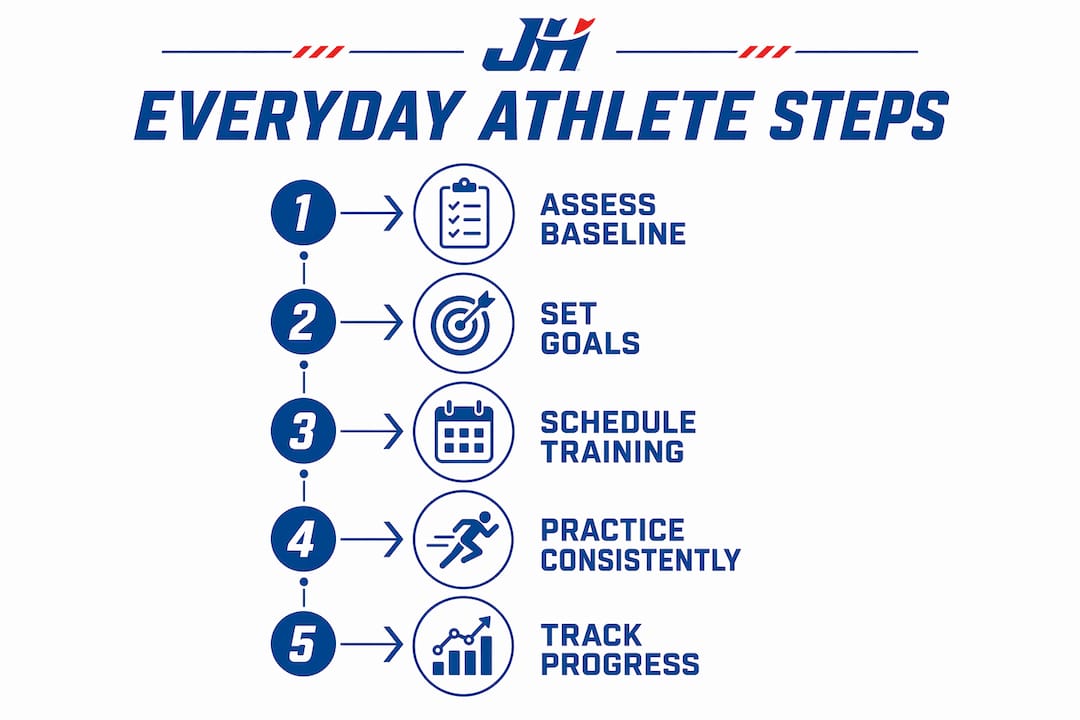
How to become an everyday athlete: practical steps
Becoming an everyday athlete does not require a gym membership, a coach, or a race entry. It requires a decision followed by consistent action.
| Step | What it looks like in practice |
|---|---|
| Assess your movement baseline | Identify where you feel stiff, weak, or limited in daily tasks |
| Build around foundational patterns | Squat, hinge, carry, and pull movements cover most of life’s demands |
| Start with consistency, not intensity | Three reliable sessions per week beats seven inconsistent ones |
| Add recovery as a non-negotiable | Sleep 7–9 hours, eat to support activity, and schedule rest days |
| Find a community or structured event | Hyrox events combine 8 exercises and 8 kilometers of running for a measurable, accessible challenge |
The comparison above shows that the path to everyday athleticism is a progression, not a transformation. Each step builds on the last. You do not need to master all five at once.
Pro Tip: Pick one foundational movement pattern and practice it three times a week for 30 days before adding complexity. Mastery of basics beats variety every time.
Key Takeaways
The everyday athlete is defined by consistent, purposeful training aimed at life readiness, not competition, making it the most sustainable and broadly beneficial approach to fitness for people aged 15–45.
| Point | Details |
|---|---|
| Definition is clear | An everyday athlete trains for life quality and functional independence, not trophies. |
| Time commitment is real | Everyday athletes invest 700–800 hours annually, fitting training around life obligations. |
| Imposter syndrome is common | Many dedicated movers hesitate to claim the athlete label despite qualifying for it. |
| Functional movement is the foundation | Squat, hinge, and carry patterns cover most real-life physical demands and reduce injury risk. |
| Community drives consistency | Connecting with others through training groups or events like Hyrox sustains long-term motivation. |
Why I stopped waiting to feel like a “real” athlete
For a long time, I thought the word “athlete” belonged to someone else. Someone faster, leaner, or with a medal on their wall. I trained hard, I showed up consistently, and I still felt like I was borrowing a label that did not belong to me.
What changed my thinking was not a race finish or a personal record. It was realizing that the people I admired most were not the ones chasing podiums. They were the ones who showed up at 5:30 a.m. before their kids woke up, who trained through stress and setbacks, and who built fitness into their lives without making it the center of everything.
The everyday athlete concept gave me permission to own my effort. The obsession with metrics, rankings, and performance data was pulling me away from the reason I started moving in the first place. Jason Bahamundi’s point about data obsession disconnecting athletes from their personal journey hit close to home. The Garmin numbers are useful. They are not the point.
My honest advice: redefine “athlete” on your terms. Your consistency, your commitment to showing up, and your decision to train for a better life are the only credentials that matter. The label is yours if you want it.
— Jason
Gear built for the way you actually train
Everyday athletes do not need gear designed for the Olympics. They need apparel that holds up through real training sessions, fits well during a morning run and a full workday, and reflects the identity they have built through consistent effort.

Teamjhall builds performance apparel for exactly this person. The TJH Men’s Performance Tee and the TJH Women’s Athletic Tank are designed for comfort and durability across the full range of everyday athletic training. Whether you are working through foundational movement patterns or showing up to a Hyrox event, Teamjhall gear moves with you. Browse the full collection at teamjhall.store and find apparel that matches the effort you put in every day.
FAQ
What is the everyday athlete concept?
The everyday athlete concept describes a person who trains consistently for life quality and functional independence rather than competition. The focus is on sustainable movement, not peak performance.
How many hours do everyday athletes train per year?
Everyday athletes typically invest 700–800 hours annually in training built around work and family obligations. That level of commitment reflects serious lifestyle integration, not casual exercise.
What are the key characteristics of an everyday athlete?
Everyday athletes prioritize functional movement patterns like squatting and carrying, integrate recovery into their routine, and balance training with family, work, and other responsibilities.
How does an everyday athlete differ from a professional athlete?
Professional athletes train as a primary occupation with competition as the goal. Everyday athletes fit training around life obligations and measure success by quality of life, not rankings.
Can anyone become an everyday athlete?
Yes. The everyday athlete lifestyle starts with assessing your current movement, building around foundational patterns, and committing to consistency over intensity. No race entry or gym membership is required to begin.