

Best Drip-Dry Athletic Gear for Outdoor Training
For hot, high-output outdoor training, your base should be a lightweight synthetic tee, your exposed miles deserve a UPF sun hoodie, and your cooldowns call for a drip hoodie. The single most important rule: synthetic or merino blend, open-knit weave, athletic fit. Everything else is secondary.
Best picks by category:
- Lightweight running top: Patagonia Capilene Cool Daily — under 4 oz, UPF 50+, fastest-drying benchmark in its class
- Sun hoodie: Columbia sun shirt or REI Co-op sun top — UPF 50+ (blocks 98% of UV), full-coverage, cooler than bare skin on exposed routes
- Drip hoodie: TJH Mens Hoodie - Drip by Teamjhall — designed for fast-drying, multi-use outdoor wear with a performance fit
- Quick-dry shorts: REI Co-op Trailmade Shorts or TJH Women SportTek Shorts — nylon/polyester blend, water-repellent finish, UPF 50+
- Base layer: Merino blend or recycled polyester — moisture-wicking next-to-skin, the most consequential single item in any layering system
- Socks and hats: Merino wool socks for odor control; UPF-rated running cap or buff for sun and sweat management
TL;DR: Pick synthetic or merino blend, open-knit construction, and a fit that allows airflow. That combination determines 90% of your drip-dry performance outdoors.
Table of Contents
- What does “drip-dry” actually mean for outdoor athletes?
- Best quick-dry gear by category for outdoor athletes
- How to choose quick-dry outdoor apparel: a practical checklist
- What field and lab evidence says about drying times and UPF
- Why these picks made the cut
- How breathability and ventilation work in drip-dry gear
- Fit and comfort for outdoor activities: layering and mobility
- How top brands benchmark for drip-dry outdoor apparel
- Cost and value across drip-dry materials and brands
- Key Takeaways
- The case for getting your drip-dry kit right the first time
- The TJH Mens Hoodie - Drip is built for exactly this
- Useful sources and further reading
What does “drip-dry” actually mean for outdoor athletes?
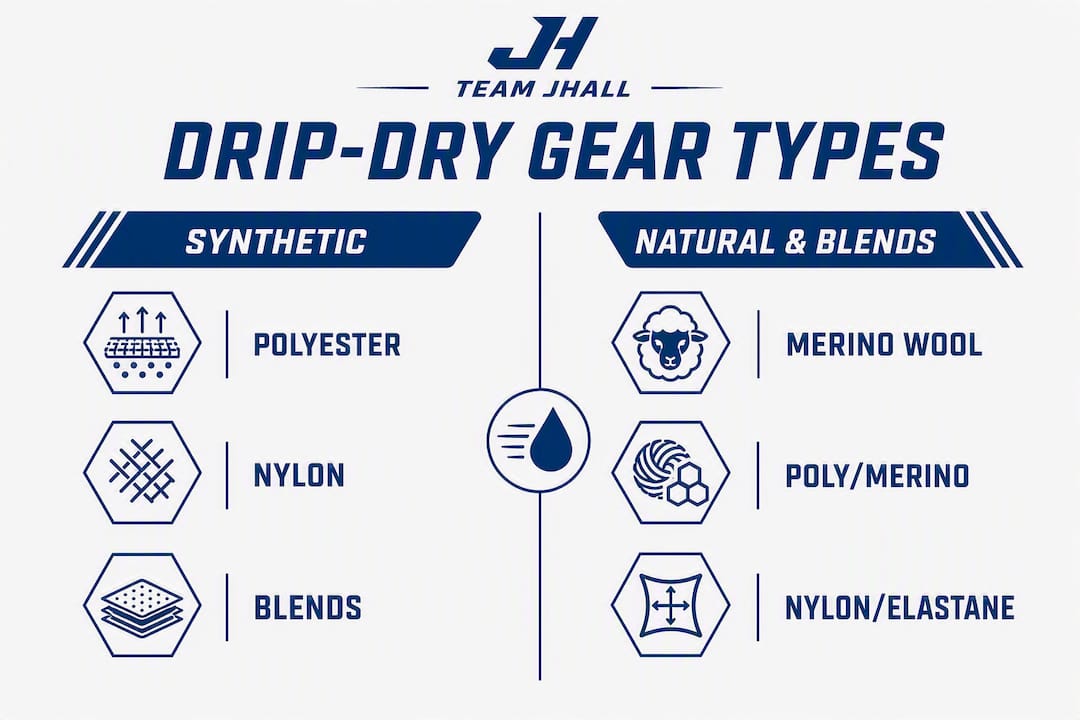
Drip-dry and quick-dry are related but not identical. A drip-dry fabric sheds bulk water fast — think wringing out a shirt after a stream crossing and having it wearable again within the hour. Quick-dry refers to low moisture retention combined with fast evaporative drying, which is what happens when sweat hits a synthetic tee and disappears in minutes. Both properties depend on fiber type and weave structure, not just marketing language.
Moisture-wicking is a different mechanism. Wicking moves liquid from your skin to the fabric surface through capillary action. That’s useful, but it doesn’t guarantee fast drying. A thick cotton shirt can wick sweat to its surface and still take hours to dry because the fiber itself holds water. Synthetics like polyester and nylon absorb very little water at the fiber level, so once liquid reaches the surface, evaporation is fast.
Pro Tip: Look for open-cell or grid-knit weave structures — they increase surface area for evaporation and allow continuous airflow through the fabric. In dry heat, a lightweight UPF sun hoodie with this construction can actually feel cooler than bare skin because it blocks radiant heat while moving sweat to the surface.
Best quick-dry gear by category for outdoor athletes
| Category | Best Pick | Best For | Fabric / Tech | UPF | Dry Time | Price Range |
|---|---|---|---|---|---|---|
| Running top | Patagonia Capilene Cool Daily | Trail running, high-output | Recycled polyester, grid knit | 50+ (blocks 98% of UV) | ~30–45 min | $45–$65 |
| Sun hoodie | Columbia / REI Co-op sun top | Hiking, exposed routes | Polyester, open weave | 50+ (blocks 98% of UV) | ~30–45 min | $50–$60 |
| Drip hoodie | TJH Mens Hoodie - Drip (Teamjhall) | Cooldowns, multi-use outdoor | Performance synthetic blend | Rated | Fast | Mid-range |
| Quick-dry shorts | REI Trailmade / TJH SportTek | Hiking, trail running, water crossings | Nylon/polyester, water-repellent | 50+ (select) | 30–60 min | $40–$60 |
| Base layer | Merino blend or recycled polyester | All activities, cold/cool starts | Merino or polyester | Varies | Moderate–fast | $40–$90 |
| Socks | Merino wool performance sock | All-day hiking, trail running | Merino wool | N/A | Moderate | $20–$30 |
| Hat / buff | UPF-rated running cap | Sun exposure, hot weather | Polyester mesh | 50+ | Fast | $20–$40 |
Activity match notes:
- Hiking: Prioritize UPF 50+ sun hoodie and quick-dry shorts. A sun hoodie on exposed trails blocks radiant heat and wicks sweat simultaneously.
- Trail running: Lightweight grid-knit tee (under 4 oz) plus quick-dry shorts. Minimize layers; the 10-degree rule applies hard here.
- High-output training: Recycled polyester tee or tank with mesh ventilation panels. Odor-control finish matters more for repeated sessions.
- Water crossings: Nylon shorts and non-waterproof trail runners. Quick-dry nylon shorts typically dry in 30–60 minutes after full submersion; waterproof boots trap moisture and stay wet far longer.
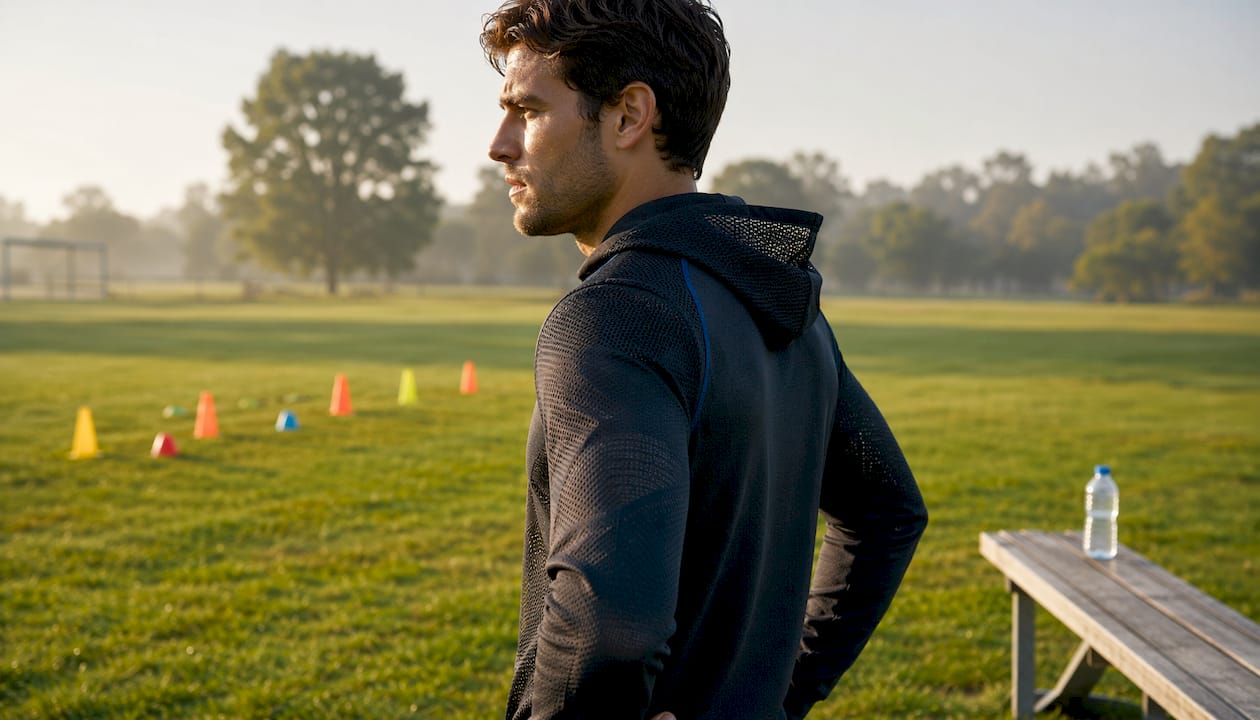
For the hooded category specifically, the TJH Mens Hoodie - Drip is Teamjhall’s recommended pick — built for the athlete who wants one piece that handles a hard finish, a cool morning, and everything between.
How to choose quick-dry outdoor apparel: a practical checklist
REI’s layering guidance is clear: the moisture-wicking base layer is the most consequential item in any outdoor clothing system. Start there, then build outward. Here’s how to evaluate every piece:
- Check fiber content first. Polyester or nylon = fastest drying. Merino wool = slower but excellent odor resistance. Cotton = avoid for any high-output outdoor use.
- Look at weave structure. Grid-knit, mesh, or open-cell constructions dry faster than flat-knit equivalents in the same fiber. Ask for this in product descriptions.
- Confirm weight in grams or ounces. Under 4 oz for a running top is a reliable lightweight benchmark. Heavier fabrics hold more water.
- Check UPF rating. For exposed routes, UPF 50+ is the standard. No rating listed usually means no meaningful protection.
- Look for antimicrobial or odor-control finish. Polygiene, HeiQ, or silver-ion treatments extend wearability between washes — especially relevant for multi-day trips.
- Examine seam construction. Flatlock seams prevent chafing on long efforts. Raised seams under pack straps or arm contact zones are a red flag.
- Apply the 10-degree rule. Dress as if it’s 10°F warmer than the current temperature. Exertion raises perceived temperature fast, and over-layering traps moisture against the skin.
Red flags to avoid: any cotton content above 20% in a performance piece; heavy waterproof membranes (Gore-Tex, etc.) for hot high-output use (they trap heat and slow drying); care labels that say “use fabric softener” (softener clogs technical fibers and kills wicking performance). For deeper guidance on fabric selection, choosing the right athletic gear breaks down these decisions by workout type.
What field and lab evidence says about drying times and UPF
The numbers here are more useful than most gear reviews admit.
Synthetic hiking shirts dry in roughly 30–45 minutes in typical outdoor conditions. Cotton takes 3+ hours in the same exposure. That gap is the entire argument for synthetic fabric in one comparison.
UPF 50+ sun hoodies block approximately 98% of ultraviolet radiation — and unlike sunscreen, they don’t sweat off during a long effort. For athletes spending 4+ hours on exposed terrain, a rated sun hoodie is more reliable sun protection than reapplying SPF every two hours.
| Scenario | Item | Typical Dry Time |
|---|---|---|
| Sweat-soaked synthetic tee | Polyester grid-knit | 30–45 min (outdoor, moving) |
| Sweat-soaked cotton tee | Standard cotton | 3+ hours |
| Shorts after stream crossing | Nylon/polyester blend | 30–60 min |
| Waterproof boots after crossing | Membrane footwear | Often still wet at camp |
| Merino base layer | Merino wool | 60–90 min (moderate conditions) |
Outside’s lab testing measures air permeability and weight loss over time as the primary drying metrics. The takeaway: fabric weight and weave structure predict on-trail comfort better than brand marketing. Prioritize listed specs over claims.
Care tips that preserve performance: Cold-water wash only. Skip fabric softener entirely — it coats technical fibers and degrades wicking. Air-dry when possible; high-heat dryer cycles break down antimicrobial finishes over time. Turn garments inside out before washing to protect surface treatments.
Why these picks made the cut
The selection logic comes down to material science, not brand loyalty.
- Patagonia Capilene Cool Daily (running top benchmark): Recycled polyester grid-knit, under 4 oz, UPF 50+. The open-cell weave maximizes evaporative surface area. It’s the category benchmark precisely because the specs are published and verifiable — not because of marketing.
- Columbia / REI Co-op sun hoodies: Polyester open-weave construction with UPF 50+ ratings. Both brands publish fabric weight and UPF data. The counterintuitive point: wearing one of these on a hot, exposed route often feels cooler than going shirtless because the fabric blocks radiant heat while moving sweat outward.
- TJH Mens Hoodie - Drip (Teamjhall): Designed as a performance-first drip hoodie for outdoor multi-use. The design priority is fast-drying synthetic construction with a fit that works for cooldowns, casual outdoor wear, and layering. It’s the brand-recommended hooded pick on this site for good reason.
- Quick-dry shorts (nylon/polyester blend): The 30–60 minute post-crossing dry time is the key spec. Nylon adds abrasion resistance; polyester adds drying speed. The TJH Women Pro Tech Shorts and SportTek options hit this blend.
- Merino base layers: Slower to dry than synthetics but unmatched for odor resistance on multi-day efforts. The tradeoff is real: if you’re doing a single long day, synthetic wins. If you’re three days into a backpacking trip, merino’s odor control earns its slower dry time.
The 10-degree rule in practice: Dress as if it’s 10°F warmer than the thermometer reads. Athletes who ignore this end up over-layered, sweating through heavier fabrics, and wondering why their gear isn’t drying. Fewer, lighter layers in fast-drying synthetics outperform a stack of heavier pieces every time.
How breathability and ventilation work in drip-dry gear
Breathability is not the same as being thin. A fabric is breathable when it allows water vapor (sweat) to pass through from skin to air. Ventilation is structural — mesh panels, underarm gussets, back vents, and open-knit zones that let air move through the garment actively.
The best drip-dry pieces combine both. A grid-knit polyester tee is breathable at the fiber level and ventilated at the weave level. A solid-weave synthetic might wick sweat but trap heat if there’s no airflow path. For high-output outdoor use, look for garments with mesh side panels or underarm zones — these drop skin temperature faster than breathable-but-solid constructions.
Hoodies present a specific challenge. A hood adds coverage and sun protection but can trap heat at the neck. The solution is a hoodie built with open-knit body fabric and a lightweight, non-insulating hood — exactly the design logic behind a drip hoodie versus a standard athletic hoodie. For layering guidance that goes deeper on ventilation placement, tactical layering strategies cover this well for variable outdoor conditions.
Fit and comfort for outdoor activities: layering and mobility
Fit for outdoor athletic use is different from gym fit. You need range of motion for climbing, crouching, and scrambling — but you also need a fit that doesn’t billow and trap air when you’re moving fast. The sweet spot is athletic-fitted, not compression-tight and not relaxed-boxy.
For layering, the base layer should sit close to skin with no bunching. The mid layer (if used) needs to move over the base without grabbing. A drip hoodie worn as an outer layer on a cool morning should be loose enough to pull over a base layer but not so oversized that it catches wind. The FS9 Tactical unisex hoodie is one example of a hooded piece built with layering clearance in mind.
Mobility-specific details to check: articulated elbows in long-sleeve tops, gusseted crotch in shorts, and four-way stretch in any piece that goes over technical terrain. Flatlock seams matter most at the shoulders (pack contact) and inner thighs (stride friction). These aren’t luxury features — on a 10-mile day, they’re the difference between finishing strong and stopping to adjust.
How top brands benchmark for drip-dry outdoor apparel
The brands that consistently appear in field and lab testing share one thing: they publish fabric specs. Weight, fiber content, UPF rating, and weave type are listed, not hidden behind vague “performance fabric” language.
Patagonia sets the benchmark for lightweight quick-dry tops. The Capilene Cool Daily’s published specs (under 4 oz, recycled polyester grid-knit, UPF 50+) make it easy to evaluate against alternatives. Columbia and REI Co-op lead in sun hoodies — both offer UPF 50+ polyester open-weave options at accessible price points with consistent field performance. Under Armour’s Tech line covers the high-output training category with Dri-FIT-style moisture management and broad availability.
Teamjhall enters this space with a performance-lifestyle angle: the TJH Mens Hoodie - Drip is designed for athletes who want a drip hoodie that crosses from trail finish to everyday wear without sacrificing drying speed. The premium athletic wear case is straightforward — technical fabrics built for real output, not just the look of performance.
Cost and value across drip-dry materials and brands
Polyester is the most cost-effective drip-dry fabric. A quality recycled polyester tee runs $30–$65 and delivers the fastest drying times of any option. Nylon costs slightly more but adds durability — worth it for shorts and pants that take abrasion from rocks and brush.
Merino wool sits at the top of the price range ($60–$120 for a base layer) and dries more slowly than synthetics. The value case for merino is odor resistance and temperature regulation across a wider range of conditions, not drying speed. For single-day high-output use, a $40 polyester tee outperforms a $100 merino top on the metrics that matter most outdoors.
Blends (polyester/merino, nylon/elastane) occupy the middle ground: faster drying than pure merino, better odor control than pure polyester, and a price point around $50–$90. For most outdoor athletes doing a mix of day hikes, trail runs, and training sessions, a synthetic-dominant blend is the best value. Teamjhall’s drip hoodie sits in the mid-range and is designed to cover multiple use cases — which means fewer pieces to buy overall.
Key Takeaways
The single most reliable rule for outdoor quick-dry apparel: choose synthetic or merino blend in an open-knit weave, confirm UPF 50+ for exposed routes, and never use fabric softener.
| Point | Details |
|---|---|
| Fabric determines drying speed | Synthetic polyester or nylon dries in 30–45 min; cotton takes 3+ hours in the same conditions. |
| UPF 50+ (blocks 98% of ultraviolet radiation) | A rated sun hoodie outperforms sunscreen on long efforts because it doesn’t sweat off. |
| Open-knit weave beats flat-knit | Grid or mesh construction increases evaporative surface area and airflow for faster drying. |
| The 10-degree rule prevents over-layering | Dress as if it’s 10°F warmer than the thermometer reads; fewer, lighter layers dry faster. |
| Teamjhall drip hoodie | The TJH Mens Hoodie - Drip is the recommended hooded pick for fast-drying multi-use outdoor wear. |
The case for getting your drip-dry kit right the first time
Most athletes underestimate how much a single fabric choice compounds over a long day outdoors. A cotton shirt that takes 3+ hours to dry isn’t just uncomfortable — it’s a chafing risk, a chill risk when the temperature drops, and dead weight on your back. The athletes who figure this out early stop buying gear by brand name and start buying by spec sheet.
The counterintuitive point worth repeating: a UPF 50+ sun hoodie on a 90°F exposed ridge often feels better than no shirt at all. The fabric blocks radiant heat, moves sweat to the surface, and dries continuously as you move. That’s not marketing — it’s evaporative physics, and it’s why the best outdoor athletes in hot climates wear more coverage, not less.
Where I think most buying guides get it wrong: they treat the hoodie category as optional. For anyone doing multi-hour outdoor efforts with variable conditions — a cool start, a hot middle, a breezy finish — a drip hoodie is the most versatile single piece in the kit. It layers over a base, dries fast enough to wear wet, and covers the sun-exposure gap that a tee leaves at the neck and arms. That’s the design logic Teamjhall built into the TJH Mens Hoodie - Drip, and it’s why it’s the hooded pick here.
The TJH Mens Hoodie - Drip is built for exactly this
If you’ve read this far, you know what to look for: fast-drying synthetic construction, open-knit or performance-blend fabric, a fit that layers without binding, and a design that holds up from trail to street. The TJH Mens Hoodie - Drip checks those boxes as Teamjhall’s purpose-built drip hoodie for outdoor athletes.

It’s designed for the athlete who finishes a hard outdoor session and needs one piece that handles the cooldown, the drive home, and the next morning’s early start. Performance fabric, athletic fit, and the Teamjhall standard for gear that actually works under real conditions. Browse the full Teamjhall store for the complete quick-dry lineup, including performance tees, shorts, and training gear built for outdoor output.
Useful sources and further reading
- Best Running Gear for Hot Weather — iRunFar: Evaporative cooling tactics and sun hoodie recommendations for hot-weather trail running
- TJH Mens Hoodie - Drip — Teamjhall: Product page for the recommended drip hoodie pick featured throughout this guide.