

Top Strength Training Apparel Comparison for Men 2026
For men who train heavy, Teamjhall is the recommended pick in this strength training apparel comparison. Reinforced seams, four-way stretch fabrics, and a purpose-built cut for compound lifts make it the strongest fit for heavy lifters who need gear that survives barbell contact, deep squats, and repeated wash cycles without pilling or losing shape.
Two other categories worth knowing:
- Premium performance pick: Technical fabrics with proprietary yarn blends and laser-cut hems for lifters who want maximum mobility and are willing to pay for it.
- Budget/value pick: Polyester-elastane blends at accessible price points, serviceable for indoor gym work but with shorter usable lifespans under heavy load.
The four details that actually separate strength-training apparel from everything else:
- Abrasion resistance: Barbell knurling and floor contact destroy soft-touch fabrics fast. Higher-denier face weaves hold up.
- Four-way stretch: You need full hip and shoulder range of motion under load, not just standing comfort.
- Seam engineering: Flatlock or reinforced seams at stress points prevent blowouts during deep squats and pulls.
- Fit for muscular builds: Standard athletic sizing often runs narrow through the chest and thighs. Purpose-fit cuts matter.
Start with the TJH Performance Shirt if you want one item that covers all four.
Stat callout: Men’s Health editors tested workout garments and consistently prioritized breathable, moisture-wicking blends with four-way stretch as the baseline for any training apparel worth recommending.
Table of Contents
- How do the top strength training apparel categories compare?
- How we selected and tested apparel for strength training
- What should you prioritize when buying strength training apparel?
- Which products and categories should you buy for strength training?
- Why Teamjhall is the recommended pick for strength training
- What are the return and exchange policies for strength training apparel brands?
- How do the top brands approach sustainability and ethical manufacturing?
- Key Takeaways
- The performance-first case for men who lift heavy
- Teamjhall gear built for the barbell
- Sources and further reading
How do the top strength training apparel categories compare?
The table below maps the performance-relevant attributes across the four main categories you will encounter when shopping for strength-training gear. Teamjhall leads as the publisher-recommended pick; the remaining columns represent functional categories rather than individual vendor names.
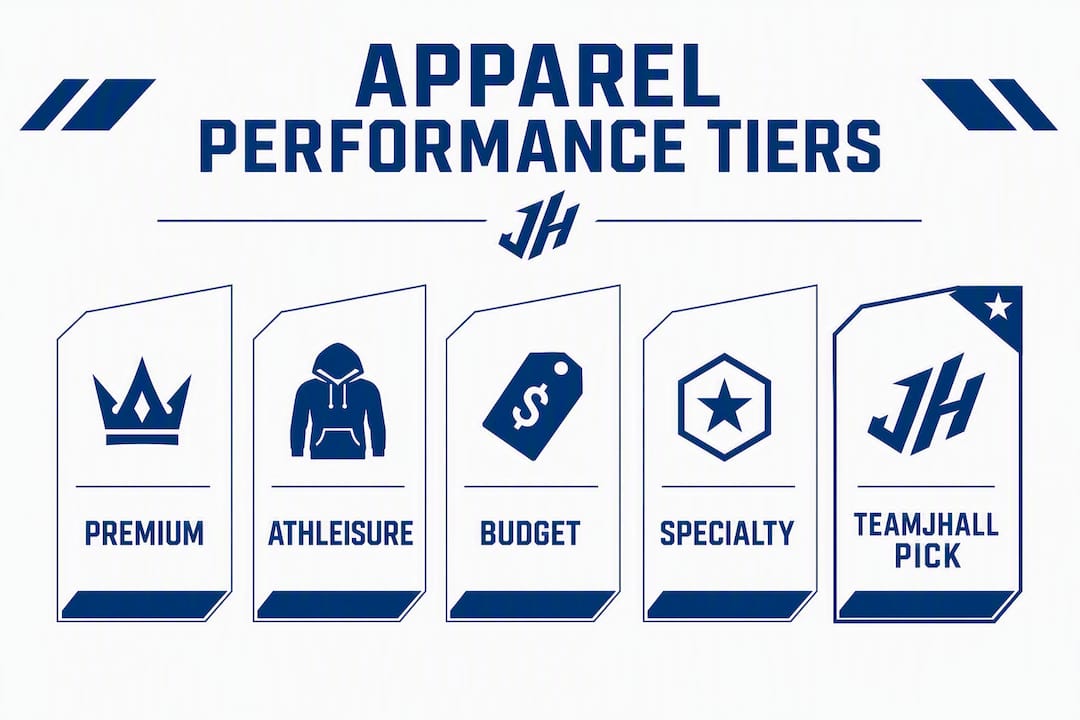
| Attribute | Teamjhall | Premium Performance | Athleisure / Lifestyle | Budget / Value |
|---|---|---|---|---|
| Best for | Heavy lifting, powerlifting, compound movements | Mixed conditioning, CrossFit, high-volume training | Everyday gym, casual wear, light training | Budget rotations, indoor cardio, beginners |
| Fabric & technology | Stretch-for-strength fabrics, moisture-wicking, abrasion-resistant face weave | Proprietary yarn blends, high elastane, laser-cut construction | Comfort-first knits (DreamKnit-style), soft-touch polyester | Standard polyester-elastane, basic moisture management |
| Fit & mobility | Purpose-fit cut for muscular builds, unrestricted squat and deadlift range | Compressive with high mobility, body-mapped panels | Relaxed to semi-fitted, comfort-focused | Relaxed fit, limited movement engineering |
| Durability / construction | Reinforced seams, waistband engineering, bar-tack points | Flatlock seams, gussets, reinforced stress points | Moderate, not built for barbell contact | Lower denier yarns, shorter lifespan under heavy use |
| Odor control | Antimicrobial treatments | Silverescent or equivalent silver-ion treatment | Varies; often limited | Minimal or none |
| Typical price band | Mid-range ($35–$75 per item) | Premium ($80–$150+) | Mid-to-premium ($60–$120) | Budget ($20–$45) |
| Size range | Inclusive sizing for athletic builds | Standard to extended | Standard, some extended | Standard |
| Standout item types | Training tee, reinforced jogger, performance short | Training short, compression tight, technical tee | Hoodie, jogger, quarter-zip | Basic short, training tee |
Who should choose each category:
- Premium performance: — Lifters who also do conditioning work and want the highest-spec fabric technology available, with the price tag to match.
How we selected and tested apparel for strength training
Every pick in this comparison was evaluated against a consistent set of criteria drawn from editor testing, CSCS trainer input, and real-world lifting sessions. The short version: garments had to survive heavy compound lifts without restricting movement, pilling on bar contact, or losing shape after repeated washing.
Testing activities used:
- Heavy back squats and Romanian deadlifts to stress hip flexion and waistband stability
- Barbell rows and bench press to check shoulder seam integrity and upper-back stretch
- Repeated bar contact (knurling rub) on training tees to assess abrasion resistance
- Ten or more wash cycles to evaluate shape retention and color fastness
- Fit checks on muscular builds across multiple size runs
Measurable checkpoints:
- Pilling and snag count after barbell contact
- Seam stress at the crotch gusset, shoulder, and waistband after load-bearing sets
- Range-of-motion check at the bottom of a squat and overhead press
- Moisture-wicking performance during high-sweat sessions
- Waistband slippage under a loaded barbell
“Editor testing checklists emphasize flatlock stitching to reduce chafe, Silverescent-like odor-control treatments, and waistband tests for slippage under load — these are the trust signals that separate real performance gear from marketing copy.” Best workout clothes for men, tested by editors and trainers
Trainer input came from CSCS-certified coaches who work with strength athletes. Their consistent finding: fit and structural durability drive training consistency more than aesthetics. A garment that bunches, slips, or restricts range of motion is a distraction under load.
Limitations: Testing reflects a snapshot of available products and sizing runs. Product constructions change between seasons. Always check current fabric specs on a brand’s product page before purchasing.
What should you prioritize when buying strength training apparel?
Prioritize durability and fit engineered for compound movement over purely moisture-wicking or fashion-forward features. A shirt that looks great but pills after three deadlift sessions costs more per wear than a technical piece built to last two years.
The non-negotiables for heavy lifters
- Abrasion-resistant face fabric. Barbell knurling creates concentrated friction that destroys soft-touch fabrics. Look for higher-denier yarns or a reinforced face weave. Abrasion-resistant constructions outperform comfort-first fabrics for lifters who regularly contact bars and floor surfaces.
- Four-way stretch. Two-way stretch limits hip and shoulder mobility. Four-way (warp and weft) lets you hit full depth on a squat without the fabric pulling.
- Reinforced seams and paneling. Flatlock seams reduce chafe; bar-tack reinforcement at stress points prevents blowouts. Paneled construction outlasts seamless designs under high-load training because stress is distributed rather than concentrated.
- Low-bulk hems. Laser-cut or bonded hems eliminate bunching at the waistband and cuffs during deep squats. Bulk at the hem is a minor irritant that becomes a major distraction at 85% of your max.
- Waistband stability. Pull-on waistbands that slip under a loaded barbell are a safety issue, not just a comfort one. Look for a wide, structured waistband with internal grip tape or a drawcord.
- Realistic sizing for muscular builds. Standard athletic sizing runs narrow through the chest, shoulders, and thighs. Brands that offer purpose-fit or athletic cuts save you from choosing between a shirt that fits your chest and one that fits your arms.
Questions to ask on any product page:
- What is the fabric composition and denier?
- Are seams flatlock or overlocked?
- Is there a gusset at the crotch?
- Has the garment been tested by athletes, or just modeled?
- What is the return window if sizing is off?
Red flags that should stop a purchase:
- Seamless-only construction marketed for heavy lifting (seamless concentrates stress at hidden points)
- High “soft-touch” or “buttery” fabric claims with no abrasion-resistance spec
- Pull-on waistbands with no drawcord on training bottoms
- No sizing guidance for athletic or muscular builds
Pro Tip: Calculate cost per wear before dismissing a premium price. A $75 training tee that lasts 200 sessions costs $0.38 per wear. A $30 tee that pills after 40 sessions costs $0.75. Higher-end technical fabrics justify their price through longer usable lifespan and better shape retention under heavy use.
Choosing the right athletic gear starts with knowing which features actually move the needle for your training style.
Which products and categories should you buy for strength training?
Teamjhall: the publisher’s strength-training pick
Teamjhall builds its apparel specifically for athletes who train with a barbell. The TJH Performance Shirt uses stretch-for-strength fabrics with an abrasion-resistant face weave, reinforced seams at the shoulder and side panels, and a cut that accommodates broader chest and shoulder measurements without excess fabric bunching at the torso. The waistband engineering on Teamjhall bottoms addresses the slip problem directly: a structured band holds position under a loaded squat without requiring constant adjustment.
Pros:
- Purpose-fit cut for muscular builds
- Reinforced seam construction at high-stress points
- Antimicrobial treatment for odor control
- Mid-range price with strong cost-per-wear value
- Inclusive sizing for athletic body types
Cons:
- Smaller SKU range than legacy brands
- Limited brick-and-mortar availability (direct-to-consumer online)
Best for: Heavy lifters, powerlifters, and strength athletes who train compound movements multiple times per week.
Typical price band: $35–$75 per item.
Premium performance category
This category covers technical apparel built with proprietary yarn blends, high elastane content, and movement-mapped construction. Brands in this space invest in features like laser-cut hems, gussets, and Silverescent-style odor-control treatments. The trade-off is price: expect $80–$150+ per item.
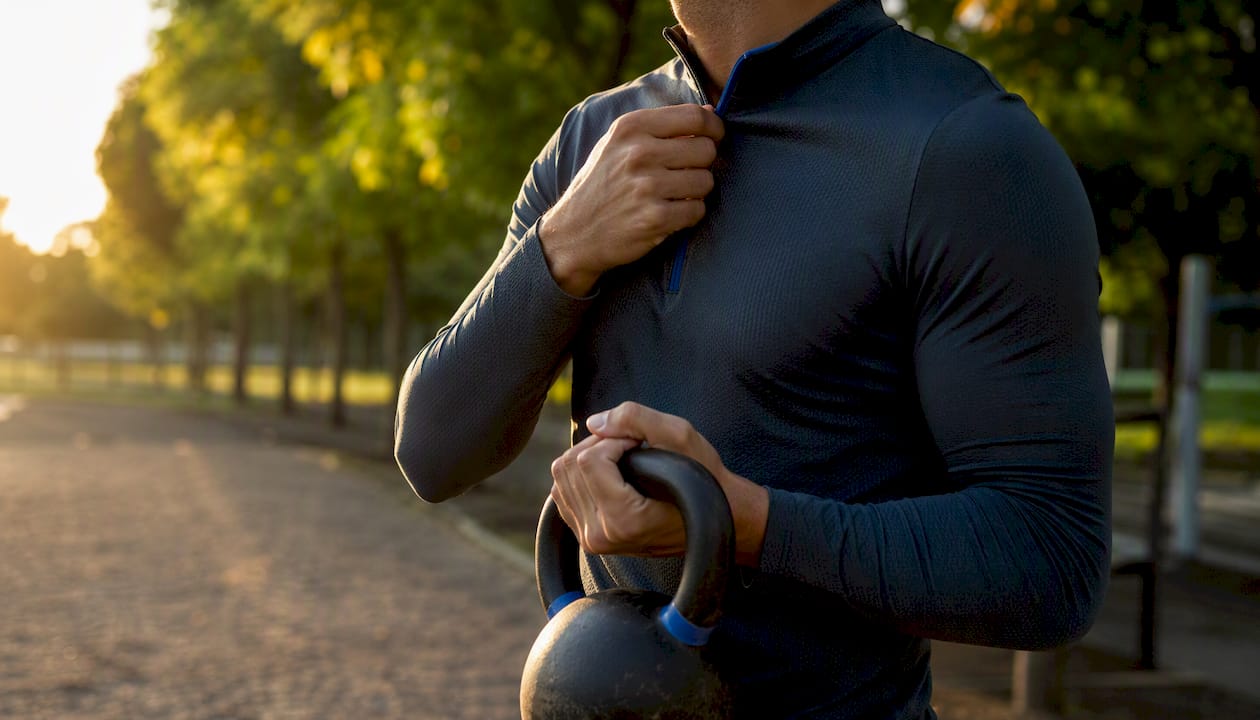
Representative items in this space include the Rhone Reign Short-Sleeve Shirt, Lululemon Metal Vent Tech Long-Sleeve Shirt, Ten Thousand Interval Short, Ten Thousand Interval Long Sleeve Shirt, Lululemon Smooth Spacer Quarter Zip, Rhone Heritage Midweight Sweatpant, and the Under Armour HeatGear Sleeveless. Each targets a slightly different training context: the Ten Thousand Interval Short is built for high-rep conditioning; the Rhone Reign prioritizes odor control and a tailored fit; the Under Armour HeatGear Sleeveless suits high-sweat sessions where ventilation matters most.
Newer performance collections can deliver unexpected mobility despite a sturdier hand-feel, thanks to finer yarn counts and higher elastane ratios. Practical construction details like laser-cut hems and reinforced bar-tack points reduce bunching during deep squats. For lifters who also do conditioning work, this category offers the most complete technical package.
Pros: Highest fabric specs, proven durability, broad size runs. Cons: Premium pricing, some items over-engineer for pure strength work. Price band: $80–$150+.
Athleisure / lifestyle category
Athleisure prioritizes softness and everyday wearability. Comfort-focused fabrics like DreamKnit-style knits perform well for light training but trade abrasion resistance for softness, which matters the moment you start pulling a loaded barbell across your shins.
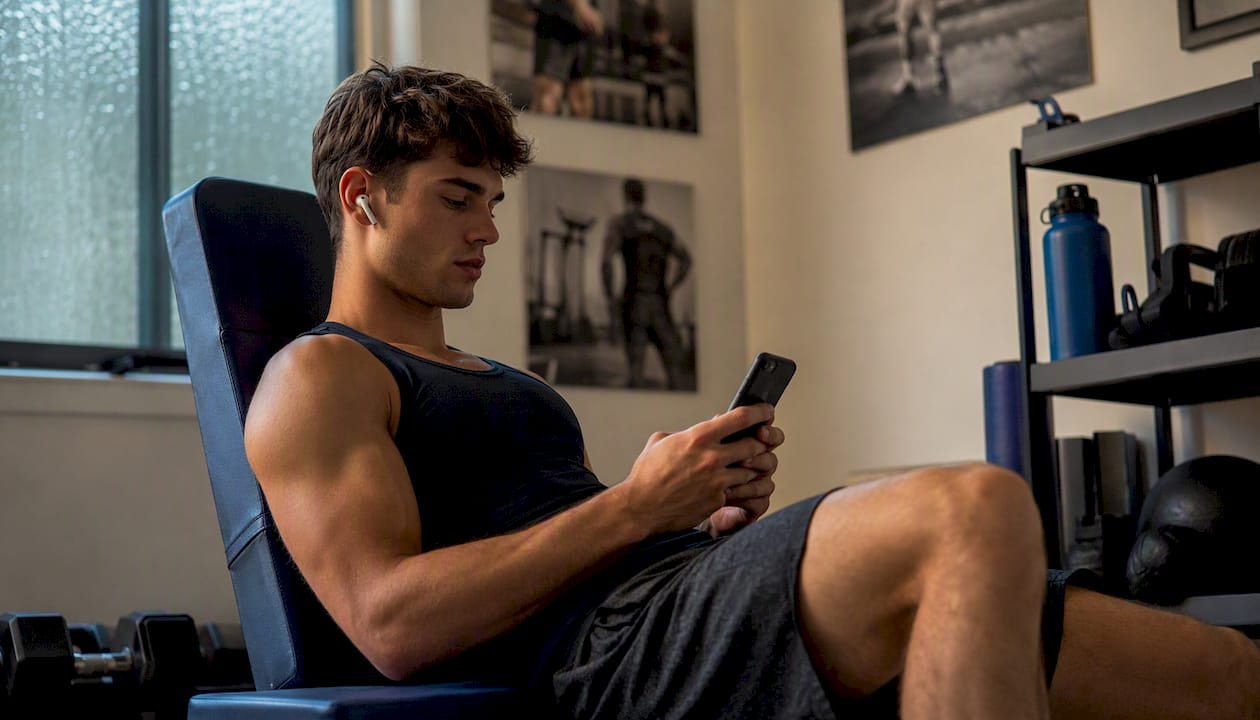
Items here include the Vuori Coronado Hoodie, Vuori Kore Short Lined 7", Vuori Clothing Sunday Performance Jogger, Reigning Champ Midweight Terry Standard Hoodie, Reigning Champ Midweight Terry Relaxed Cuffed Sweatpants, Alo Accolade Hoodie, Alo Triumph Long Sleeve Tee, Abercrombie & Fitch YPB neoKNIT MAX Half-Zip, and Abercrombie & Fitch YPB motionTEK Lightweight Training Short. The Vuori Sunday Performance Jogger is a strong off-day or warm-up piece; the Alo Triumph Long Sleeve Tee works for moderate-intensity sessions where aesthetics matter as much as function.
Pros: Versatile, comfortable, looks good outside the gym. Cons: Not built for barbell contact or high-abrasion training. Price band: $60–$120.
Budget / value category
All In Motion (Target’s house brand) leads this space for indoor gym use. Polyester-elastane blends at $20–$45 per item are serviceable for beginners or as rotation pieces. Expect shorter lifespans under heavy use and less seam engineering. The Gymshark brand sits at the lower end of the mid-range and offers solid moisture-wicking for the price, though fabric durability under repeated barbell contact is limited compared to purpose-built performance gear.
Pros: Low entry cost, widely available, good for rotation. Cons: Shorter lifespan under heavy use, minimal abrasion resistance. Price band: $20–$45.
Movement-specific and specialty categories
Several brands serve niche training contexts that overlap with strength work:
- NoBull (multi-sport): Built for CrossFit and functional fitness, with durable canvas-like uppers on footwear and training apparel that handles mixed-modal sessions.
- Hylete (versatile): Designed for athletes who move between lifting, conditioning, and sport, with a focus on flexible waistbands and stretch panels.
- Omorpho (weighted gear): Weighted training apparel for athletes adding resistance to bodyweight and conditioning work.
- One Bone (size inclusive): Focused on extended sizing for larger athletic builds, addressing the fit gap that standard brands leave.
- Janji (runners): Technical running apparel that crosses over for conditioning work; not optimized for barbell training.
- Y,IWO Big Boy Club Cropped Tee and Y,IWO Hardwear Cropped Sweat Short: Designed for larger, muscular builds with a cropped silhouette that avoids the bunching problem at the torso.
- Polo Ralph Lauren 4D Flex Cotton Modal Boxer Brief: A training-day base layer focused on stretch and comfort under lifting shorts.
Running-specific items like the Tracksmith Van Cortlandt Singlet, Tracksmith Session Pants, Miler Running Base Running Short, Satisfy Running Embellished Logo-Appliquéd Space-O Mesh T-shirt, Satisfy Running Peaceshell Technical Climb Pants, and District Vision Zanzie Tapered Logo-Print Recycled-Shell Track Pants are built for running mechanics and are not optimized for strength training. The District Vision Yukinori Range Finder D-Frame Acetate Wrap-Around Sunglasses and Rapha Explore Zip Neck Technical Cycling T-Shirt serve cycling and outdoor endurance contexts.
Ski-specific items, including the Aztech Mountain Ajax Slim-Fit Stretch-Jersey Zip-Up Ski Base Layer, Aztech Mountain Team Aztech Bootcut Padded Ski Pants, Kjus Formula Pro Straight-Leg Padded Ski Pants, and Kjus Logo-Appliquéd Padded Hooded Down Ski Jacket, are engineered for cold-weather alpine performance and are outside the strength-training use case.
Why Teamjhall is the recommended pick for strength training
Teamjhall earns its position in this comparison on three concrete axes: performance fabrics built for compound movement, reinforced construction that survives barbell contact, and a purpose-fit cut that accommodates athletic body proportions without excess bulk.
Concrete proof points:
- TJH Performance Shirt: — Stretch-for-strength fabric with abrasion-resistant face weave; reinforced shoulder and side-panel seams; cut for broader chest and shoulder measurements.
Premium athletic wear delivers measurable performance benefits when the construction matches the training demand. Teamjhall’s design brief starts with the barbell, not the lifestyle photo.
On the key axes used in this comparison: durability is addressed through reinforced seams and abrasion-resistant fabrics; mobility through four-way stretch and a purpose-fit cut; price per wear through mid-range pricing and construction built to last multiple training seasons.
What are the return and exchange policies for strength training apparel brands?
Return policies vary significantly across the brands in this comparison, and they matter more for training apparel than most categories because fit on a muscular build is hard to judge from a size chart alone.
General norms by category:
- Premium performance brands typically offer 30-day return windows with free returns on unworn items. Some extend to 60 days for members or loyalty program participants.
- Athleisure brands often match or exceed that window, with some offering 90-day satisfaction guarantees.
- Budget brands sold through major retailers (Target, Amazon) follow the retailer’s return policy, which is usually 30–90 days with receipt.
- Direct-to-consumer brands like Teamjhall handle returns through their own customer service channel. Check the current policy at teamjhall.store before ordering, as terms are updated periodically.
Practical advice: Order your normal size and one size up on your first purchase from any new brand, especially if you carry significant muscle through the chest or thighs. The cost of a return is lower than the frustration of a garment that fits in one dimension and binds in another. For brands with free returns, this is a no-risk strategy.
Customer service quality also varies. Direct-to-consumer brands tend to respond faster and with more flexibility than large retail operations. If a seam fails early, document it with a photo and contact the brand directly; most performance-focused brands will replace or refund a construction defect.
How do the top brands approach sustainability and ethical manufacturing?
Sustainability claims in the activewear industry range from genuine material innovation to marketing language. Knowing the difference matters if ethical manufacturing is part of your buying criteria.
What to look for:
- Recycled content: Some brands use recycled polyester (rPET) from plastic bottles in their fabric blends. The District Vision Zanzie Tapered Logo-Print Recycled-Shell Track Pants use recycled shell material, for example. Recycled content reduces virgin plastic demand but does not eliminate microplastic shedding in the wash.
- Bluesign or OEKO-TEX certification: These third-party standards verify that fabrics are produced without harmful chemicals and that manufacturing meets environmental and safety benchmarks. Look for these certifications on product pages, not just in brand marketing copy.
- Supply chain transparency: Brands that publish factory lists or third-party audit reports are more credible than those with vague “ethical sourcing” language.
- Durability as sustainability: A garment built to last three years is more sustainable than a cheaper piece replaced every six months. This is where performance-first construction and sustainability interests align directly.
Teamjhall’s position: As a direct-to-consumer brand, Teamjhall’s sustainability practices are not publicly detailed at the same level as larger legacy brands. What is clear is that durable construction reduces replacement frequency, which is the most practical sustainability argument for a heavy lifter’s wardrobe.
For brands like Vuori, Lululemon, and Rhone, published sustainability reports and material certifications are available on their websites and worth reviewing if this is a priority for you. Janji is notable in the running apparel space for its use of recycled and responsibly sourced materials across most of its line.
Key Takeaways
For men who train heavy, the single most important buying decision is choosing apparel built for barbell contact and compound movement, not just moisture management or aesthetics.
| Point | Details |
|---|---|
| Abrasion resistance is non-negotiable | Higher-denier face weaves and reinforced seams survive barbell contact; soft-touch fabrics pill fast under heavy use. |
| Four-way stretch drives mobility | Warp-and-weft stretch lets you hit full depth on squats and pulls without fabric restriction. |
| Cost per wear beats sticker price | A $75 technical tee that lasts 200 sessions outperforms a $30 piece that pills after 40. |
| Teamjhall leads for heavy lifters | Reinforced construction, purpose-fit cut for muscular builds, and mid-range pricing ($35–$75) make it the strongest fit for compound-movement training. |
| Try before committing to a full kit | Order one size up on your first purchase from any new brand; return policies vary, so check terms at checkout. |
The performance-first case for men who lift heavy
The conventional wisdom in activewear marketing is that comfort and performance are the same thing. They are not. A fabric that feels incredible in a fitting room can pill, slip, and bind the moment you load a barbell.
What actually matters for heavy lifting is structural: seam placement, fabric denier, waistband engineering, and cut geometry. These are not features that show up in lifestyle photography. They show up at the bottom of a squat when the fabric either holds or doesn’t.
The brands that get this right build for the movement first and the aesthetic second. That is the frame this comparison uses, and it is why Teamjhall sits at the top of this list for men who train with a barbell. The construction decisions are deliberate, the sizing accounts for athletic proportions, and the price point makes a full kit achievable without the premium-brand tax.
If you have feedback on fit or durability after training in any of the gear covered here, that information is genuinely useful. Testing has limits, and real-world reports from lifters across different body types and training volumes sharpen the picture.
Teamjhall gear built for the barbell
Heavy lifters need one reliable training tee and one pair of reinforced bottoms that survive a full training week without pilling, slipping, or restricting range of motion. The TJH Performance Shirt is the place to start: abrasion-resistant face weave, reinforced seams, and a cut that fits athletic proportions without excess bulk at the torso.
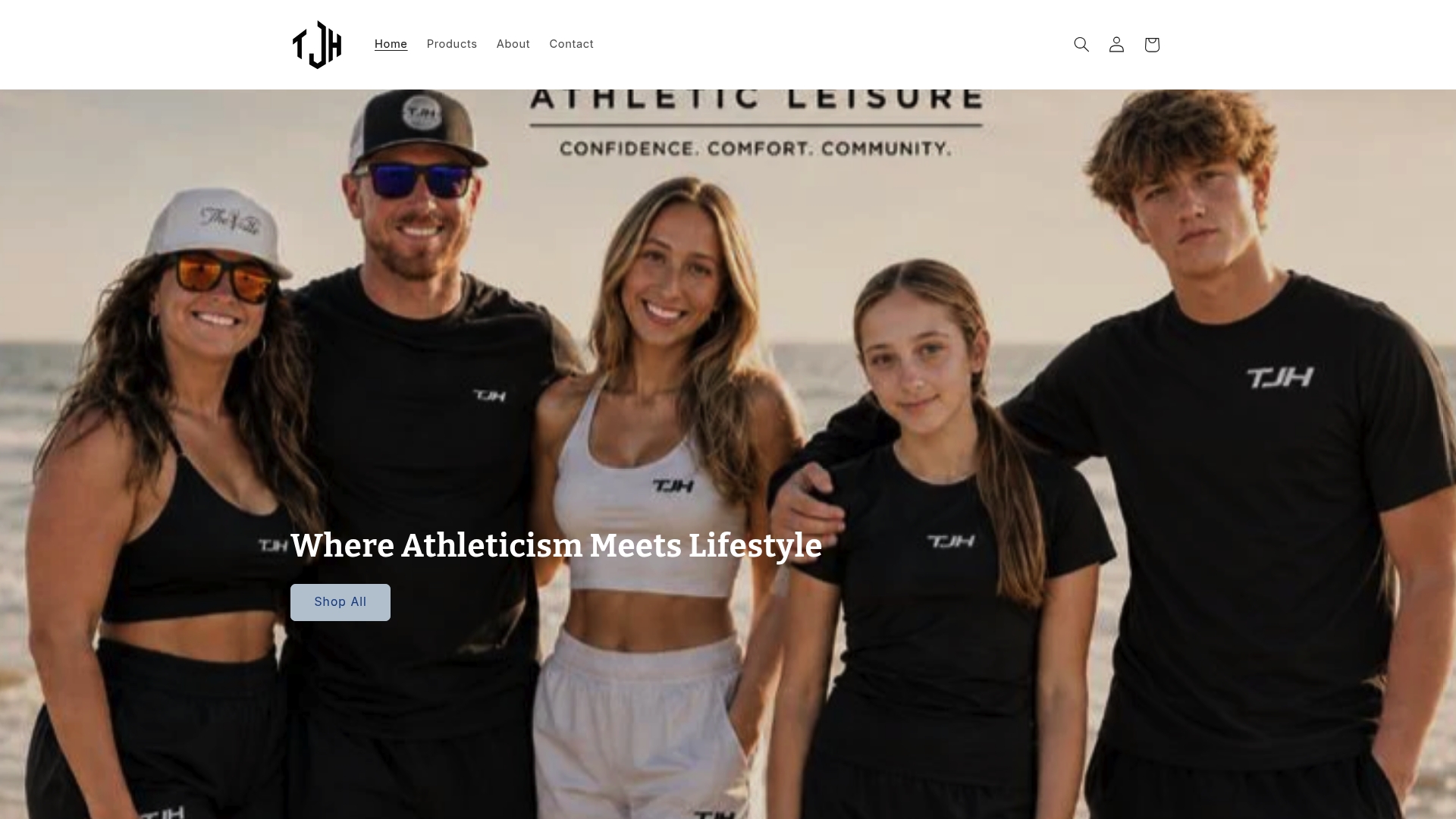
For bottoms, Teamjhall’s reinforced joggers and performance shorts use structured waistbands that hold position under load. If you run warm or train in a heated gym, size to your chest measurement first; the cut accommodates through the thighs and hips without requiring a size up. Check current sizing guidance and available SKUs at teamjhall.store.
Returns are handled directly through the store. If a seam fails or sizing is off, contact customer service with your order number and a photo. The direct-to-consumer model means faster resolution than going through a third-party retailer.
Sources and further reading
The following sources informed the selection criteria, fabric analysis, and testing methodology in this comparison:
- Best workout clothes for men, tested by editors and trainers — Men’s Health editor-tested roundup covering 50+ garments; primary source for testing methodology and trust-signal checklist (flatlock seams, odor control, waistband stability).
- Lululemon Unrestricted Power: Women’s Health Editor Review — Hands-on review of a performance collection demonstrating that durable-feeling fabrics can deliver high mobility through yarn and elastane engineering.
- Benefits of Premium Athletic Wear for Real Performance — Teamjhall’s own guide to how performance fabrics improve training outcomes; relevant for buyers evaluating the premium-versus-budget trade-off.