

How to Eat for Athletic Performance in 2026
Eating for athletic performance in 2026 means choosing the right nutrients, in the right amounts, at the right times to fuel training, accelerate recovery, and drive long-term adaptation. Sports nutrition has moved well past generic meal plans. Research now points to nutrient timing, circadian rhythm alignment, and food quality as the three pillars that separate athletes who plateau from those who keep improving. This guide covers what the latest science says about how to fuel athletic training, from foundational macronutrient targets to pre-sleep protein and nitrate-rich foods that measurably extend endurance.
What are the key nutritional principles to eat for athletic performance?
Protein, carbohydrates, hydration, and food quality form the non-negotiable foundation of nutrition for athletes in 2026. Get these wrong and no amount of timing tricks or supplements will close the gap.
Protein is the most commonly under-dosed macronutrient among recreational athletes. The current evidence supports 1.6–2.2 g of protein per kilogram of bodyweight daily, spread across at least four meals. Spreading intake matters because muscle protein synthesis has a ceiling per meal. Eating 60g of protein at dinner does not compensate for skipping it at breakfast.
Carbohydrates are the primary fuel for high-intensity training. Your daily carbohydrate target depends on sport type and training volume. A distance runner logging 90 minutes per day needs significantly more carbohydrate than a strength athlete training 45 minutes. Match your carb intake to your actual output, not to a generic template.
Hydration is where most athletes leave performance on the table. Baseline hydration targets sit at 35–45 ml per kg of bodyweight daily, with 125–150% of fluid lost during training replaced afterward. In hot conditions, sodium intake of 500–1,000 mg per hour during exercise prevents hyponatremia and maintains performance.
Anti-inflammatory foods belong in every athlete’s daily diet. Turmeric, pineapple, and bell peppers reduce systemic inflammation and support tissue repair. Bell peppers alone provide over 200% of daily vitamin C, which is critical for collagen synthesis and joint health.
- Eat 1.6–2.2 g of protein per kg of bodyweight daily, split across four or more meals
- Match carbohydrate intake to training volume and sport type, not a fixed number
- Drink 35–45 ml of fluid per kg of bodyweight as a daily baseline
- Replace 125–150% of sweat lost after training sessions
- Add turmeric, pineapple, and bell peppers to meals for recovery support
- Prioritize whole food sources before reaching for supplements
Pro Tip: Weigh yourself before and after a hard session. Every pound lost equals roughly 16 oz of fluid. That number tells you exactly how much to drink, not a generic “8 glasses a day” rule.
How does nutrient timing impact athletic performance and recovery?
Nutrient timing is the practice of eating specific nutrients at specific times relative to training to maximize performance and recovery. When you eat matters almost as much as what you eat.
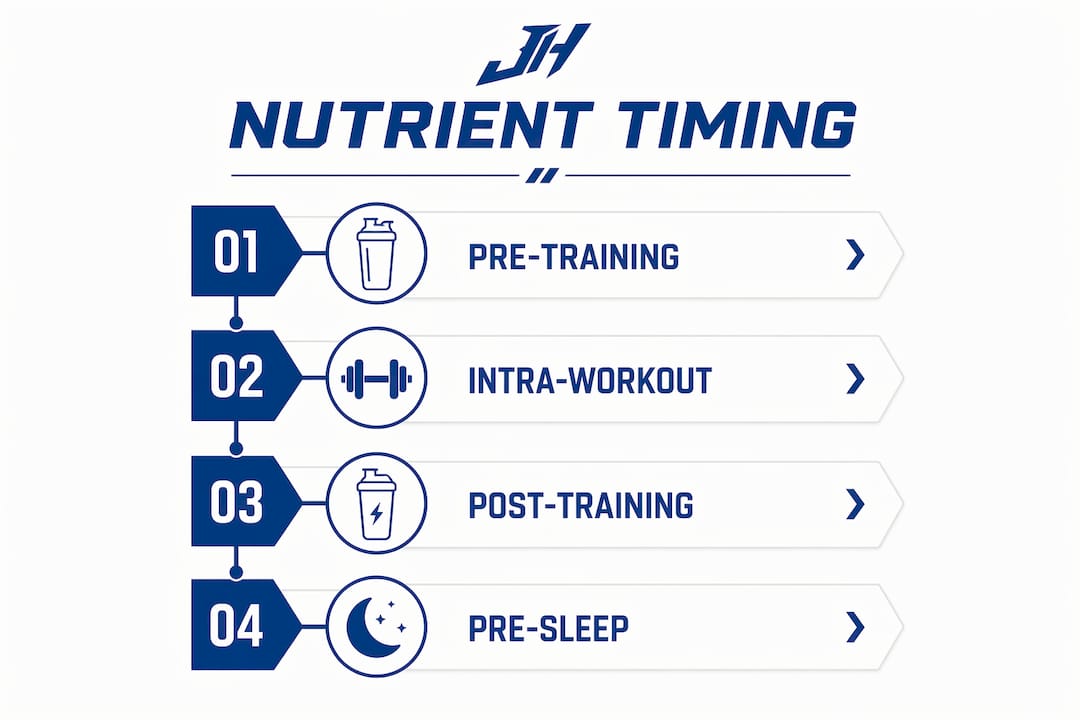
Pre-training nutrition
Eat a meal containing 20–40g of protein plus a moderate amount of carbohydrates 1–3 hours before training. This primes muscle protein synthesis and tops off glycogen stores. A meal of Greek yogurt, oats, and a banana fits this window well. Eating too close to training, within 30 minutes, increases the risk of GI discomfort without adding meaningful fuel.
Intra-workout fueling
For sessions lasting more than 60 minutes, carbohydrate intake of 30–60g per hour maintains blood glucose and delays fatigue. The source matters less than the dose. Bananas, energy gels, and sports drinks all deliver comparable results at equivalent carbohydrate amounts. Carry whatever your stomach tolerates best.
Post-training recovery
The post-workout window is real, but it is not as narrow as old-school gym culture suggested. Delays beyond 2 hours post-exercise slow recovery significantly. A target of 60g of carbohydrates with 20g of protein after training promotes glycogen replenishment and muscle repair in a roughly 3:1 carb-to-protein ratio. Rice with grilled chicken or a smoothie with fruit and whey protein both hit this target efficiently.
Pre-sleep protein
Consuming 30–40g of slow-digesting protein before sleep significantly increases overnight muscle protein synthesis. Casein protein and cottage cheese are the most studied sources. This strategy is particularly effective for athletes in high-volume training blocks where recovery demand is elevated.
Circadian timing of carbohydrates
Eating the bulk of carbohydrates before 3 p.m. leverages peak insulin sensitivity, improving glycogen storage and reducing fat gain. Circadian biology shows that the same meal eaten at 7 a.m. produces a better metabolic response than the same meal at 9 p.m. Front-load your carbs.
| Timing Window | Target Nutrients | Practical Example |
|---|---|---|
| 1–3 hours pre-training | 20–40g protein + moderate carbs | Oats, Greek yogurt, banana |
| During training (>60 min) | 30–60g carbs per hour | Banana, gel, sports drink |
| Within 2 hours post-training | 60g carbs + 20g protein | Rice, chicken, or fruit smoothie with whey |
| 30 min before sleep | 30–40g slow-digesting protein | Cottage cheese or casein shake |
Pro Tip: Prep your post-workout meal before you train. When you finish a hard session, decision fatigue is real. Having food ready removes the 2-hour window as a variable.
Which foods and supplements are most effective for athletic performance in 2026?
The best foods for sports performance are whole, minimally processed, and nutrient-dense. Supplements fill specific gaps. They do not replace food quality.
Nitrate-rich foods are one of the most evidence-backed performance tools available. Consuming 11.2 mmol of nitrates improved high-intensity cycling by 15.7% in controlled trials. Beetroot juice and whole beets are the most concentrated sources. Arugula and spinach also deliver meaningful nitrate loads. Endurance athletes benefit most, but the oxygen-efficiency gains apply across sport types.
High-leucine protein sources trigger muscle protein synthesis more effectively than low-leucine alternatives. Leucine content is more critical than absorption speed. Whey protein, eggs, and cottage cheese rank highest for leucine density. Whole food sources with proper timing work as well as protein powders for most athletes.
- Beetroot and arugula: nitrate-rich, improve oxygen efficiency and endurance
- Whey protein and eggs: high leucine content, directly stimulate muscle protein synthesis
- Cottage cheese: slow-digesting casein protein, ideal pre-sleep recovery source
- Turmeric: anti-inflammatory compound curcumin supports joint and tissue recovery
- Pineapple: contains bromelain, an enzyme that reduces post-exercise muscle soreness
- Bell peppers: over 200% daily vitamin C per serving, supports collagen and immune function
On supplements: the market is saturated with products carrying opaque labels and inflated claims. Recovery nutrition treated with the same seriousness as pre-training fueling delivers more consistent gains than any supplement stack. Creatine monohydrate and caffeine remain the two most research-supported ergogenic aids. Everything else requires scrutiny. If a label does not clearly state the dose of each active ingredient, skip it.
How do you personalize your nutrition strategy for your sport and goals?
No single meal plan works for every athlete. The everyday athlete training for a 5K has different fuel requirements than a collegiate basketball player or a powerlifter in a strength block. Personalization starts with understanding your sport’s energy demands, then layering in timing and food quality.
Sweat rate varies widely between athletes and conditions. Weigh yourself before and after training in different environments to build a personal hydration profile. A runner losing 2 lbs per hour in summer heat needs a completely different fluid and sodium plan than the same runner training indoors in winter.
Competition days and training days require different nutrition approaches. On competition days, prioritize familiar foods and proven timing. Experimenting with new foods or supplements on race day is a consistent source of preventable performance loss. Save new strategies for training blocks.
Sports nutrition is also shifting toward metabolomics and AI-guided personalized strategies beyond generic meal plans. These tools can identify individual metabolic responses to specific foods and training loads. Use them as data inputs, not as replacements for foundational nutrition habits.
| Athlete Type | Primary Fuel Need | Key Timing Priority |
|---|---|---|
| Endurance (>60 min sessions) | High carbohydrate, moderate protein | Intra-workout carbs + post-session recovery |
| Strength and power | High protein, moderate carbs | Pre and post-training protein windows |
| Team sport (intermittent) | Balanced carbs and protein | Pre-game carb load + post-game recovery |
| Recreational fitness | Moderate across all macros | Consistent daily intake over precise timing |
The most common pitfall across all athlete types is delayed post-workout nutrition. Athletes who train hard and then wait 3–4 hours to eat are leaving measurable recovery gains behind. The second most common mistake is treating all calories as equal. Food quality, not just quantity, determines how well your body repairs and adapts.
Pro Tip: Consistency across training blocks matters more than any single perfect meal. Build repeatable habits around your training schedule and adjust from there.
Key takeaways
Eating for athletic performance in 2026 requires consistent nutrient timing, quality food choices, and hydration strategies matched to your specific sport and training load.
| Point | Details |
|---|---|
| Protein spread matters | Eat 1.6–2.2 g of protein per kg of bodyweight daily across four or more meals. |
| Timing drives recovery | Consume 60g carbs and 20g protein within 2 hours post-training to restore glycogen and repair muscle. |
| Pre-sleep protein works | 30–40g of casein or cottage cheese before bed measurably increases overnight muscle repair. |
| Front-load carbohydrates | Eat most daily carbs before 3 p.m. to align with peak insulin sensitivity and improve body composition. |
| Food quality over supplements | Nitrate-rich foods, high-leucine proteins, and anti-inflammatory whole foods outperform most supplement stacks. |
What I’ve learned from years of eating for performance
The biggest mistake I see athletes make is treating nutrition as an afterthought. They train hard, they recover poorly, and they blame their program. The program is rarely the problem.
Nutrient timing changed how I think about food entirely. Once I started treating the post-workout window as seriously as the training session itself, my recovery shifted in ways I could feel within two weeks. Not because I added anything expensive. Because I stopped skipping the basics.
I am also skeptical of anything that promises performance gains without disclosing exact doses. The supplement industry is full of proprietary blends that hide how little of each ingredient is actually in the product. Beetroot, eggs, cottage cheese, and turmeric cost less than most pre-workout powders and have more research behind them.
The circadian nutrition angle is the piece most athletes are still ignoring. Front-loading carbohydrates before mid-afternoon is not a fad. It is biology. Your insulin sensitivity is highest in the morning. Use that window. Eat your rice and oats early, not at 10 p.m. after a late training session.
Building a performance lifestyle is not about perfection. It is about stacking consistent, science-backed habits until they become automatic. Nutrition is the foundation. Get it right and everything else gets easier.
— Jason
Teamjhall gear built for athletes who take performance seriously
Athletes who train hard need gear that keeps up. Teamjhall designs premium athletic apparel for competitors, creators, and everyday athletes who refuse to cut corners, whether that is in the kitchen or on the field.

Every piece in the Teamjhall collection is built for movement, comfort, and the kind of confidence that carries from training into real life. From the TJH Men’s Performance Tee engineered for hard sessions to the TJH Women’s Athletic Tank designed for full range of motion, the line covers what athletes actually need. Shop the full collection at Teamjhall and wear what the work demands.
FAQ
What is the best protein intake for athletic performance?
Athletes need 1.6–2.2 g of protein per kg of bodyweight daily, spread across at least four meals. High-leucine sources like whey, eggs, and cottage cheese trigger muscle protein synthesis most effectively.
How soon after a workout should I eat?
Eat within 2 hours of finishing training. A target of 60g of carbohydrates with 20g of protein restores glycogen and supports muscle repair. Waiting longer than 2 hours measurably slows recovery.
Does beetroot juice actually improve performance?
Yes. Consuming 11.2 mmol of dietary nitrates from beetroot improved high-intensity cycling performance by 15.7% in controlled trials. The mechanism is improved oxygen efficiency in working muscles.
What should I eat before sleep for muscle recovery?
Consume 30–40g of slow-digesting protein, such as casein or cottage cheese, within 30 minutes of sleep. Multiple randomized controlled trials confirm this increases overnight muscle protein synthesis.
How do I adjust my nutrition for competition days?
Stick to familiar foods and proven timing on competition days. Front-load carbohydrates in the morning, eat a pre-event meal 1–3 hours before, and avoid any new foods or supplements you have not tested in training.