

The Role of Clothing in Self-Expression: 2026 Guide
Clothing is a non-verbal language that communicates your identity, values, and personality before you speak a single word. The role of clothing in self-expression goes far beyond aesthetics. Research confirms that people form impressions from clothing-based traits within 100 to 130 milliseconds, even when told not to judge by appearance. That speed makes your wardrobe one of the most powerful communication tools you own. Understanding how this works, and how to use it deliberately, changes the way you dress forever.
How clothing communicates personality and social identity
Clothing functions as a symbolic language. A study of 300 undergraduates across diverse geopolitical zones confirmed that clothing expresses cultural belonging, social status, and personal values in ways that are both conscious and unconscious. That means every outfit you wear sends a message, whether you intend it or not.
Sociologists describe clothing as “social skin,” a mediating layer between your inner identity and the world’s perception of you. Charles Cooley’s looking-glass self concept explains this well. You form your self-image partly by imagining how others see you. Your clothing choices shape that reflection directly.

Group identity is another layer. Uniforms, team colors, and style codes all signal belonging. A basketball player wearing a team jersey, a skater in streetwear, or a professional in a tailored blazer each communicates group membership instantly. French sociologist Pierre Bourdieu called this cultural capital, the idea that your taste and style signal your social position and values to others.
Here is how clothing communicates across different dimensions:
- Personality: Bold colors and graphic prints signal confidence and creativity. Minimalist, neutral tones often signal precision and calm.
- Cultural identity: Traditional garments, regional textiles, and heritage patterns communicate ethnic and cultural pride.
- Social belonging: Matching team apparel, dress codes, and shared style signals reinforce group membership.
- Status and authority: Tailored fits, quality fabrics, and branded pieces communicate professionalism and credibility.
| Signal type | What it communicates | Example |
|---|---|---|
| Color choice | Mood, energy, confidence level | Red signals boldness; navy signals authority |
| Fit and silhouette | Attention to detail, self-awareness | Structured fit reads as intentional and polished |
| Fabric quality | Status, care, and seriousness | Premium materials signal investment in self |
| Style consistency | Identity clarity and reliability | Cohesive outfits read as confident and self-aware |
What is enclothed cognition and how does it affect you?
Enclothed cognition is the psychological phenomenon where the clothes you wear directly influence your mindset, focus, and behavior. The term was formalized in academic research and describes how wearing clothing associated with a specific role primes you to think and act in alignment with that role. Wearing a lab coat makes people more attentive. Wearing athletic gear shifts your mental state toward performance.
2026 research on enclothed cognition confirms that apparel does not just change how others see you. It changes how you see yourself. That shift in self-perception directly affects your confidence, focus, and output. This is why athletes, executives, and performers all pay close attention to what they wear before high-stakes moments.
The impact of clothing on self-image follows a clear pattern:
- You choose clothing with intention. You select a piece that aligns with a role or identity you want to inhabit, whether that is athlete, leader, or creative.
- The clothing primes your mindset. Wearing the piece activates the mental associations tied to that role, sharpening your focus and confidence.
- Your behavior shifts. You carry yourself differently, communicate more assertively, and perform closer to your potential.
- Others respond to the signal. Your changed posture and energy invite responses that reinforce the identity you projected.
Pro Tip: Before a competition, presentation, or important meeting, choose your outfit with the same intention you bring to your preparation. The right gear is not vanity. It is part of your performance ritual.
Enclothed cognition effects are strongest when clothing is intentional and high quality. Cheap or generic apparel can undermine the identity signal you are trying to send. Quality matters not just for durability, but for the psychological confidence it generates.
Common style pitfalls and how to build a coherent personal style
Personal style is a measurable communicative resource. Clarity and consistency determine whether your self-expression lands or gets lost. Most people do not fail at style because of bad taste. They fail because their signals are mixed, incomplete, or contradictory.
The three style signal mismatches
Style mismatches fall into three categories. Overcoding happens when you layer too many competing signals at once, such as mixing multiple bold logos, clashing subculture references, and conflicting color stories in a single outfit. The result is visual noise. Undercoding is the opposite. Your outfit is so neutral and generic that it sends no signal at all, leaving others with no impression of who you are. Identity-signal conflict occurs when your clothing contradicts your stated identity. A leader who dresses carelessly, or an athlete who wears ill-fitting gear, sends a message that conflicts with the role they claim.
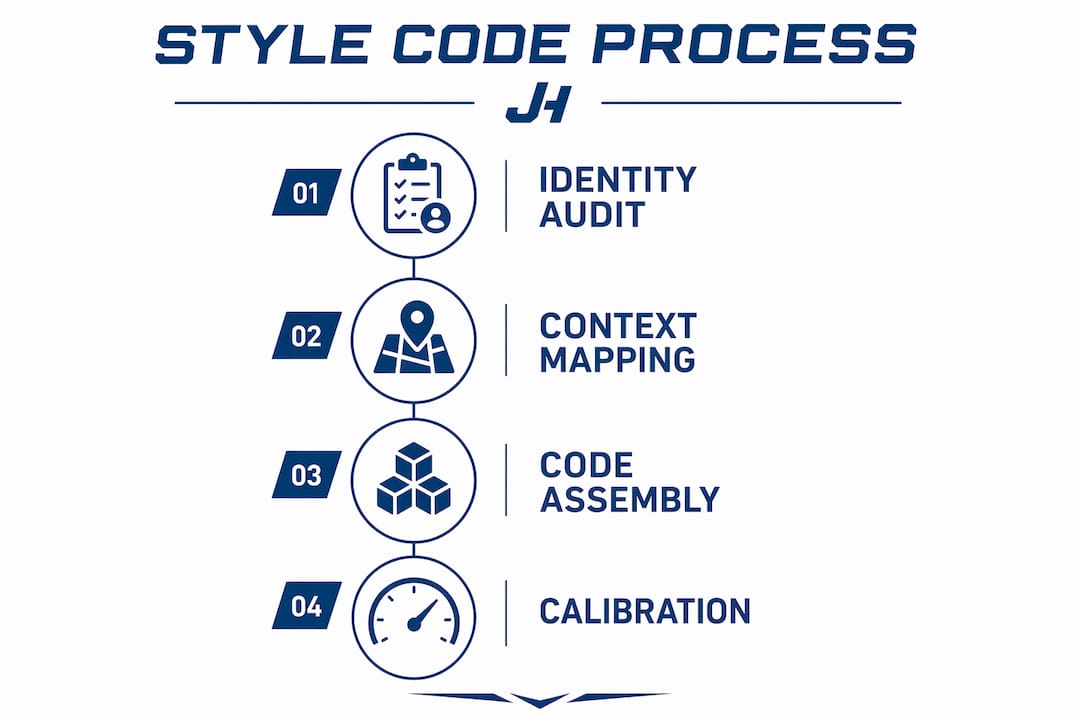
The four-stage style code process
Building a coherent personal style follows a four-stage process used by style consultants and image professionals.
Stage 1: Identity Audit. Write down three to five words that describe who you are and who you want to be perceived as. Athlete. Creator. Leader. Loyal. Confident. These become your style anchors.
Stage 2: Context Mapping. List the environments you move through daily, training, work, social settings, and creative spaces. Each context has its own dress code expectations. Your style needs to work across all of them without losing its core signal.
Stage 3: Code Assembly. Select clothing pieces that carry your identity anchors into each context. A performance tee with clean design works in the gym and in a casual meeting. A structured hoodie bridges training and street. Build a wardrobe where every piece earns its place.
Stage 4: Calibration. Wear your assembled style in real contexts and observe the feedback. Do people respond to you the way you intend? Does your clothing feel like you, or like a costume? Adjust until the signal is clear and consistent.
Pro Tip: Run your wardrobe through the identity audit test. If a piece does not connect to at least one of your identity anchors, it is creating noise, not signal.
How to apply clothing as self-expression in daily life
Authentic self-expression through clothing is not about owning the most expensive pieces or following every trend. It is about balancing individuality with social context so your style feels both true to you and readable to others.
Start with intention. Before you get dressed, ask what role you are stepping into and what you want to communicate. That single habit shifts clothing from passive habit to active choice.
Here are the core principles that make daily self-expression through clothing work:
- Color with purpose. Choose colors that align with your energy and the impression you want to create. Wear bold colors when you want to project confidence. Use neutral tones when you want your actions to speak louder than your appearance.
- Fit above all else. Clothing that fits well communicates self-awareness and attention to detail. Poor fit undermines every other signal, regardless of brand or price.
- Texture and layering. Mixing textures adds depth and personality to an outfit. A structured outer layer over a soft base signals both strength and approachability.
- Accessories as punctuation. A watch, a cap, or a specific shoe style acts like punctuation in a sentence. It sharpens the message your outfit is already sending.
- Evolve with intention. Your identity grows. Your style should grow with it. Revisit your identity audit every six months and update your wardrobe to reflect who you are becoming, not just who you were.
The pursuit of style balance means expressing individuality while reinforcing social belonging through symbolic cues in dress. You do not have to choose between fitting in and standing out. The most effective personal styles do both at once.
Knowing how to build a performance lifestyle also means understanding that your clothing is part of the identity you project every day, not just in the gym or on the field.
Key Takeaways
Clothing is your most immediate and consistent form of non-verbal communication, and clarity in your style signals matters more than aesthetics alone.
| Point | Details |
|---|---|
| First impressions are instant | People read clothing-based traits within 100–130 milliseconds, making your outfit your first statement. |
| Enclothed cognition is real | Intentional, quality clothing primes your mindset and directly improves confidence and performance. |
| Signal clarity beats aesthetics | Overcoding, undercoding, and identity-signal conflict all dilute your self-expression message. |
| Use the four-stage process | Identity Audit, Context Mapping, Code Assembly, and Calibration build a style that communicates clearly. |
| Evolve your style deliberately | Revisit your identity anchors regularly so your wardrobe reflects who you are becoming. |
Why I think most people are using clothing wrong
Most people treat getting dressed as a daily chore. They reach for whatever is clean, whatever is comfortable, whatever requires the least thought. I get it. But that mindset costs you more than you realize.
Every time you dress without intention, you hand over control of your first impression to chance. You let the world assign you an identity instead of claiming one. I have watched people walk into rooms and immediately command attention, not because of what they said, but because of how they showed up. Their clothing was doing work before they opened their mouths.
The athletic mindset applies here. Competitors do not leave their gear to chance. They prepare every detail because they know preparation signals seriousness. Your clothing is part of that preparation, whether you are competing on a field or walking into a job interview.
The uncomfortable truth is that most style mistakes are not about taste. They are about inconsistency. People wear pieces that contradict each other, that contradict their values, or that belong to an identity they have already outgrown. The fix is not buying more clothes. It is getting clear on who you are and dressing from that clarity outward.
Experiment freely, but always come back to your anchors. Style should feel like freedom, not a uniform. When your clothing reflects your actual values, confidence, and creativity, getting dressed stops being a chore. It becomes one of the most powerful habits of your day.
— Jason
Teamjhall apparel built for people who dress with purpose
Teamjhall designs premium athletic apparel for competitors, creators, leaders, and everyday athletes who understand that what you wear is part of how you perform and who you are.
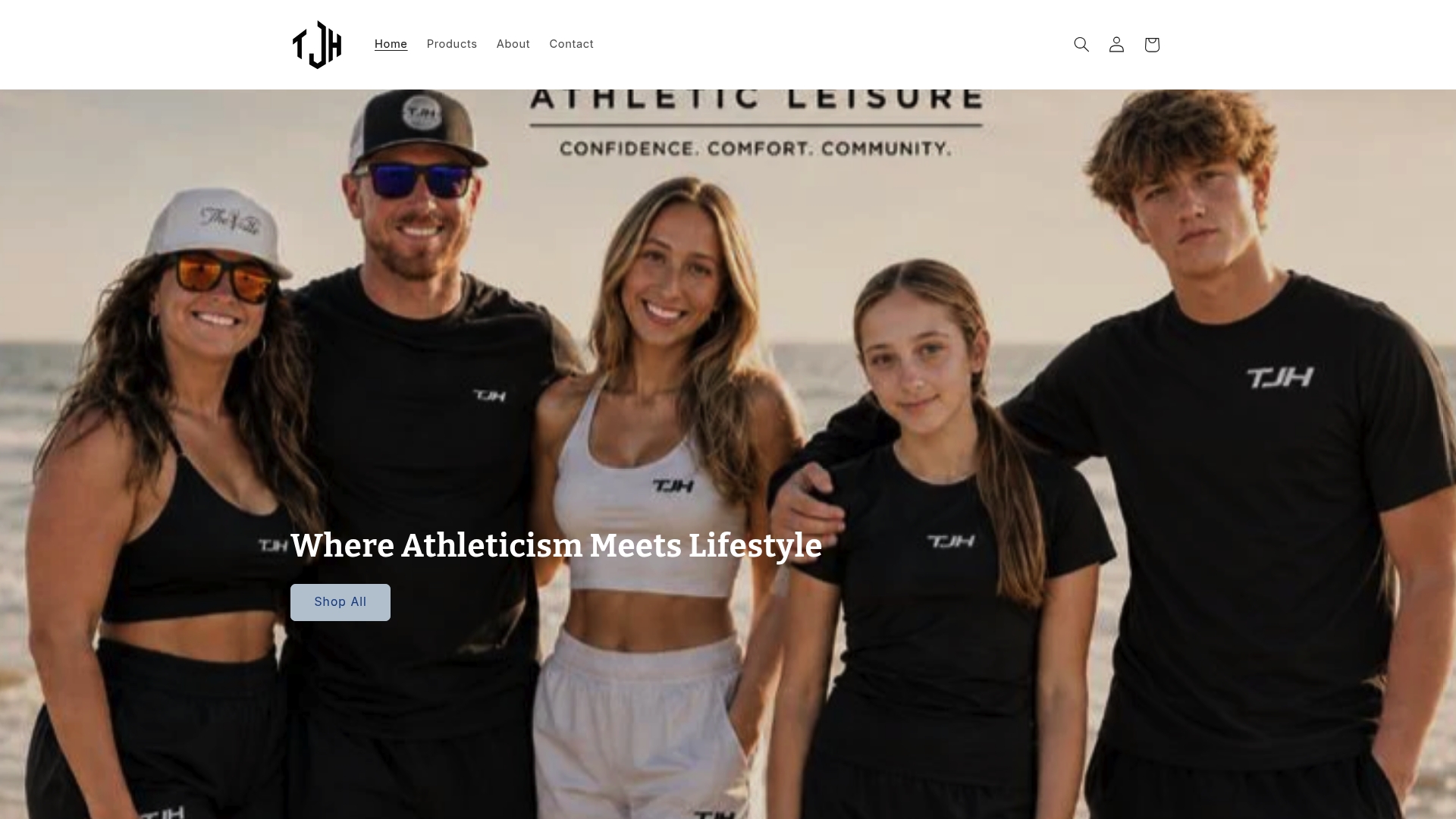
Every piece in the Teamjhall collection is built with the quality and intentionality that enclothed cognition research demands. Generic gear sends a generic signal. Teamjhall apparel is designed to carry your identity into every context, from training to everyday life. The UA Ladies Athletic Tee and the TJH Men’s Performance Tee are built for people who show up with intention. Browse the full collection at Teamjhall and find pieces that say exactly what you mean.
FAQ
What is the role of clothing in self-expression?
Clothing serves as a non-verbal language that communicates your personality, values, and identity to others. Research shows people form clothing-based impressions within 100 to 130 milliseconds, making your wardrobe one of your most immediate communication tools.
What is enclothed cognition?
Enclothed cognition is the psychological effect where wearing clothing associated with a specific role primes your mindset and behavior to match that role. Wearing intentional, quality apparel directly improves confidence and performance.
How does clothing affect self-esteem?
Clothing that aligns with your identity and fits well reinforces a positive self-image. The impact of clothing on self-image is strongest when your choices are intentional and the quality of the garment supports the signal you want to send.
What are the most common personal style mistakes?
The three main style signal mismatches are overcoding, which is layering too many competing signals; undercoding, which is dressing so neutrally you send no signal; and identity-signal conflict, where your clothing contradicts your stated identity.
How do I start building a personal style that reflects who I am?
Start with an Identity Audit. Write down three to five words that describe who you are and who you want to be perceived as, then build your wardrobe around pieces that carry those signals clearly across every context you move through.