

How to Dress for Confidence Every Day
Dressing for confidence every day is a psychological practice, not a personality trait. Clothing shapes your mindset through a well-documented principle called enclothed cognition, where the symbolic meaning of what you wear influences focus, mood, and performance. Your wardrobe is a daily tool for self-expression, emotional regulation, and identity reinforcement. When you align what you wear with who you are, you reduce anxiety and build the kind of self-esteem that holds up under pressure. This guide gives you the psychology, the habits, and the practical steps to make confident dressing a consistent part of your life.
How does fit and wardrobe coherence build daily confidence?
Fit is the single most powerful factor in how clothing affects your confidence. A well-fitted garment communicates precision and self-assurance regardless of its price tag. Social psychology research confirms that fit outranks cost when it comes to perceived competence. A $30 shirt that fits your body well reads more confidently than a $150 one that doesn’t.
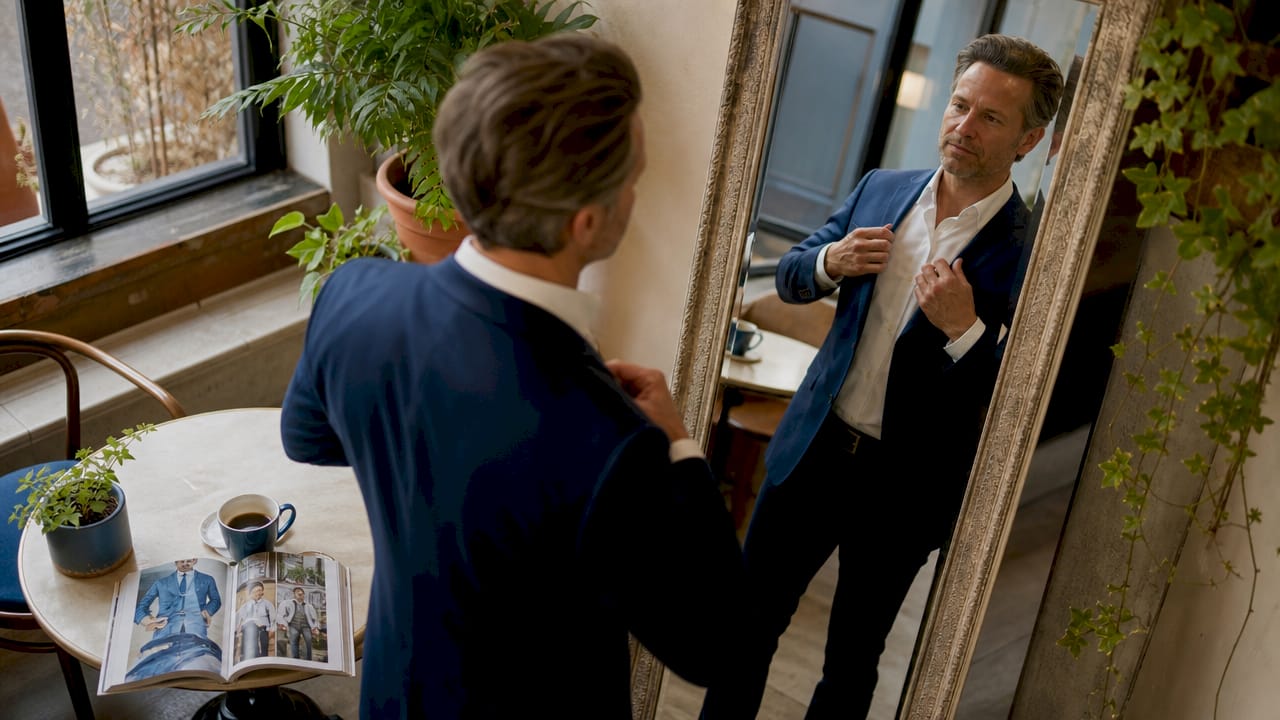
Wardrobe coherence means your pieces belong together. They share a color palette, a style direction, and a connection to your personal identity. When your closet is coherent, getting dressed becomes easy. When it isn’t, you face decision fatigue from an incoherent wardrobe that drains your mental energy before the day even starts.
The goal is not to own more clothes. The goal is to own the right clothes for your actual life. That means removing items that don’t fit, don’t reflect who you are, or only exist because they were on sale. Every piece that stays should earn its place.
- Fit first: Before buying anything, try it on and move in it. If it pulls, gaps, or requires constant adjustment, it will undermine your confidence every time you wear it.
- Color palette: Choose 3–4 base colors that work together. This makes mixing and matching effortless and gives your wardrobe a visual identity.
- Style identity: Know your aesthetic. Whether it’s athletic, minimal, or expressive, your wardrobe should reflect one consistent direction.
- Meaningful pieces: Invest in items that carry personal significance, not just trend appeal. Clothes tied to your values feel better to wear.
Pro Tip: Pull out every item in your closet and ask one question: “Does this fit who I am right now?” If the answer is no, remove it. A smaller, coherent wardrobe builds more confidence than a full closet of mismatched options.
What daily preparation habits support dressing confidently?
Confident dressing starts the night before. Nightly wardrobe auditing transforms getting dressed from a chore into a practice of self-respect. When you prepare your outfit in advance, you remove the stress of morning decisions and replace it with intention.
The 10-minute evening routine is one of the most effective habits you can build. It takes less time than scrolling your phone before bed and delivers a measurable return on your morning confidence. Here is how to build it:
- Check your calendar. Know what you are doing tomorrow. A workout, a meeting, and a casual day out all call for different outfits.
- Check the weather. Nothing kills a confident outfit faster than being underdressed in the cold or overdressed in the heat.
- Lay out the full outfit. This means shoes, accessories, and any layers. Seeing the complete look the night before lets you make adjustments without pressure.
- Inspect your garments. Check for wrinkles, missing buttons, or stains. A polished garment signals self-respect to everyone, including yourself.
- Confirm it feels right. If something feels off about the outfit, swap it now. Trust that instinct before morning, not during it.
Pro Tip: Build a rotation of 5–7 “power outfits” that you know work for your most common situations. These are your go-to combinations for high-stakes days, low-energy mornings, and everything in between.
| Situation | Outfit strategy | Time to prepare |
|---|---|---|
| High-stakes day | Full outfit laid out the night before | 10 minutes |
| Low-energy morning | Pre-selected power outfit from rotation | 2 minutes |
| Casual day | Cohesive basics in your core color palette | 5 minutes |
| Active day | Performance wear matched to activity | 5 minutes |
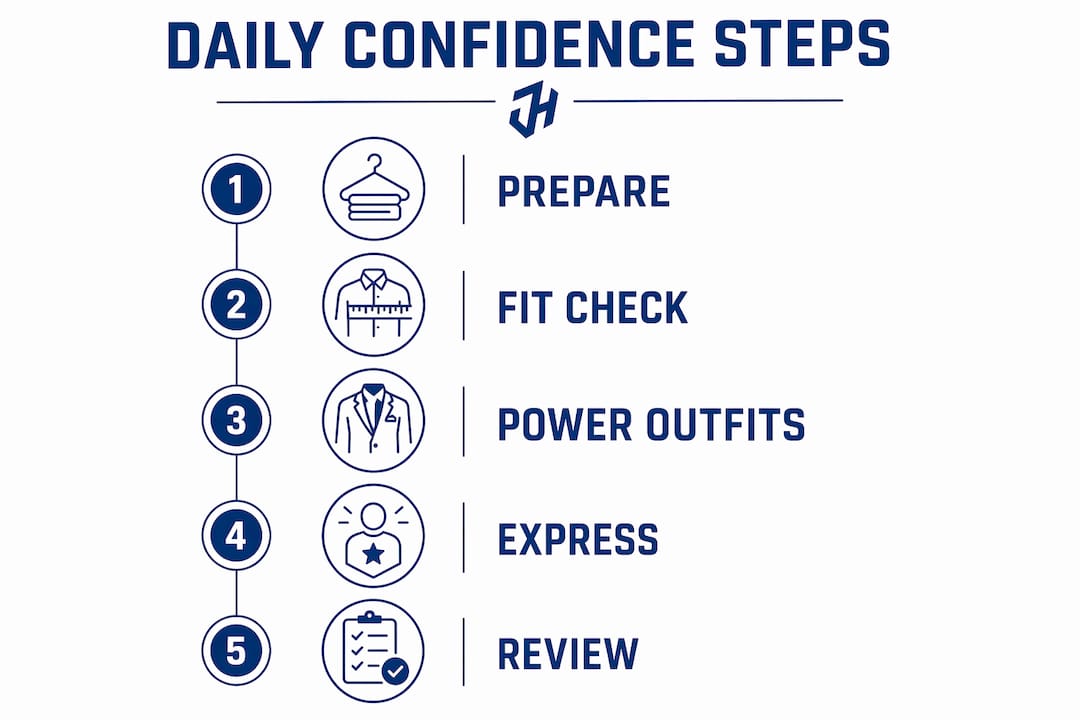
Preparation rituals create what researchers describe as a “sanctuary of self-respect.” That phrase sounds abstract, but the effect is real. When your environment and your garments are ready, your brain shifts from reactive to intentional. That shift is where daily confidence lives.
How can color, texture, and personal expression boost everyday confidence?
Dopamine dressing is the practice of choosing clothes for how they make you feel, not for external approval. Dopamine dressing using color and texture supports emotional resilience and self-esteem by creating a positive feedback loop between your appearance and your mood. You wear something that feels good, you feel better, and that feeling reinforces the habit.
Color psychology is a real and practical tool. Bold colors like red and orange signal energy and presence. Blues and greens create calm and focus. Neutrals like gray, white, and navy project reliability. You do not need to overhaul your wardrobe around color theory. Simply notice which colors make you feel alive and wear them more often.
Texture adds a dimension that color alone cannot. Soft, comfortable fabrics reduce physical distraction throughout the day. Structured fabrics like a fitted performance tee or a tailored jacket create a sense of readiness. Aligning clothing choices with personal values reduces anxiety and increases self-acceptance, which is the deeper goal behind every style decision.
- Wear your “feel-good” colors more often. These are the shades that generate compliments and, more importantly, make you feel present and capable.
- Choose comfort-forward textures. If a fabric irritates your skin or restricts movement, it will pull your attention away from what matters.
- Use accessories as anchors. A watch, a cap, or a bracelet tied to a memory or a value can shift your mindset before you even leave the house.
- Dress for the person you are becoming. Clothing is a cognitive strategy that closes the gap between who you are and how you appear. Use it deliberately.
What are common pitfalls in dressing confidently every day?
The biggest mistake people make is waiting to feel confident before dressing confidently. Confidence does not precede the outfit. The outfit helps create the confidence. Dress for the person you are becoming, not the mood you woke up with.
Wearing uncomfortable clothing is the second most common mistake. If you spend the day pulling at your waistband, adjusting your collar, or shifting in your shoes, your attention is on your clothes instead of your life. Discomfort is a confidence leak. Fix it by prioritizing fit and fabric over appearance alone.
“Avoid common pitfalls like all-or-nothing dressing and wearing ill-fitting garments. Authentic confidence comes from clothes that work for your body and your life, not from chasing a perfect look that only exists in theory.”
The all-or-nothing mindset is equally damaging. People either dress with full intention or give up entirely on low-energy days. The fix is the 1% rule in style, which means making one small intentional upgrade each day instead of attempting a complete overhaul. Swap yesterday’s worn-out tee for a clean one. Add a belt. Choose the shoes that fit better. Small steps compound.
- Stop wearing clothes that don’t fit. Donate or alter them. Keeping them “for later” keeps you stuck.
- Build a low-effort backup outfit. On hard days, you need a go-to that requires zero decisions but still looks intentional.
- Separate dressing from mood. Treat getting dressed like brushing your teeth. It happens regardless of how you feel.
- Audit your wardrobe quarterly. What worked three months ago may not reflect who you are now. Regular audits keep your wardrobe aligned with your current identity.
Small, consistent style improvements can increase confidence by 37% over a year. That figure comes from applying the atomic habits principle to clothing: a 1% daily intentional style improvement compounds into a significant annual advantage. The math is less important than the mindset. Small and consistent beats big and sporadic every time.
Key Takeaways
Dressing for confidence every day works because fit, preparation, and personal expression combine to reinforce your identity and reduce the mental friction that undermines self-esteem.
| Point | Details |
|---|---|
| Fit over price | A well-fitted affordable garment builds more confidence than an expensive ill-fitting one. |
| Nightly preparation | A 10-minute evening routine eliminates morning stress and sets an intentional tone for the day. |
| Dopamine dressing | Choosing clothes for emotional effect, not approval, creates a positive feedback loop between mood and appearance. |
| The 1% rule | Small daily style improvements compound into a 37% confidence gain over a year. |
| Coherent wardrobe | Removing mismatched items reduces decision fatigue and makes confident dressing effortless. |
What I’ve learned from treating dressing as a daily discipline
Most people treat getting dressed as an afterthought. I used to do the same. I would grab whatever was clean and call it done. The problem was not the clothes. It was the signal I was sending myself before the day even started.
The shift happened when I started treating my wardrobe the way I treat training. You do not show up to a workout without a plan and expect your best performance. The same logic applies to how you dress. When I started laying out my outfit the night before and building a small rotation of pieces I actually felt good in, my mornings changed. Less friction. More focus.
The insight that stuck with me is this: confidence grows from dressing in a coherent personal style that belongs to you, not from chasing external validation. That means your wardrobe should reflect your values, your goals, and the version of yourself you are working toward. For me, that connection between clothing and identity is what makes the practice sustainable. It is not about looking good for other people. It is about showing up for yourself, every single day.
The readers who get the most out of this are the ones who stop waiting for a big wardrobe overhaul and start making one intentional choice today. Wear the shirt that fits. Lay out tomorrow’s outfit tonight. Those small acts of self-respect add up faster than you think.
— Jason
Build your daily confidence wardrobe with Teamjhall
Teamjhall designs performance apparel for people who take their daily standard seriously. Every piece is built around fit, comfort, and a style that works across active and everyday settings.

The TJH Men’s Performance Tee and the UA Ladies Athletic Tee are built to move with you and look intentional doing it. These are the kinds of pieces that anchor a daily confidence wardrobe because they fit well, feel good, and hold up. When your clothes perform, you perform. Browse the full Teamjhall collection and find the pieces that belong in your rotation.
FAQ
What is enclothed cognition?
Enclothed cognition is the psychological process by which the symbolic meaning of clothing influences the wearer’s mindset, focus, and behavior. Wearing a garment associated with competence or strength can trigger those qualities in how you think and act.
How does fit affect confidence in clothing?
A well-fitted garment communicates self-assurance regardless of its cost. Social psychology research shows that fit outranks price for perceived competence, making proper fit the highest-return investment in your wardrobe.
What is dopamine dressing?
Dopamine dressing is the practice of choosing clothes based on how they make you feel emotionally, rather than for external approval or trend alignment. It uses color, texture, and personal meaning to support mood and self-esteem throughout the day.
How long does it take to build a confident daily wardrobe?
Building a coherent, confidence-supporting wardrobe is a gradual process. Applying the 1% rule, which means one small intentional improvement per day, can yield a measurable confidence increase over the course of a year without requiring a complete overhaul.
Why do preparation habits matter for dressing confidently?
Nightly preparation removes the decision fatigue and morning stress that undermine confident dressing. A 10-minute evening routine that includes outfit selection, garment inspection, and calendar review sets an intentional tone that carries through the entire day.