

UPF Workout Clothing: What to Buy and Why It Matters
Yes, UPF workout clothing is worth buying if you train outdoors. The Skin Cancer Foundation recommends UPF 30 as the minimum for meaningful sun protection, and UPF 50+ for prolonged exposure. Runners, cyclists, hikers, and paddle-sport athletes all benefit from purpose-built UV protective activewear that blocks radiation without sacrificing breathability. Teamjhall’s performance pieces, including the TJH Performance Shirt, are built for exactly this kind of active, outdoor use.
Key Takeaways
| Point | Details |
|---|---|
| Choose UPF 30+ as your floor | UPF 30 blocks a very high percentage of UV; use UPF 50+ for prolonged or high-altitude exposure. |
| Fabric construction drives protection | Tight polyester or nylon weaves outperform untreated cotton; wet or stretched fabric loses UPF. |
| Care preserves performance | Wash cold, skip bleach and fabric softener, and replace visibly worn pieces every 12–18 months. |
| UPF covers only what it covers | Apply broad-spectrum sunscreen on exposed skin whenever the UV index reaches 3 or above. |
| Teamjhall for outdoor training | The TJH Performance Shirt and UA Ladies Athletic Tee offer coverage and performance fabric for active outdoor use. |
Table of Contents
- What does UPF mean, and how is it different from SPF?
- What features should you look for in UPF workout clothing?
- Which fabrics and technologies actually deliver UPF performance?
- How do you choose UPF workout clothing for your specific activity?
- How do you care for UPF workout clothing to preserve its protection?
- What do people get wrong about UPF clothing?
- Teamjhall UPF-ready performance pieces worth considering
- What price range should you expect, and what’s worth paying for?
- Why UPF workout clothing is worth the investment
- Teamjhall performance gear for outdoor training
- Sources
What does UPF mean, and how is it different from SPF?
UPF measures how much UVA and UVB radiation passes through a fabric. SPF, by contrast, rates how long a sunscreen delays skin reddening from UVB only. UPF is a direct measure of radiation blockage by the garment itself, which makes it the more complete standard for clothing.
The math is straightforward. A garment rated UPF 50 allows roughly 1/50th of UV radiation through, blocking about 98% of UV rays.
| UPF Rating | UV Blocked | Protection Category |
|---|---|---|
| — | about 98% | Minimum |
| UPF 30 | about 98% | Good |
| UPF 50 | ~98% | Excellent |
| UPF 50+ | >98% | Excellent |
Source: ARPANSA — Australian sun protective clothing standard
One caveat worth knowing: lab UPF ratings are measured on dry, unstretched fabric. Wet fabric, stretched fabric, and worn fabric all transmit more UV than the label suggests. Standards like AS/NZS 4399 and BS EN 13758 define how testing is conducted, but real-world conditions are always harder on a garment than a lab setup.
What features should you look for in UPF workout clothing?
Start with the rating on the label, then look at construction. According to Cleveland Clinic, higher thread counts and tighter weaves consistently correlate with better UV protection. Cosmetic claims like “sun-ready” or “UV-aware” without a numeric UPF rating mean very little.
- UPF rating on the label: A numeric rating (UPF 30, 40, 50+) from a tested garment. Look for mention of AS/NZS 4399, BS EN 13758, or the Skin Cancer Foundation Seal of Recommendation.
- Tight weave or knit: Denser construction leaves less space for UV to pass through.
- Fiber content: Polyester and nylon blends outperform untreated cotton for UPF. Some fabrics use chemical UV absorbers as a finish.
- Coverage: Long sleeves, high collars, and longer hems protect more skin. More coverage means less sunscreen needed.
- Moisture-wicking and quick-dry: Critical for comfort during high-intensity outdoor sessions.
- Venting and breathability: Mesh panels, laser perforations, or open-back designs help regulate heat without sacrificing coverage.
- Flatlock seams and mobility: Seams that lie flat reduce chafing during repetitive movement.
- Thumbholes and zip-neck collars: These keep sleeves in place and protect the neck without adding bulk.
Pro Tip: If a product page doesn’t list a numeric UPF rating or reference a testing standard, treat the sun-protection claim as marketing copy, not a specification.
Wirecutter’s testing makes a point that’s easy to overlook: the best sun-protective clothing is the clothing you’ll actually wear. Comfort and style aren’t secondary to protection. They’re what make protection consistent.
Which fabrics and technologies actually deliver UPF performance?
Tightly woven synthetic fibers are the foundation. Polyester and nylon provide good inherent UV protection because their molecular structure absorbs UV radiation, and they’re naturally quick-drying. Peer-reviewed research confirms that engineered fabrics and coatings can maintain high UPF while staying lightweight and breathable enough for athletic use.
Construction factors matter as much as fiber type:
- Yarn type: Finer yarns packed tightly together block more UV than coarser yarns with gaps.
- Weave/knit density: A denser structure means less light penetration. Stretch fabrics open up under tension, which reduces protection.
- Chemical finishes: UV absorbers applied to fabric surfaces can boost UPF, though these may wash out over time with repeated laundering.
- Color: Darker and more saturated colors generally absorb more UV than pale or white fabrics.
The cause-and-effect chain is simple: tight weave means less light penetration; stretch or wetness means fiber separation and more UV transmission. A lightweight polyester blend hits the sweet spot for outdoor workouts — good UPF, quick-dry, and breathable. Heavy denim has excellent UPF but is useless for anything athletic. Untreated white cotton sits at the worst end of both scales.
For premium athletic wear, fabric construction is where the real performance gap between budget and quality pieces shows up.
How do you choose UPF workout clothing for your specific activity?
Match coverage and breathability to your intensity level and environment. Higher intensity means you need more breathability; more sun exposure means you need more coverage. Those two demands sometimes pull in opposite directions, and the right piece finds the balance for your specific workout.
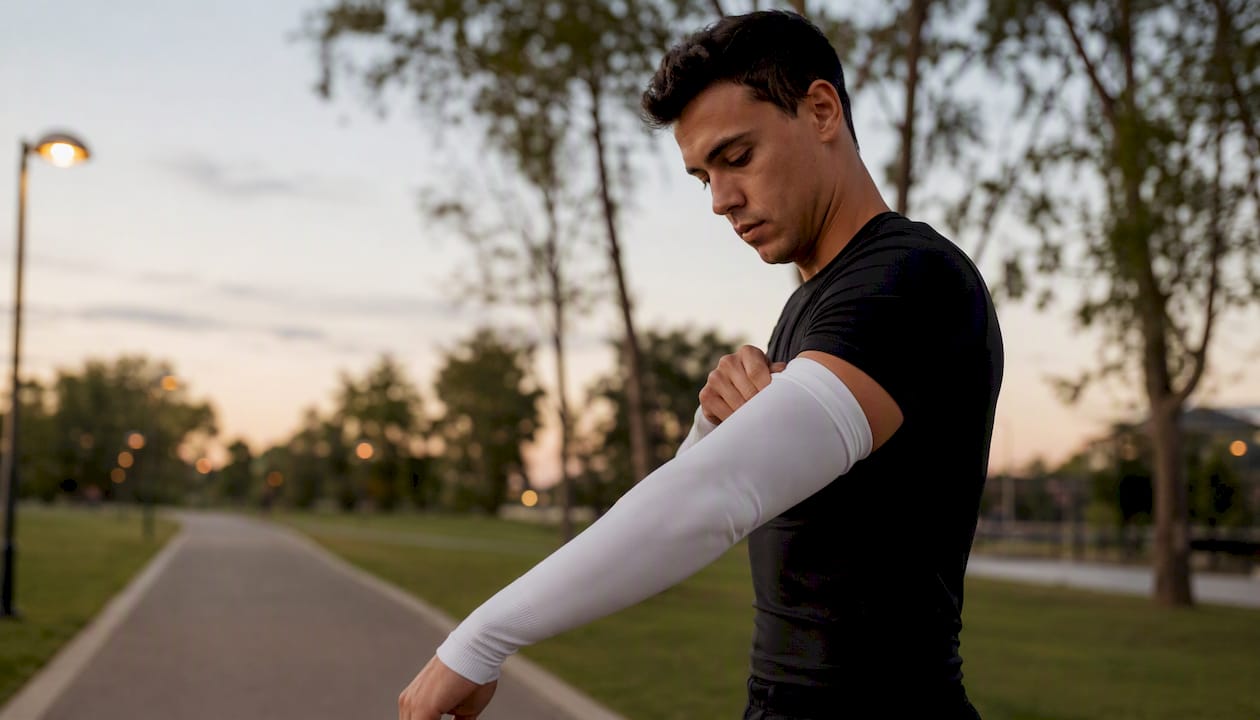
Running: A lightweight long-sleeve UPF shirt or arm sleeves paired with a UPF hat covers the most exposed areas without overheating. Prioritize moisture-wicking and a relaxed-enough fit that the fabric doesn’t stretch thin under movement.
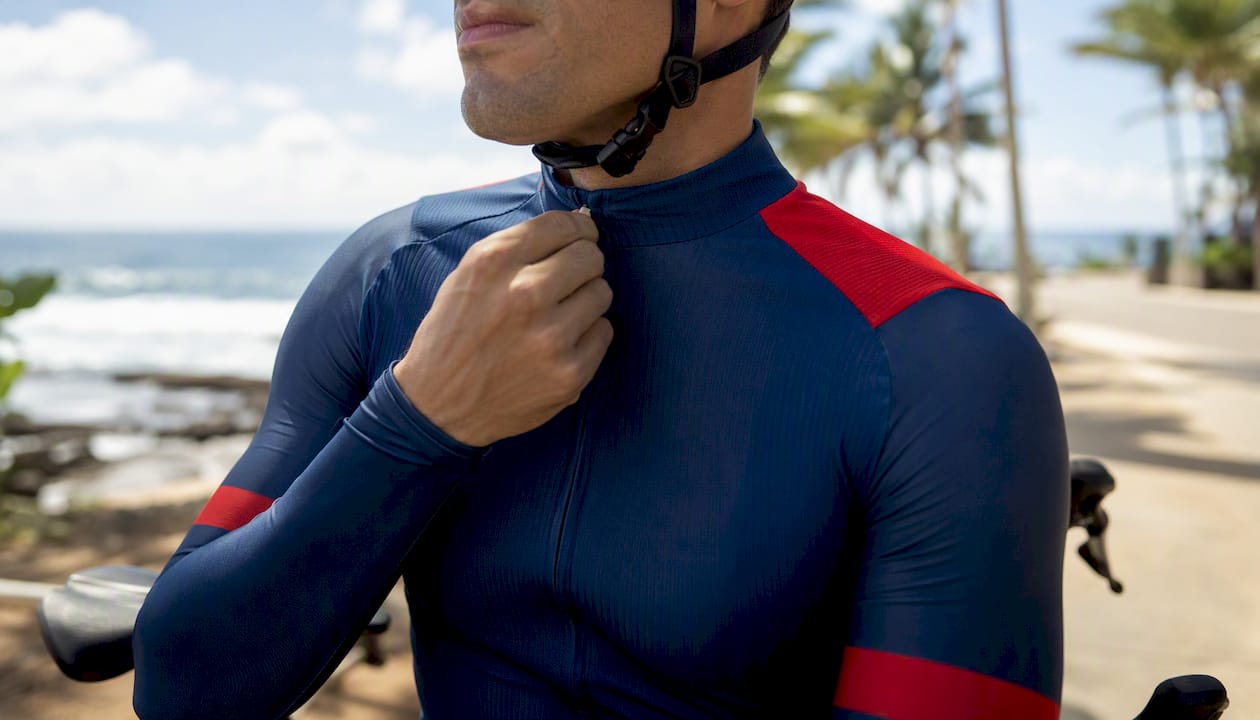
Cycling: Form-fitting UPF jerseys with vented backs and a zip-neck collar work best. The aerodynamic fit reduces flapping but can stretch the fabric, so aim for UPF 50+ to maintain protection even under tension.
Hiking: A looser long-sleeve with UPF 30+ gives you coverage and airflow on longer efforts. Pockets and insect-resistant fabric are practical bonuses for trail use.
Water sports: Quick-dry UPF 50+ is non-negotiable here. Wet fabric loses protection fast, so the rating needs headroom. Rash guards and fitted UPF tops designed for water hold their structure better when soaked.
Long outdoor events: Layer a high-UPF base piece under a vented mid-layer. This lets you adjust coverage as conditions change without losing protection.
For hot, humid climates, choose lighter colors and venting panels but keep the UPF rating at 30 or above. At high altitude or in dry, high-UV environments, UPF 50+ is the smarter floor. A slightly looser fit also preserves UPF better under load than a stretched-tight one. For more on matching gear to workout type, this selection guide covers the full range of activity-specific decisions.
How do you care for UPF workout clothing to preserve its protection?
Machine wash cold, skip the bleach and fabric softener, and air-dry when possible. That’s the short version. Fabric softener coats fibers and can degrade UV-absorbing finishes; bleach weakens synthetic fibers and strips treatments.
Do:
- Wash in cold water on a gentle cycle.
- Turn garments inside out to reduce surface abrasion.
- Air-dry in shade or use a low-heat dryer setting.
- Follow the care label, especially for treated fabrics.
Don’t:
- Stretch garments while wet or hang them by the shoulders to dry.
- Expose them to prolonged chlorine (pool water degrades both elastane and UV finishes).
- Use abrasive detergents or wash with rough fabrics that cause pilling.
Replace a piece when you notice visible thinning, significant fading, or pilling that opens up the weave. For garments worn several times a week outdoors, that’s typically every 12–18 months of heavy use. Most factory-applied UPF is built into the fiber structure and doesn’t wash out the way a topical finish would, but physical wear still degrades the fabric over time. Consumer re-treatment sprays exist but offer limited and inconsistent results compared to purpose-built UPF construction. For more on drip-dry outdoor gear and fabric care, Teamjhall’s guide covers the practical details.
What do people get wrong about UPF clothing?
Myth: Any shirt protects you from the sun. A standard white cotton T-shirt has a UPF of roughly 7, and when wet it can drop to UPF 3. That’s almost no protection. Dark, tightly woven synthetics perform dramatically better by comparison.
Myth: UPF clothing replaces sunscreen. It doesn’t. UPF only protects the skin it covers. Exposed skin — face, neck, hands, lower legs — still needs sunscreen when the UV index is 3 or above. Medical guidance consistently recommends combining UPF clothing with broad-spectrum sunscreen and UV-blocking sunglasses for complete protection.
Myth: You can judge protection by how a fabric looks or feels. You can’t. Color, weave, fiber, and finish interact in ways that aren’t visible. Testing is the only reliable measure. A fabric that looks dense can still transmit significant UV if the fiber type is wrong.
Myth: UPF holds up no matter how you wear it. Stretching a garment across the body, wearing it wet, or washing it repeatedly with harsh detergents all reduce effective UPF. The rating on the label is a starting point, not a permanent guarantee.
Teamjhall UPF-ready performance pieces worth considering
Teamjhall builds performance apparel for athletes who train hard and expect their gear to keep up. The pieces below suit outdoor training where coverage, fabric performance, and fit all matter.
- TJH Performance Shirt: A mid-range performance top built for active use. Suits runners and general outdoor athletes who want coverage and mobility without bulk. Check the product page for current fabric specs, sizing chart, and return details.
- UA Ladies Athletic Tee: A performance tee designed for women who train outdoors. Lightweight construction with moisture-wicking fabric. Works well as a standalone piece or base layer. Inclusive sizing available.
- Men UA Unstoppable Full Zip Up: A full-coverage layering piece for cooler outdoor sessions or high-UV environments where more skin coverage is the priority. The zip-neck design lets you adjust ventilation without losing upper-body protection.
All Teamjhall pieces come with sizing guidance on the product pages. The brand’s return policy and shipping details are listed at checkout. UPF-relevant fabric details are noted in each product description.
What price range should you expect, and what’s worth paying for?
Budget UPF performance tees typically run $20–$40. These often use basic polyester blends with decent moisture-wicking but limited UPF documentation. Mid-range pieces ($40–$80) usually come from brands with tested UPF ratings, better construction, and more activity-specific features like venting zones or flatlock seams. Premium technical layers ($80–$150+) add engineered fabrics, certified UPF ratings, and features like thumbholes, zip-neck collars, and four-way stretch.
Before you buy, run through this checklist:
- UPF rating listed numerically on the label or product page.
- Fabric content listed (polyester, nylon, or treated blend preferred).
- Size chart available with measurements, not just S/M/L.
- Return policy clearly stated.
- Care instructions included.
- Customer reviews that mention real-world sun protection or outdoor use.
Specialty direct-to-consumer performance brands and outdoor retailers are your best sources for tested UPF apparel. Teamjhall’s store is a solid starting point for performance-focused pieces that balance coverage, comfort, and style. When in doubt, pay for the tested rating over the marketing claim.
Why UPF workout clothing is worth the investment
The case for UPF-rated activewear isn’t complicated: you’re already wearing something to train in, so it might as well block UV radiation while it’s on your body. The difference between a standard tee and a UPF 50+ performance shirt is meaningful, especially for anyone logging hours outdoors each week.
What I’d push back on is the idea that sun protection clothing has to feel clinical or look utilitarian. The best pieces, including what Teamjhall offers, are designed to perform and look good doing it. That matters because gear you actually want to wear is gear that protects you consistently. Pair it with sunscreen on exposed skin and a hat, and you’ve covered the basics without overthinking it.
Teamjhall performance gear for outdoor training
Teamjhall’s performance apparel is built for athletes who train outdoors and want clothing that works as hard as they do. The pieces are designed with coverage, fabric performance, and inclusive sizing in mind — the right combination for anyone who spends real time in the sun.

Browse the full collection at Teamjhall and check individual product pages for sizing charts, fabric details, and return information. The UA Ladies Athletic Tee is a strong starting point for women training outdoors, while the TJH Performance Shirt suits most activity types. Shipping and return details are available at checkout. If you have sizing questions, the product pages include measurement guides to help you get the right fit the first time.
Sources
The sources below back the facts in this article. Each covers a different angle, from testing standards to clinical guidance to editorial product testing.
- Sun-Protective Clothing — Skin Cancer Foundation
- PMC article (NCBI) — review on sun-protective textiles
- Does Sun-Protective Clothing Actually Work? — Cleveland Clinic Health Essentials
- Australian sun protective clothing | ARPANSA
- The Best Sun Protection Clothing of 2026 | Wirecutter