

Manage Weight for Athletic Performance: 2026 Guide
Athletic weight management is the practice of adjusting body composition through targeted nutrition, training load, and recovery to preserve or improve physical output. Done right, it keeps you stronger, faster, and healthier through every training block. Done wrong, it costs you muscle, energy, and months of progress. The key is understanding that your body weight is not the goal. Your performance is.
How to manage weight for athletic performance without losing strength
The safe weekly weight loss rate for most athletes sits between 0.5% and 1% of total body weight. That means a 180-pound athlete should lose no more than 0.9 to 1.8 pounds per week. Faster than that, and you start burning muscle alongside fat.
Lean athletes face a tighter ceiling. Men below 14% body fat and women below 22% should cap their weekly loss at 0.3% to 0.5% to protect strength and pace. The leaner you are, the less fat your body has available to burn, so it turns to muscle faster when the deficit gets too aggressive.

Protein intake is the primary defense against muscle loss during a calorie deficit. Targeting approximately 2g of protein per kilogram of body weight per day keeps muscle protein synthesis high even when total calories drop. That number is not a suggestion. It is the floor.
Here are the key signals that your weight loss rate is too aggressive:
- Top-set strength drops on your main compound lifts across two or more sessions
- Threshold pace drifts upward, meaning the same effort produces slower splits
- Resting heart rate climbs by 5 or more beats per minute without a training spike
- Sleep quality falls without an obvious lifestyle cause
- Mood and motivation decline consistently over 7 to 10 days
Pro Tip: Weigh yourself daily and track a 7-day rolling average. Single-day readings swing with hydration and food volume. The trend line is what matters.
What nutritional strategies preserve energy and muscle during a deficit?
Nutrition for athletic performance during a calorie deficit requires more precision than standard dieting. You are not just eating less. You are timing nutrients to protect training quality while still creating the conditions for fat loss.
Follow these steps to structure your nutrition around your training schedule:
- Set protein first. Hit 2g per kilogram of body weight every day, regardless of whether it is a training day or a rest day. Protein is non-negotiable.
- Cycle carbohydrates by training load. Nutritional periodization means eating more carbs on hard training days and fewer on rest days. This keeps glycogen stocked when you need it and creates a calorie deficit when you do not.
- Front-load carbs around your session. Eat a carbohydrate-rich meal 2 to 3 hours before training. Follow your session with a carb and protein combination within 30 to 60 minutes to start recovery.
- Fill remaining calories with vegetables, legumes, and whole grains. These foods increase fiber and micronutrient intake, which improves satiety and supports hormonal health during extended deficits.
- Adjust fat intake last. Fat is the flexible macronutrient. Once protein and carbs are set, fat fills the remaining calorie budget. Do not drop it below 20% of total calories, as it supports testosterone and joint health.
Pro Tip: On rest days, shift your carb calories toward the evening meal. Research on periodized carb intake shows this approach maintains training intensity without adding total calories.
A structured nutritional periodization program can produce results that seem counterintuitive. One documented case showed an elite boxer losing 23.7 kg over 23 weeks while improving VO2 max and strength. That outcome is only possible when nutrition is timed precisely around training demands.
How do you use performance monitoring to adjust your weight plan?
Performance signals tell you what the scale cannot. Output metrics precede scale changes by 10 to 14 days. That means your strength and pace will warn you that something is wrong before your weight average reflects it. Waiting for the scale to confirm a problem means you have already lost two weeks of progress.
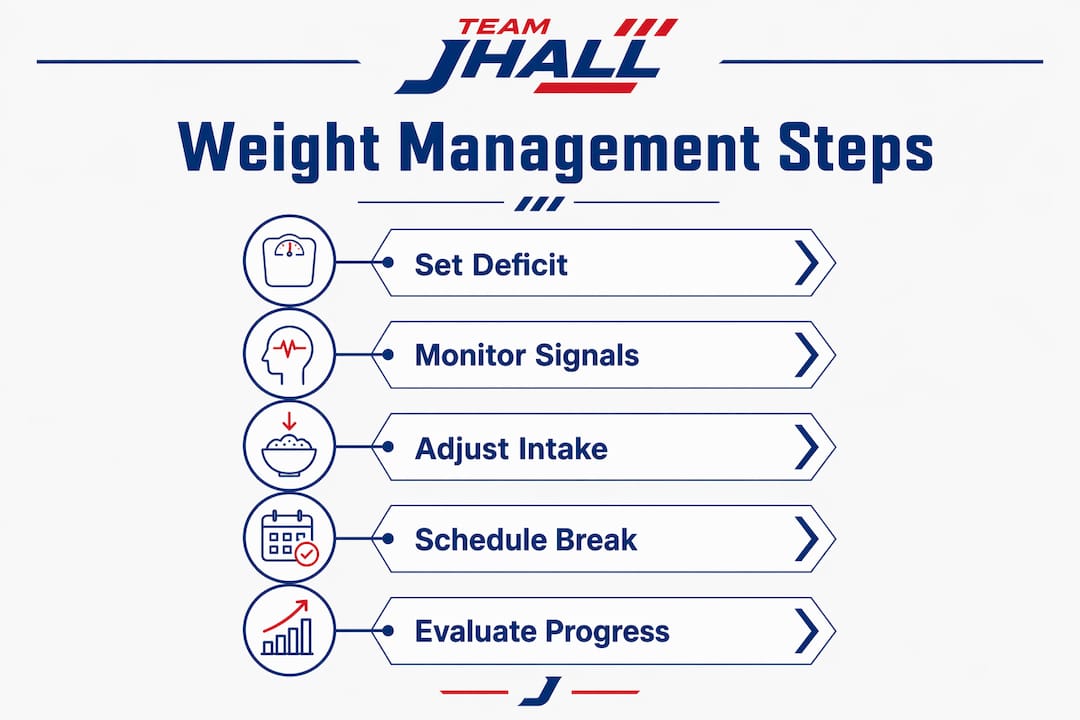
The monitoring framework is straightforward:
| Signal | What to track | Action threshold |
|---|---|---|
| Top-set strength | Weekly max on primary lifts | Drop of 5% or more over 2 sessions |
| Threshold pace | Average pace at target heart rate | Drift of 5 seconds per mile or more |
| Resting heart rate | Morning reading before getting up | Rise of 5+ beats per minute |
| Body weight trend | 7-day rolling average | Less than 0.3% weekly change |
When two or more signals trigger at the same time, reduce your calorie deficit by 200 to 300 calories per day and reassess after one week. Do not eliminate the deficit entirely unless a third signal appears.
After 8 to 12 weeks of consistent calorie restriction, schedule a diet break at maintenance calories for 1 to 2 weeks. This resets hunger hormones, restores glycogen, and normalizes metabolic rate. Athletes who skip diet breaks often hit a wall around the 10-week mark and abandon their plan entirely. The break is not a failure. It is part of the program.
Treat your entire weight management plan as a hypothesis-testing cycle. Set your initial deficit, monitor your signals, and adjust based on what the data shows. No plan survives first contact with your actual physiology unchanged.
What do female athletes need to know about RED-S and energy availability?
Relative Energy Deficiency in Sports, known as RED-S, is a condition where calorie intake falls too low relative to the energy demands of training. It affects hormonal function, bone density, immune health, and cardiovascular performance. RED-S is not limited to elite athletes. Any female athlete training consistently while under-eating is at risk.
The recognized threshold for healthy energy availability in exercising women is approximately 45 kcal per kilogram of fat-free mass per day. Falling below this level disrupts the hormonal signals that regulate the menstrual cycle, bone remodeling, and metabolic rate. The damage accumulates quietly over weeks before symptoms appear.
Prioritizing energy availability over body weight targets is the single most important shift female athletes can make. A lower number on the scale means nothing if it comes at the cost of hormonal health, bone density, or long-term performance capacity.
Common warning signs of low energy availability include irregular or absent menstrual cycles, stress fractures, persistent fatigue, and declining performance despite consistent training. These are not signs of overtraining. They are signs of underfueling.
Multidisciplinary support involving a registered sports dietitian, a coach, and a physician is the standard of care for managing RED-S risk. No single professional has the full picture. A dietitian tracks nutrition, a coach monitors training load, and a physician assesses hormonal and bone health markers. All three perspectives are needed.
Pro Tip: Female athletes can use performance metrics tracking to monitor energy availability signals alongside standard training data. Catching a downward trend early prevents months of recovery.
Rapid weight loss methods, particularly those used in combat sports, carry documented risks including dehydration, glycogen depletion, and impaired performance. These risks apply to female athletes in all sports, not just those with weight categories. Gradual fat loss through a controlled deficit is always the safer and more effective path.
Key Takeaways
Athletes who manage weight through sustainable deficits, timed nutrition, and consistent performance monitoring preserve muscle, protect hormonal health, and maintain training quality throughout every phase of their program.
| Point | Details |
|---|---|
| Safe weekly loss rate | Lose 0.5%–1% of body weight per week; lean athletes should cap at 0.3%–0.5%. |
| Protein is non-negotiable | Target 2g of protein per kilogram of body weight daily to protect muscle during a deficit. |
| Periodize carbohydrates | Eat more carbs on training days and fewer on rest days to fuel sessions without excess calories. |
| Monitor performance signals | Track strength, pace, and resting heart rate; these warn you 10–14 days before scale changes appear. |
| Protect energy availability | Female athletes need at least 45 kcal per kg of fat-free mass daily to avoid RED-S. |
Weight management is a process, not a number
Most athletes I have worked with or observed come into a weight management phase with a target weight in mind. That number becomes the entire focus. The problem is that body weight is a lagging indicator. It tells you what happened last week, not what is happening now.
What I have found actually works is shifting the focus to performance output. When your squat numbers hold steady and your threshold pace stays consistent, your deficit is calibrated correctly. When those numbers slip, the deficit is too aggressive, regardless of what the scale says. The scale is the last thing to tell you the truth.
The other thing most athletes underestimate is how long sustainable fat loss actually takes. Rushing the process by cutting calories too hard is the most common mistake I see. You lose muscle, your performance drops, and you end up heavier six months later than when you started because the approach was not sustainable. Patience is not passive. It is the strategy.
The athletes who get this right treat their nutrition plan the way they treat their training plan: structured, monitored, and adjusted based on real feedback. They read about eating for athletic performance the same way they study technique. They take it seriously because they know the body responds to precision.
— Jason
Gear built for athletes who train with purpose
Athletes who commit to serious weight management train hard, and the gear they wear needs to keep up.

Teamjhall designs premium athletic apparel for competitors, creators, and everyday athletes who refuse to cut corners. From the Confidence Is King Tee built for high-output sessions to the full range of performance wear at the Teamjhall store, every piece is made for athletes who show up consistently. The brand is built on the same principles this article covers: confidence, consistency, and doing the work right. Gear that fits your training makes every session count.
FAQ
What is a safe rate of weight loss for athletes?
The safe rate is 0.5%–1% of total body weight per week for most athletes. Lean athletes should stay at the lower end of 0.3%–0.5% to avoid strength and pace decline.
How much protein do athletes need during a calorie deficit?
Athletes should target approximately 2g of protein per kilogram of body weight per day. This level of intake protects muscle mass when total calories are reduced.
What is RED-S and who does it affect?
RED-S is Relative Energy Deficiency in Sports, a condition caused by chronically low calorie intake relative to training demands. It primarily affects female athletes but can impact any athlete who consistently under-eats relative to their training load.
How does nutritional periodization help with athletic weight management?
Nutritional periodization cycles carbohydrate intake higher on training days and lower on rest days. This approach maintains training quality and glycogen levels while still creating the overall calorie deficit needed for fat loss.
When should an athlete take a diet break?
After 8 to 12 weeks of consistent calorie restriction, a 1 to 2 week diet break at maintenance calories resets hunger hormones and restores metabolic rate before the next fat loss phase.