

What Is Sports Performance Training? Your 2026 Guide
Sports performance training is defined as a structured, outcome-driven system designed to improve athletic qualities like strength, speed, endurance, and movement efficiency for sport-specific results. Unlike general fitness, it targets the neuromuscular system, energy pathways, and functional movement patterns that directly translate to better performance on the field, court, or track. Athletes who follow structured performance programs improve movement efficiency by 20–30% compared to those using general fitness routines. That gap is the difference between training hard and training smart. Whether you compete at a high level or chase personal bests as a fitness enthusiast, understanding what performance training actually involves changes how you approach every session.
What is sports performance training and how does it work?
Sports performance training is the industry-recognized term for a planned, science-based approach to developing athletic ability across multiple physical qualities at once. It goes beyond lifting weights or running laps. Performance training develops neuromuscular coordination, energy system efficiency, and joint stability to prepare the body for the unpredictable forces encountered in sport. The goal is not to look a certain way. The goal is to move better, react faster, and last longer under competitive pressure.
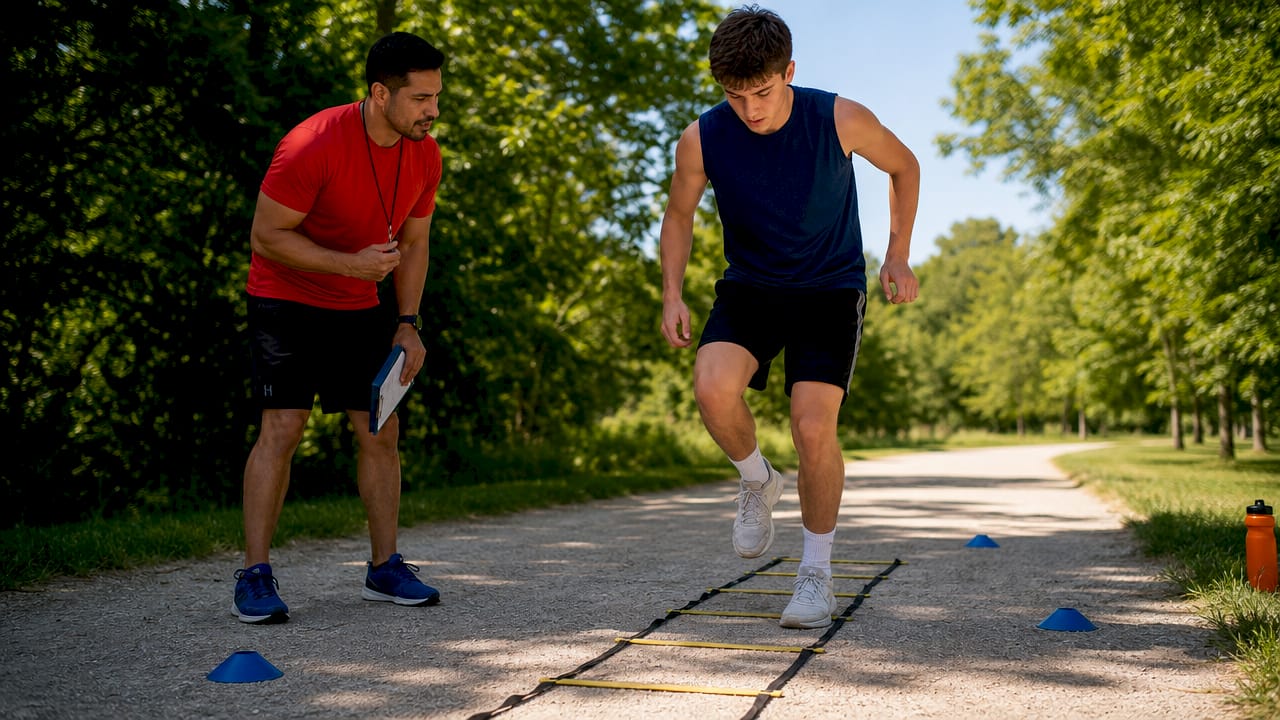
The process integrates physical conditioning, technical skill work, mental resilience, and tactical preparation. Sports training is a scientifically planned process that brings all four of those elements together to reach peak competition readiness. That means a sprinter’s program looks nothing like a basketball player’s program, even if both athletes share similar physical qualities. The training is always shaped by the demands of the sport first.
How does performance training differ from general fitness and bodybuilding?
The most common misconception is treating bodybuilding and sports performance training as the same thing. Bodybuilding targets muscle size and aesthetics. Performance training targets speed, power, and neural efficiency. Those are fundamentally different goals that require fundamentally different methods.
General fitness programs improve health markers like cardiovascular endurance and body composition. Performance training does that too, but it adds sport-specific movement patterns, coordination drills, and power development that general fitness programs skip entirely. Athletic performance training improves strength, speed, endurance, and movement efficiency beyond what standard fitness programs offer. The difference shows up most clearly under game conditions, where trained movement patterns fire automatically under fatigue and pressure.
Here is how the three approaches compare:
| Category | Primary Goal | Training Focus | Key Methods |
|---|---|---|---|
| Bodybuilding | Muscle size and aesthetics | Isolated muscle groups | High-volume hypertrophy sets |
| General fitness | Health and body composition | Cardiovascular and strength base | Cardio, machines, basic lifts |
| Performance training | Athletic output and injury prevention | Functional movement, power, speed | Plyometrics, agility, periodization |
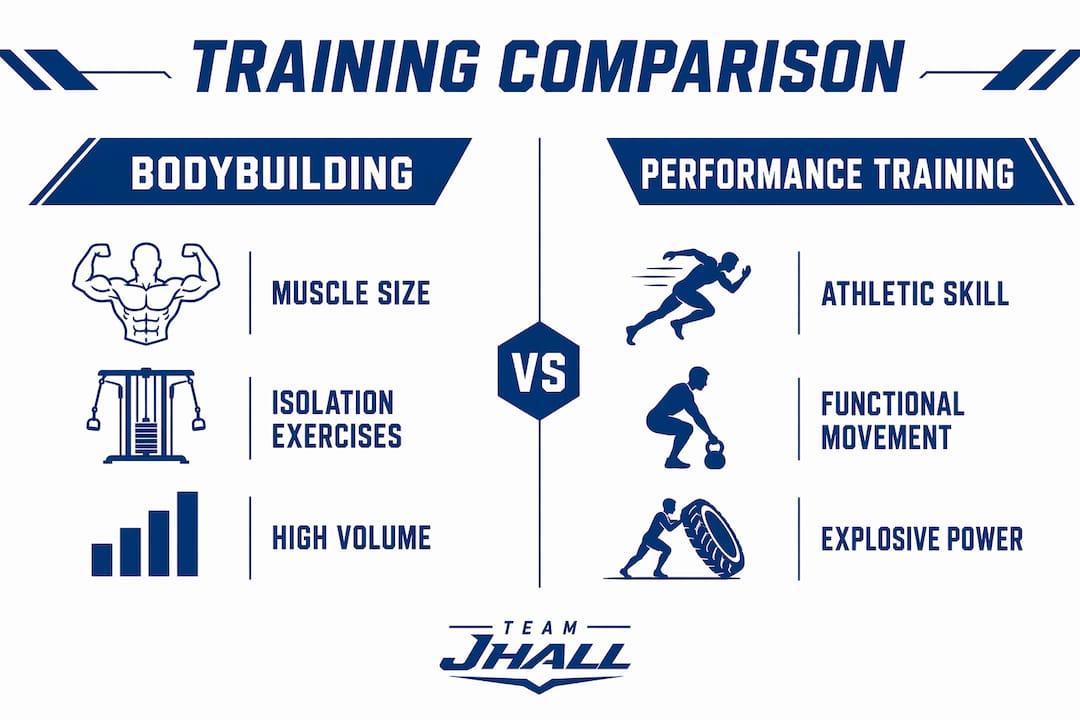
Performance training also benefits athletes who never compete professionally. Regular people benefit from performance training by building coordinated, functional movement patterns that improve resilience in daily activities. If you want to move well for life, not just look good in the mirror, performance training is the right framework.
What are the key principles of effective performance training?
Four principles form the foundation of every well-designed athletic training program: progressive overload, periodization, neuromuscular warm-up, and structured recovery.
Progressive overload is the most misunderstood of the four. Most athletes apply it only to weight on the bar. Progressive overload applies equally to skill acquisition as it does to physical strength. Increasing the complexity of a movement, not just the load, prevents plateaus and drives continuous improvement. A receiver running simple routes eventually needs to run complex route combinations under defensive pressure to keep improving.
Periodization organizes training into phases, typically a base-building phase, a strength phase, a power phase, and a competition phase. Each phase builds on the last. This structure prevents overtraining and ensures athletes peak at the right time.
Neuromuscular warm-up is where most athletes cut corners. Neuromuscular warm-up protocols performed 2–3 times weekly for 10–20 minutes maximize performance readiness and reduce lower-extremity injury risk. Static stretching before explosive activity is outdated. Dynamic warm-ups prioritizing balance, landing mechanics, and acceleration drills prime the nervous system far more effectively.
Structured recovery is not optional. Proper rest and structured recovery protocols reduce overuse injury risk by up to 50% compared to unstructured training. That number alone should change how you view rest days.
Pro Tip: Use readiness monitoring or autoregulation tools like velocity-based training to adjust your daily workload. If your movement speed drops significantly from your baseline, reduce the session volume rather than pushing through. Load autoregulation prevents neurological burnout and keeps your movement quality high over the long term.
What specific techniques and exercises does performance training use?
Performance training builds athletes through four core training categories: multi-planar strength, plyometrics, agility work, and mobility training. Each category targets a different physical quality, and the best programs blend all four within the same training week.
Multi-planar strength training moves beyond the sagittal plane of standard squats and deadlifts. Athletes train lateral lunges, rotational presses, and single-leg movements that mirror the directions their sport demands. This builds functional strength that transfers directly to competition.
Plyometrics develop explosive power through the stretch-shortening cycle. Box jumps, depth drops, and bounding drills teach the body to store and release elastic energy rapidly. This is the physical quality that separates fast athletes from explosive ones.
Agility drills train reactive movement, not just pre-planned speed. Cone drills, ladder work, and reactive change-of-direction exercises force the nervous system to process and respond to unpredictable stimuli. You can explore agility training in depth to understand how it fits into a complete performance program.
Mobility work maintains the range of motion needed to express strength and speed safely. Hip mobility, thoracic rotation, and ankle dorsiflexion are the three areas most commonly limiting athletic performance.
Common mistakes athletes make in performance training include:
- Skipping the neuromuscular warm-up and going straight into heavy lifts
- Prioritizing volume over movement quality, especially late in a training block
- Neglecting single-leg and rotational strength in favor of bilateral barbell work
- Treating every session as a maximum-effort day without accounting for recovery status
Pro Tip: Film yourself performing key movements like a lateral bound or a deceleration drill every four weeks. Movement quality is hard to self-assess in real time. Video gives you objective feedback that no mirror can provide.
How does performance training reduce injury risk and improve results?
The performance gains from structured training are measurable and consistent. Athletes using sport-specific programs improve movement efficiency by 20–30% over those following general fitness routines. That improvement shows up as faster reaction times, cleaner deceleration mechanics, and more power output per stride or jump.
Injury prevention is where the evidence gets even more compelling. Three focused training sessions per week with 48 hours of recovery between sessions produce better long-term adaptations than daily high-volume training. More sessions do not mean more progress. They often mean more breakdown. The table below summarizes the key performance and injury-risk outcomes linked to structured performance training.
| Metric | Outcome | Key Driver |
|---|---|---|
| Movement efficiency | 20–30% improvement | Sport-specific drills and neuromuscular training |
| Overuse injury risk | Up to 50% reduction | Structured recovery and periodization |
| Warm-up effectiveness | Reduced lower-extremity injury | Dynamic neuromuscular protocols 2–3x weekly |
| Long-term adaptation | Superior results | Spaced sessions with quality focus over volume |
“Excessive volume with daily sessions harms movement quality. Spacing sessions with focused, high-quality training plus rest often yields superior long-term adaptations.” — Pliability
Functional fitness also plays a direct role in sustaining these gains. Understanding the benefits of functional fitness for sport-specific development helps athletes build a training base that holds up across a full competitive season.
Key Takeaways
Sports performance training produces measurable athletic gains through structured, science-based methods that general fitness programs cannot replicate.
| Point | Details |
|---|---|
| Core definition | Performance training targets neuromuscular efficiency, speed, and functional movement, not aesthetics. |
| Progressive overload | Apply it to skill complexity, not just load, to prevent plateaus and drive continuous improvement. |
| Warm-up protocol | Dynamic neuromuscular warm-ups 2–3 times weekly reduce lower-extremity injury risk significantly. |
| Recovery is non-negotiable | Structured rest cuts overuse injury risk by up to 50% and preserves movement quality. |
| Measurable results | Sport-specific training improves movement efficiency by 20–30% over general fitness routines. |
What I’ve learned after years of watching athletes train wrong
Most athletes I’ve observed make the same mistake. They confuse effort with quality. They show up every day, push maximum volume, and wonder why they plateau or get hurt six weeks into a training block. The answer is almost always the same. They are training their ego, not their nervous system.
The research backs this up, but so does watching it happen in real time. The athletes who improve fastest are not the ones training the most. They are the ones who treat their warm-up as seriously as their main session, who back off when their movement speed drops, and who understand that rest is where adaptation actually happens.
The other thing I’ve noticed is how often athletes skip the single-leg and rotational work because it feels less impressive than a heavy back squat. But sport happens on one leg, in multiple directions, under fatigue. If your training never mirrors that reality, your body will not be ready for it when it counts.
My honest advice is this. Pick up the types of sports training programs that match your sport’s demands. Build your base with periodization. Protect your warm-up and recovery time like they are the most important parts of your program. Because they are.
— Jason
Gear built for athletes who train with purpose
Athletes who train with intention deserve gear that keeps up. Teamjhall builds performance apparel for competitors, creators, and everyday athletes who take their training seriously.

Whether you are running agility drills, grinding through a strength block, or recovering between sessions, the right gear affects how you move and how you feel doing it. The TJH Men’s Performance Tee is built for high-output training sessions, and the TJH Women’s Athletic Tank delivers the same quality for female athletes pushing their limits. Browse the full Teamjhall collection at teamjhall.store and find gear that matches the standard you hold yourself to.
FAQ
What is sports performance training in simple terms?
Sports performance training is a structured program designed to improve athletic qualities like speed, strength, power, and movement efficiency for sport-specific results. It differs from general fitness by targeting functional movement patterns and neuromuscular coordination directly tied to athletic output.
How often should you do performance training?
Three focused sessions per week with at least 48 hours of recovery between sessions produces the best long-term adaptations. Daily high-volume training often reduces movement quality and increases overuse injury risk.
Can beginners benefit from sports performance training?
Yes. Performance training scales to any fitness level by adjusting load, complexity, and volume. Beginners build foundational movement patterns and neuromuscular coordination that carry over to every sport and physical activity.
What does a neuromuscular warm-up include?
A neuromuscular warm-up includes dynamic balance drills, landing mechanics practice, and acceleration exercises performed for 10–20 minutes before training. Static stretching before explosive activity is less effective and should be replaced with these dynamic protocols.
How does performance training prevent injuries?
Structured recovery protocols and periodized training reduce overuse injury risk by up to 50% compared to unstructured programs. Neuromuscular warm-ups performed 2–3 times weekly further reduce lower-extremity injury risk by priming the nervous system before high-intensity work.