

Why Footwear Affects Athletic Performance: 2026 Guide
Footwear is a direct performance variable, not just protective gear. The right shoe changes how your body moves, how much energy you spend, and how fast you recover between efforts. Research published in 2026 confirms that advanced footwear technology improves running economy by 2%–4%, translating to roughly 1%–2% better race performance. That gap is the difference between a podium finish and a personal best. This guide breaks down the biomechanics, the technology, and the individual factors that determine why footwear affects athletic performance at every level.
Why footwear affects athletic performance: the core science
The shoe you wear changes the mechanical and metabolic demands of every stride. Biomechanists call this effect “running economy,” which measures how much oxygen your body uses to sustain a given pace. A shoe that lowers oxygen cost lets you run faster at the same effort level, or sustain your current pace longer before fatigue sets in.
Carbon-plated shoes are the clearest example of shoe technology driving measurable results. A 2025 meta-analysis found that carbon-plated shoes reduce metabolic demand by about 2.75% compared to standard running shoes. That reduction comes from the interaction between the carbon plate, the midsole foam, and the shoe’s overall geometry. No single component produces the effect alone.
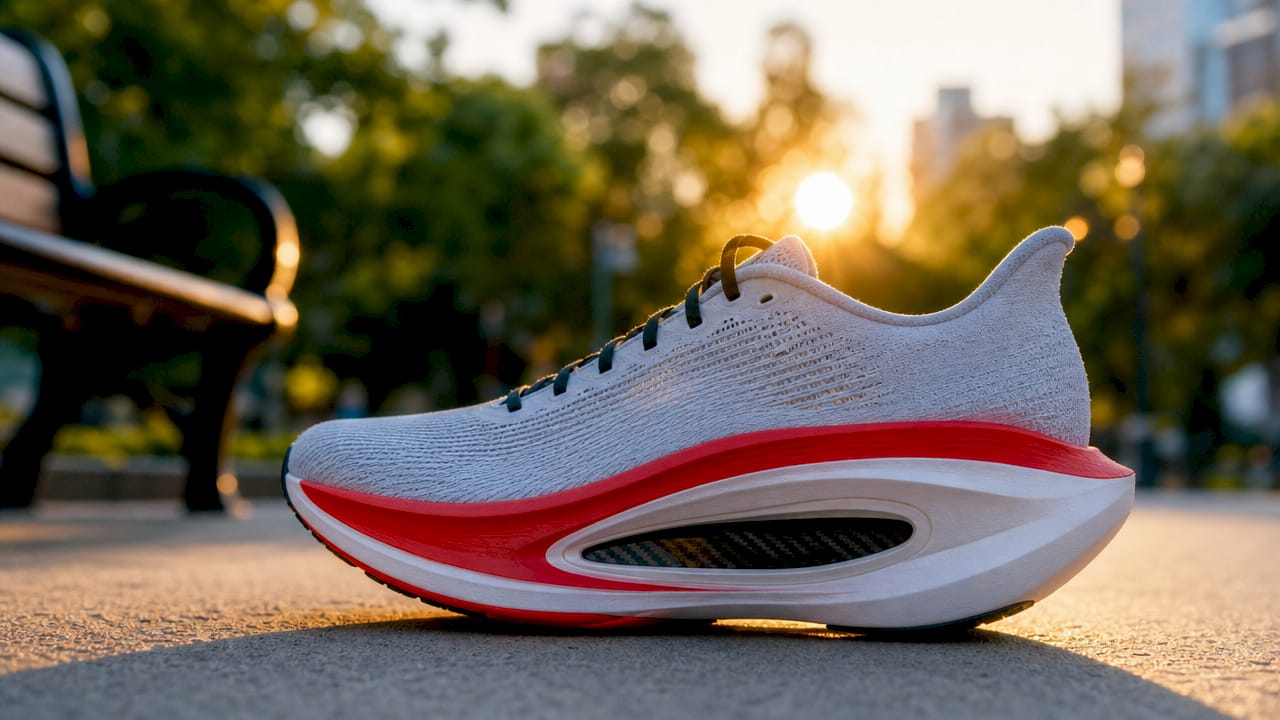
The carbon plate works by altering the shoe’s longitudinal bending stiffness. This changes how the foot and ankle function through the push-off phase of each stride. The result is reduced ankle work per step, which compounds across thousands of strides in a long run or race. The midsole foam amplifies this by returning stored energy rather than absorbing it as heat.
Pro Tip: Do not evaluate a carbon-plated shoe by the plate alone. The foam compound and stack height are equally responsible for the metabolic savings. A stiff plate in a low-return foam delivers far less benefit.
Key mechanisms behind shoe-driven performance gains:
- Longitudinal bending stiffness reduces the work the ankle and foot must produce at push-off.
- High-return midsole foam (such as PEBA-based compounds) stores and releases energy with each stride.
- Rocker geometry shifts the center of pressure forward, reducing the braking force at ground contact.
- Reduced shoe mass lowers the metabolic cost of swinging the leg forward with each step.
- Stack height affects the lever arm acting on the ankle, influencing how force transfers through the foot.
These features work as a package. Multiple interacting factors, including shoe mass, stack height, foam properties, and plate curvature, all contribute to the final metabolic outcome.
What biomechanical changes do different shoes actually cause?
Footwear changes are often subtle at the joint level, but subtle does not mean insignificant. A 2026 systematic review found that carbon-plated shoes produce a small reduction in ankle power without significantly altering hip or knee joint power or overall leg stiffness. That finding matters because it tells you where the shoe is doing the work.
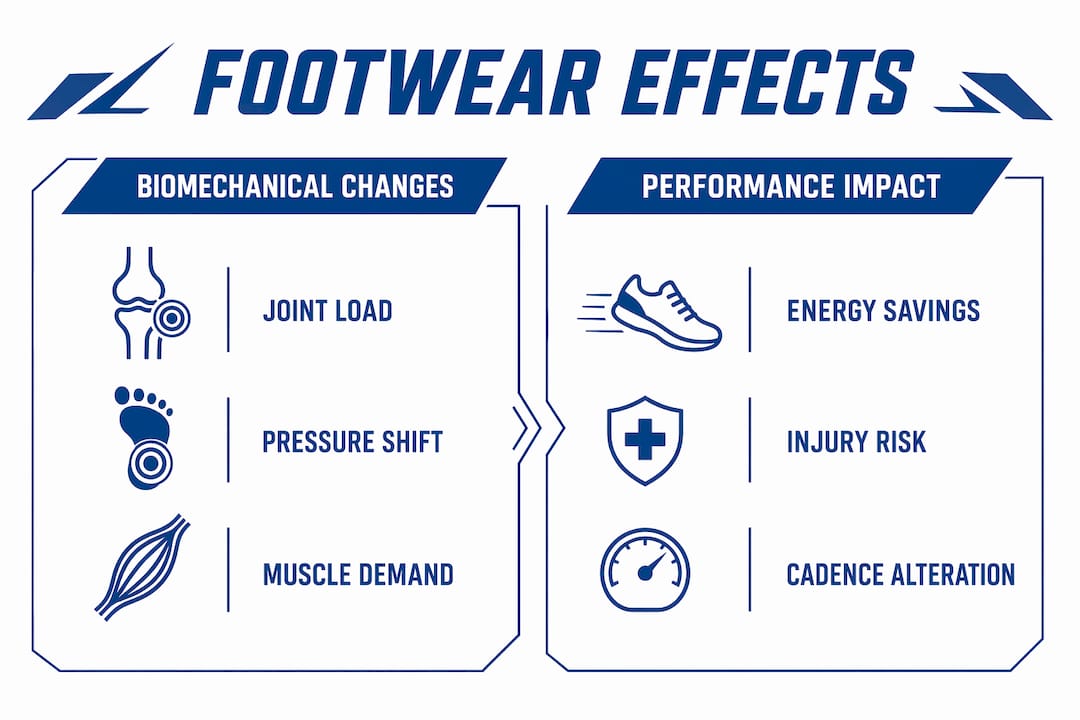
The ankle is the primary site of adaptation. The carbon plate and foam combination offloads the calf and Achilles tendon, reducing the muscular demand at push-off. Hip and knee mechanics stay largely unchanged, which means the rest of your kinetic chain is not being disrupted. For athletes worried about compensatory injury patterns, this is reassuring.
Shoe geometry also shifts plantar pressure distribution. Rocker sole designs, for example, reduce peak dorsiflexion moments by 22%–25% and move pressure away from the forefoot. This matters for athletes managing forefoot loading issues or metatarsal stress. The pressure shift changes how force travels through the foot with every ground contact.
| Shoe feature | Primary biomechanical effect | Performance implication |
|---|---|---|
| Carbon plate | Reduced ankle joint power | Less calf fatigue over long distances |
| Rocker sole geometry | Lower dorsiflexion moment, shifted plantar pressure | Reduced forefoot loading, altered push-off |
| High-stack foam | Increased energy return per stride | Lower oxygen cost at race pace |
| Minimalist design | Increased foot and calf muscle demand | Strength gains, higher injury risk in transition |
| Standard cushioned shoe | Moderate energy absorption | Balanced protection and ground feel |
Advanced footwear also produces small but cumulative effects on injury-related mechanics, including cadence and rearfoot eversion. These changes are not large enough to feel during a single run. Over a training cycle, though, they can shift loading patterns in ways that either protect or stress specific tissues.
Pro Tip: If you switch to a carbon-plated shoe, track your cadence for the first two weeks. A drop in cadence combined with increased stride length can raise bone stress injury risk, especially in the tibia and metatarsals.
How individual factors shape your response to footwear
Not every athlete benefits equally from the same shoe. Individual biomechanics determine how much metabolic and mechanical benefit a given shoe delivers. Two runners wearing the same carbon-plated model at the same pace can show meaningfully different oxygen cost responses. Average study results do not guarantee individual results.
Your foot strike pattern, arch height, running cadence, and training history all influence how a shoe interacts with your body. A heel striker and a midfoot striker load the shoe differently, which changes how the carbon plate and foam respond. An athlete with a high arch distributes plantar pressure differently than one with a flat foot, altering the pressure-shifting effects of rocker geometry.
Training level also matters. Recreational athletes at slower speeds still benefit from advanced footwear. A randomized trial showed that oxygen consumption drops by 4–5.4 mL O2 per kilogram per kilometer at slower running speeds with advanced footwear, even without changes in cadence or ground contact time. That means the metabolic benefit is not reserved for elite runners.
Sport specificity adds another layer. A basketball player needs lateral stability and ankle support that a marathon shoe does not provide. A sprinter needs a stiff forefoot plate and minimal heel drop. A trail runner needs grip and torsional control that road shoes lack. Matching shoe design to sport mechanics is as important as matching it to individual biomechanics.
- Test before committing. Run at race pace or sport-specific intensity in any new shoe before training in it regularly.
- Rotate footwear. Using two or three shoe types in training reduces repetitive loading on the same tissues.
- Prioritize comfort. Perceived comfort correlates with actual metabolic efficiency. A shoe that feels right often performs better for that individual.
- Transition gradually. Introducing a new shoe technology over 3–4 weeks reduces injury risk from sudden biomechanical changes.
Carbon-plated vs. minimalist vs. standard: which shoe fits your goals?
Choosing the right shoe type requires matching design features to your performance goals and injury history. Each category involves real trade-offs.
Carbon-plated shoes deliver the strongest metabolic and performance benefits for endurance running. The running economy gains of 2%–4% are well-supported by current research. The trade-off is cost, adaptation time, and a potential increase in bone stress injury risk with abrupt transitions. These shoes are best suited to runners logging high mileage at race pace or near it.
Minimalist shoes sit at the opposite end of the spectrum. They strip away cushioning and structure to increase ground feel and foot muscle activation. Athletes who transition correctly can build foot and calf strength that improves long-term resilience. The risk is high during transition. Achilles tendon and plantar fascia injuries spike when athletes move to minimalist footwear too quickly.
Standard cushioned shoes remain the most practical choice for the widest range of athletes. They offer moderate energy return, reasonable protection, and enough structure to suit most training loads. For cross-training, gym work, and multi-directional sports, a well-fitted standard athletic shoe outperforms a specialized running shoe.
Key selection criteria by athlete profile:
- Endurance runners targeting race performance: carbon-plated shoes with high-return foam and rocker geometry.
- Athletes managing forefoot or metatarsal stress: rocker sole designs that shift plantar pressure rearward.
- Strength and conditioning athletes: stable, low-drop shoes with firm midsoles for ground contact feedback.
- Multi-sport or team sport athletes: sport-specific shoes designed for lateral movement and ankle support.
- Beginners or high-injury-risk athletes: standard cushioned shoes with gradual progression to specialized models.
The functional fitness demands of your sport should drive your shoe choice as much as any performance metric.
Key Takeaways
Footwear directly shapes athletic performance by altering biomechanics, reducing metabolic cost, and shifting injury risk, making shoe selection a training decision, not just a gear preference.
| Point | Details |
|---|---|
| Carbon plates reduce metabolic cost | Meta-analysis confirms a 2.75% drop in metabolic demand versus standard shoes. |
| Ankle joint bears the primary adaptation | Carbon-plated shoes reduce ankle power without significantly changing hip or knee mechanics. |
| Individual response varies significantly | The same shoe produces different metabolic outcomes for different athletes. |
| Shoe type must match sport demands | Endurance, strength, and team sport athletes need different design features. |
| Gradual transition reduces injury risk | Rotating footwear and adapting over 3–4 weeks protects against stress injuries. |
What I’ve learned from watching athletes get this wrong
Most athletes treat shoe selection like a shopping decision. They pick based on brand, color, or what a sponsored athlete wears. That approach leaves real performance on the table and puts injury risk on the table instead.
The science is clear that the right shoe reduces metabolic cost and changes how force moves through your body. What the science also shows is that average results do not apply to every individual. I have seen athletes chase carbon-plated shoes because the research says they work, then develop shin pain within six weeks because they skipped the adaptation phase. The shoe worked exactly as advertised. The transition strategy failed.
My honest advice: treat your footwear choice the way you treat your training program. Test it, adapt to it gradually, and track how your body responds. Comfort is not a soft metric. Research confirms that perceived comfort correlates with actual metabolic efficiency. If a shoe feels wrong, it probably is wrong for you, regardless of what the data says about average populations.
The athletes who get this right combine evidence with self-awareness. They know their foot strike, their injury history, and their training load. They use that information to filter the research rather than apply it blindly. That is the difference between using shoe technology and being used by it.
— Jason
Gear that matches your performance standard
Your shoes set the foundation, but your full kit determines how you train and compete. Teamjhall builds performance apparel for athletes who take every detail seriously.

From the TJH Men’s Performance Tee to the TJH Women’s Athletic Tank, every piece is designed for competitors who show up ready. Teamjhall gear is built around the same values that drive smart footwear choices: function, fit, and consistency under pressure. Browse the full collection at Teamjhall and gear up with apparel that keeps pace with your training.
FAQ
Why does footwear affect athletic performance?
Footwear changes the biomechanics of movement and the metabolic cost of effort. The right shoe reduces oxygen demand, alters joint loading, and improves energy return with every stride.
How much can the right shoe improve running performance?
Advanced footwear technology improves running economy by 2%–4%, which translates to roughly 1%–2% better race performance based on current research.
Do carbon-plated shoes work for recreational runners?
Yes. Studies show oxygen consumption drops at slower running speeds with advanced footwear, meaning recreational athletes gain measurable metabolic benefits, not just elite competitors.
Can the wrong shoe increase injury risk?
Advanced footwear produces small but cumulative changes in loading mechanics linked to bone stress injury risk. Abrupt transitions without gradual adaptation are the primary cause of shoe-related injuries.
How do I choose the best shoe for my sport?
Match shoe design features to your sport’s movement demands. Endurance runners benefit from carbon-plated, high-return foam models. Team sport and strength athletes need lateral stability and firm midsoles over specialized running geometry.