

Build a Competitive Sports Portfolio That Gets Results
Your sports portfolio is the first thing a sponsor, agent, or team evaluates before they ever take your call. A competitive sports portfolio is a curated, strategic presentation of your achievements, partnerships, and professional identity, built to function as a business tool, not a scrapbook. Sports Media Huddle puts it plainly: a well-structured portfolio signals professionalism long before a conversation begins.
What makes a competitive sports portfolio worth building?
A strong athlete portfolio does three things at once. It proves your value with measurable results, tells a story that connects emotionally, and positions you as a business partner rather than just a competitor. That last part is where most athletes fall short.
Sponsors are not writing checks for trophies. They want measurable business outcomes tied to audience reach, brand alignment, and activation potential. Your portfolio needs to speak that language.
- A competitive sports portfolio is a curated presentation of achievements, content, and partnerships organized for professional impact
- It functions as a business document, not an archive of past results
- Measurement frameworks like media value equivalency and brand health metrics give sponsors useful data
- Grouping partners by category and including your competition calendar communicates continued brand value
- Industry sources like Sports Media Huddle and USA Business Times confirm that portfolio architecture separates durable careers from one-off deals
Think of it the way Kristen Faulkner presents herself: Olympic gold medalist, TEDx speaker, and venture capital professional, all in one clean narrative. Every element of her public profile reinforces the others. That is the standard to aim for.
How do you structure and curate an effective sports portfolio?
Organization is what separates a professional portfolio from a folder of highlights. The goal is a layout that lets a sponsor or agent find what they need in under 60 seconds.
Start with your strongest work. A cohesive, intuitive portfolio that leads with its best examples creates a stronger impression than one that buries the headline achievement on page three. Group content by category, sport, or audience type, and write a short description for each piece explaining what it achieved and why it matters.
- Videos: game-day highlights, training footage, and behind-the-scenes content that shows personality
- Statistics: performance data, rankings, and measurable results tied to specific events
- Testimonials: quotes from coaches, sponsors, or media contacts that validate your credibility
- Social media integration: follower counts, engagement rates, and platform reach as proof of audience
- Competition calendar: upcoming events that show sponsors their investment has a future, not just a past
Cluttered layouts reduce impact. White space is not wasted space. It gives each piece room to land. Mix action content with emotion and behind-the-scenes moments to connect viewers with your story beyond the numbers.
For hosting, personal websites give you full control over branding and presentation. Portfolio builder platforms work well for athletes earlier in their careers. What matters most is accessibility. Anyone reviewing your work should reach it without navigating multiple links or complicated menus.

Pro Tip: Audit your portfolio every quarter. Remove anything that no longer reflects your current skill level or career direction. A smaller, sharper selection always outperforms a long, uneven one.
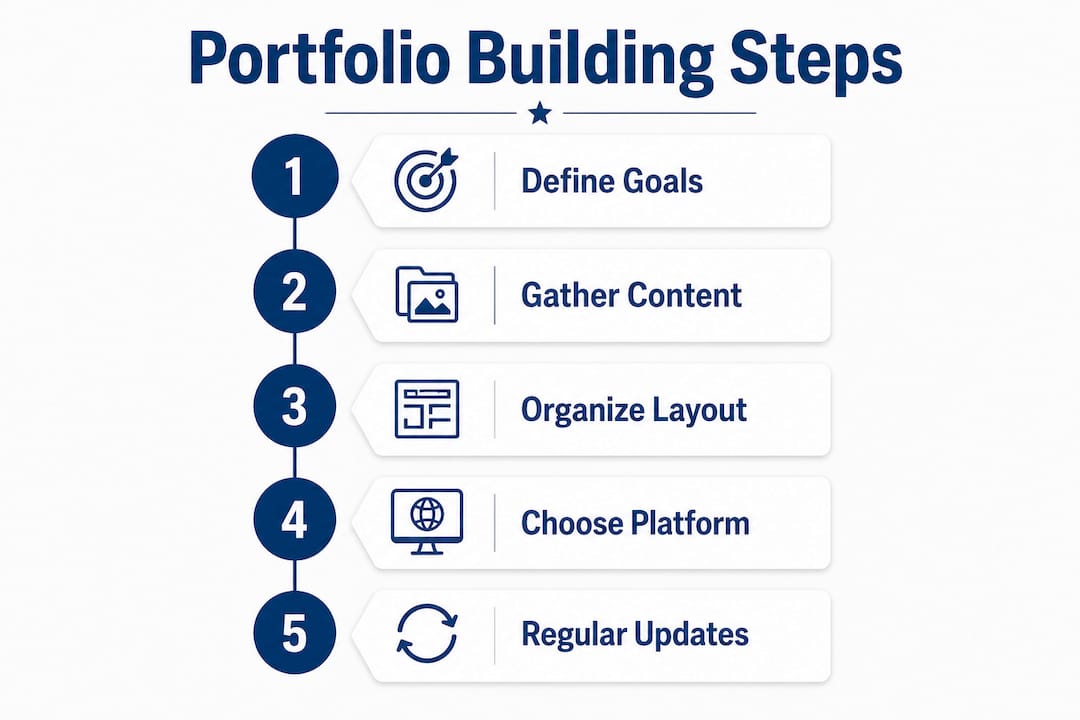
Platforms like DepthChartIQ offer athlete development frameworks that can help you professionalize your portfolio structure with real program benchmarks.
How do you measure your portfolio’s performance?
Building the portfolio is step one. Knowing whether it is actually working is step two, and most athletes skip it entirely.
USA Business Times recommends building your measurement framework around three tiers: media value equivalency as a baseline floor, brand health metrics tracked through pre- and post-campaign research, and direct business outcomes tied to sponsorship activation. Review your portfolio performance quarterly against these benchmarks.
| Metric | What it measures | Why it matters |
|---|---|---|
| Media value equivalency | Estimated dollar value of media coverage | Baseline floor for sponsor ROI conversations |
| Brand health metrics | Awareness, perception, and recall shifts | Shows whether your brand is growing |
| Lead generation | Inquiries, applications, or sponsor contacts | Direct proof of portfolio effectiveness |
| Social media traction | Reach, engagement rate, follower growth | Demonstrates audience value to sponsors |
| Sponsorship activation rate | Engagement from existing partner deals | Signals whether current partnerships are performing |
Tracking athletic performance metrics alongside these portfolio indicators gives you a complete picture of your career trajectory. When a property consistently underdelivers against your benchmarks, restructure or replace it. The discipline to exit a deal that looks good on paper but performs poorly is what separates athletes who build lasting careers from those who stall.
What mistakes kill a sports sponsorship portfolio?
The most common error is chasing big-name partnerships over structural fit. A logo from a major brand means nothing if the activation budget is too thin to generate real engagement. Successful sponsorship portfolios rely on complementary properties that reinforce each other and deliver measurable business outcomes, not prestige alone.
- Prioritizing brand name recognition over audience alignment and measurable ROI
- Cluttered portfolios with too much low-quality content and no clear narrative thread
- Underfunding activation relative to rights fees, which leaves sponsorships performing below potential
- Passive portfolios that archive past achievements without telling a forward-looking story
- Ignoring portfolio architecture, meaning no thought given to how properties stack and reinforce each other
The University of Kansas Sport Management program notes that business-ready portfolios group partners by category and include competition calendars, giving sponsors a clear picture of ongoing engagement value rather than a one-time snapshot.
Pro Tip: Build your portfolio architecture so that each partnership reinforces the others. Complementary properties with stacked audiences compound your value over time. One strong category cluster beats five unrelated logos.
For athletes managing recruitment and team placement alongside sponsorship, portal timing best practices from DepthChartIQ offer a useful framework for structuring your outreach calendar.
How does your portfolio evolve as your career grows?
A portfolio that served you at 17 will not serve you at 24. Your career stage, skill level, and professional goals change, and your portfolio needs to keep pace. Treating it as a living document rather than a finished product is the single biggest shift most athletes need to make.
- Audit content at least twice a year and replace weaker examples with stronger, more recent work
- Build a professional narrative that shows progression, not just a list of achievements
- Tailor the portfolio for each audience: sponsors want ROI data, agents want career trajectory, teams want performance metrics and coachability
- Include behind-the-scenes content and personality to give stakeholders a sense of who you are beyond the stats
- Integrate career milestones with measurable results so each achievement has context and proof
Your athletic identity is the thread that ties all of it together. Confidence, consistency, and loyalty to your values are not soft concepts. They are the qualities that make sponsors and agents trust you with their brand. Teamjhall is built on exactly that foundation, and the athletes who carry that ethos into their portfolio work tend to present with a clarity that generic highlight reels never achieve.
The goal is a portfolio that tells someone who you are, where you have been, and where you are going, all before you say a word.
Teamjhall gear built for athletes who compete seriously
Serious competitors need gear that matches their ambition. Teamjhall designs premium athletic apparel for athletes who treat their sport as a profession, built around the values of confidence, family, faith, loyalty, and consistency.
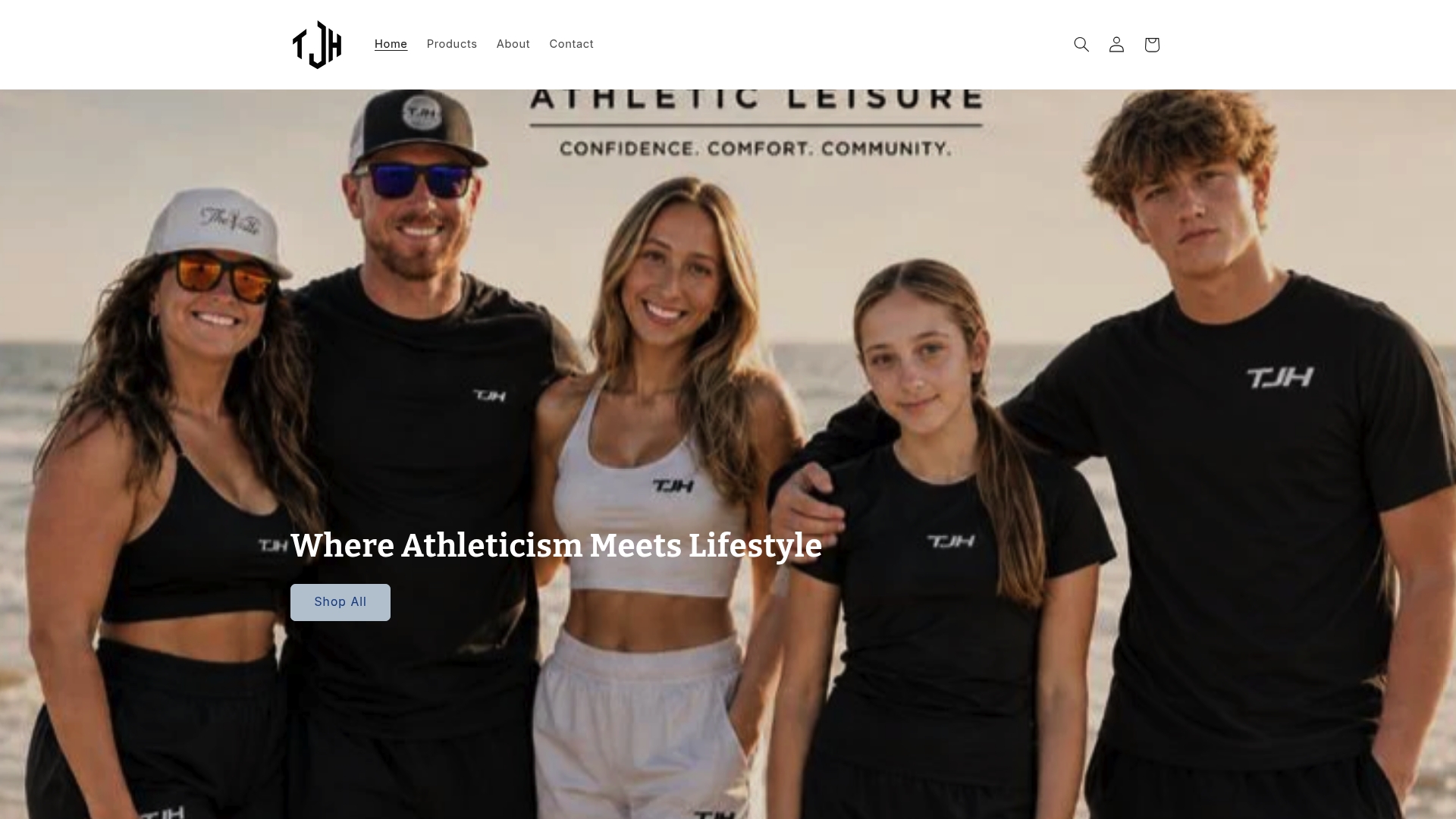
The UA Ladies Athletic Tee, TJH Women SportTek Shorts, and Spaghetti Strap Yoga Sports Bra are built for athletes who train hard and present professionally. Every piece reflects the bold, high-energy aesthetic that competitors and creators recognize. When your gear looks the part, your portfolio content does too.
Key Takeaways
A competitive sports portfolio functions as a business document, not an archive, and must be built around measurable outcomes, clear storytelling, and regular review to drive real career results.
| Point | Details |
|---|---|
| Portfolio as a business tool | Structure your portfolio around measurable outcomes and partner categories, not just achievements. |
| Lead with your strongest work | Place your best content first; a cohesive, curated selection outperforms a long, uneven one. |
| Measure performance quarterly | Track media value equivalency, brand health metrics, and lead generation to know what is working. |
| Avoid prestige over fit | Complementary partnerships with stacked audiences outperform big-name deals with weak activation. |
| Teamjhall brand alignment | Teamjhall gear and brand ethos support athletes building a professional identity grounded in confidence and consistency. |