

Types of Motivational Fitness Goals: Your 2026 Guide
Motivational fitness goals fall into three distinct categories: process goals, performance goals, and outcome goals. Each type serves a different psychological function, and combining all three produces the most sustainable results. The SMART framework, which stands for Specific, Measurable, Achievable, Relevant, and Time-bound, gives every goal type a structure that turns vague intentions into trackable progress. Exercise and Sports Science Australia confirms that goal content varies by specificity, difficulty, and temporal range, meaning the types of motivational fitness goals you choose directly shape your behavior and your results.
1. Types of motivational fitness goals: the core framework
The three main types of fitness goals are process, performance, and outcome. Process goals focus on daily habits. Performance goals track measurable milestones. Outcome goals define the end result you want. Most athletes who stay consistent use all three at once, because each type fills a gap the others leave open. Relying on outcome goals alone is the fastest way to lose motivation when progress feels slow.
2. What are process goals and how do they build consistent habits?
Process goals are behavior-based targets. They focus on what you do, not what you achieve. Examples include scheduling three gym sessions per week, walking 8,000 steps daily, or adding 10 minutes of stretching after every workout. These goals work because they are entirely within your control, regardless of how your body responds on any given day.
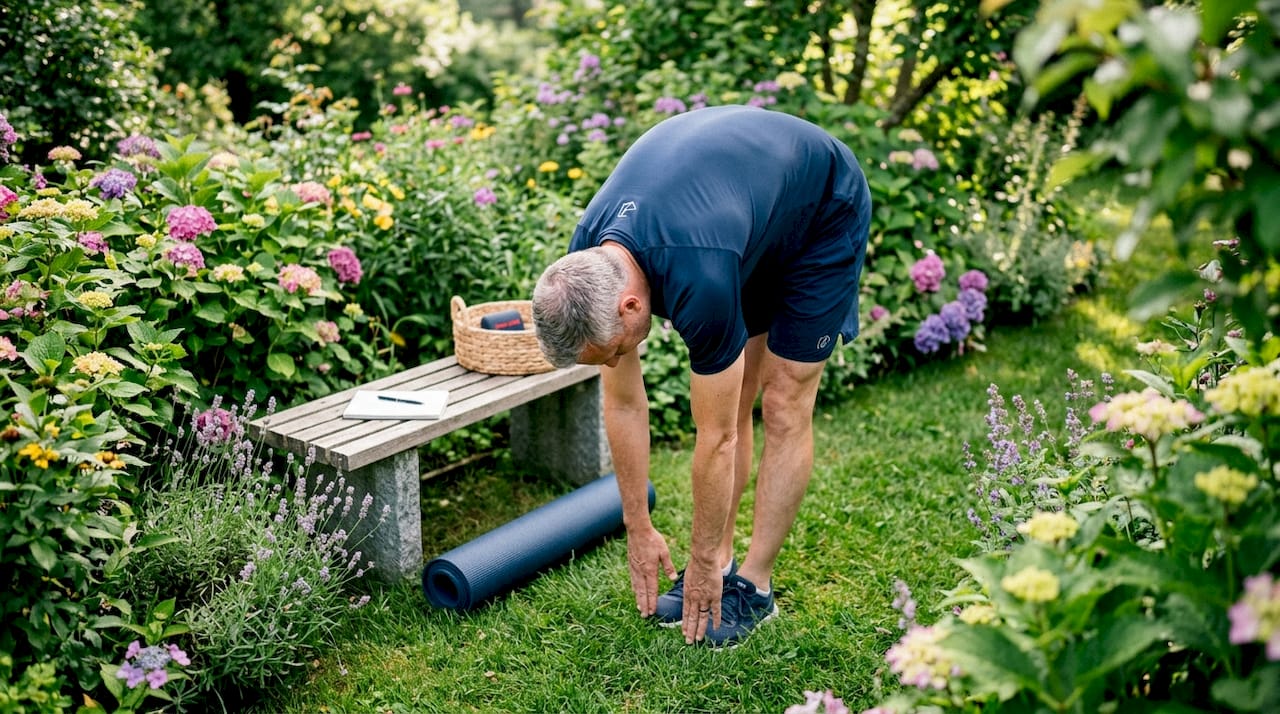
For beginners, process goals are the most powerful starting point. Scheduling and social support maintain adherence and prevent boredom far better than willpower alone. When you build a workout into your calendar like a meeting, you remove the daily decision of whether to go. That removal of friction is what turns exercise from a chore into a habit.
Process goals also protect your motivation during plateaus. If your outcome goal is to lose 20 pounds but the scale does not move for two weeks, a process goal like “I worked out four times this week” still gives you a win. That win keeps you moving forward.
- Schedule workouts at a fixed time each day or week
- Track active minutes rather than calories burned
- Commit to a pre-workout routine to reduce hesitation
- Log each session, even short ones, to build a visible streak
Pro Tip: If you are new to fitness, set only process goals for your first four weeks. Build the habit before you chase the result.
3. How performance goals measure progress toward bigger objectives
Performance goals are measurable milestones that sit between your daily habits and your final destination. They answer the question: “Am I actually getting better?” Examples include increasing your squat weight by 10 pounds, running a mile 30 seconds faster, or holding a plank for 90 seconds instead of 60. These goals give you concrete feedback that your effort is working.
The SMART criteria apply most naturally to performance goals. A goal like “improve my bench press” is vague. A goal like “add 15 pounds to my bench press in eight weeks” is specific, measurable, and time-bound. That specificity removes ambiguity and makes it easy to know whether you succeeded.
Performance goals also serve as athletic performance metrics that keep motivation high between the start of a program and the final outcome. When you hit a milestone, your brain registers progress. That signal reinforces the behavior and makes the next session easier to commit to.
- Increase the weight lifted on a key exercise by a set amount each month
- Improve your running pace by a specific number of seconds per mile
- Add five minutes to your longest weekly run every two weeks
- Track reps, sets, and rest times to spot real improvements
Pro Tip: Review your performance goals every four weeks. If you hit them early, raise the bar. If you miss them, adjust the timeline before you adjust your effort.
4. Why outcome goals provide the ultimate motivation and how to set them realistically
Outcome goals define the end result you are working toward. Completing a 5K, reaching a target body weight, or building visible muscle are all outcome goals. They provide the vision that makes the hard days worth it. Without an outcome goal, process and performance goals can feel like activity without purpose.
The risk with outcome goals is that they depend on factors you cannot fully control, including genetics, recovery, and life stress. Pairing outcome goals with process and performance goals prevents motivation drops when progress stalls. The outcome goal keeps your eyes on the horizon. The other two goal types keep your feet moving today.
Setting realistic outcome goals means anchoring them to a timeline. The Cleveland Clinic notes that short-term goals usually cover six months or less. A goal to run a half marathon in six months is realistic for most people who start training consistently. A goal to run a full marathon in six weeks is not.
- Choose one primary outcome goal per training cycle
- Write it down with a specific date attached
- Break it into two or three performance milestones along the way
- Revisit and adjust the goal if your circumstances change significantly
5. How goal specificity and setting techniques affect motivation
Not all goals are equally specific, and that difference matters more than most people realize. Exercise and Sports Science Australia identifies three levels of goal specificity: specific goals, range goals, and non-specific goals. Each produces a different psychological experience during goal pursuit.
Specific goals have binary outcomes. You either hit 10,000 steps or you do not. That clarity is motivating when you succeed and deflating when you fall just short. Specific goals create all-or-nothing effects, meaning a near miss can feel like a full failure. Range goals solve this problem by defining a performance continuum. A goal of 150–300 minutes of moderate activity per week gives you a floor and a ceiling. Hitting 200 minutes still counts as success.
A feasibility trial comparing three goal-setting techniques found that incremental goals produced 87.5% retention at six months. That is a meaningful result. Incremental goals increase the target gradually, often by around 20% per week, so the challenge grows with your ability. Static goals set one fixed target from the start. Self-selected goals let the individual choose their own target. Each approach suits a different personality and fitness level.
| Goal-setting technique | How it works | Best for | Motivational effect |
|---|---|---|---|
| Static | One fixed target from day one | Experienced athletes with clear baselines | High clarity, lower flexibility |
| Incremental | Target increases gradually each week | Beginners and those building consistency | High adherence, grows with ability |
| Self-selected | Individual chooses their own target | Self-motivated athletes | High ownership, variable results |
| Range goals | Defines a performance window | Anyone prone to all-or-nothing thinking | Reduces discouragement on near misses |
6. How to match goal types to your fitness level and motivation needs
Choosing the right goal type is not about preference alone. Matching goal setting to your environment and personal ability reduces the friction that kills consistency. A beginner who sets an aggressive outcome goal with no supporting process structure is likely to quit within weeks. An experienced athlete who only tracks habits without measuring performance will plateau without knowing why.
The most effective approach combines all three goal types in a layered structure. Your outcome goal sets the direction. Your performance goals mark the checkpoints. Your process goals define the daily actions. This structure mirrors how coaches build programs for sports performance training at every level.
Adherence also depends on reducing what researchers call activation friction. The harder it is to start a workout, the less likely you are to do it. Laying out your gear the night before, training at the same time each day, and finding a training partner all lower that friction. These are process-level decisions that protect your outcome-level ambitions.
- Beginners: start with two or three process goals and one range-style outcome goal
- Intermediate athletes: add two performance milestones per training block
- Advanced athletes: use incremental goal increases to keep the challenge growing
- All levels: schedule a weekly five-minute review of all active goals
Pro Tip: Write your outcome goal somewhere visible, like a phone lock screen or a gym bag tag. Seeing it daily keeps the “why” front of mind when motivation dips.
Key takeaways
The most effective fitness goal structure combines process goals for daily habits, performance goals for measurable milestones, and outcome goals for long-term vision, because each type addresses a different layer of motivation and adherence.
| Point | Details |
|---|---|
| Use all three goal types | Process, performance, and outcome goals each serve a different motivational function. |
| Apply SMART criteria | Specific, measurable, and time-bound goals reduce ambiguity and track progress clearly. |
| Try incremental goal setting | Gradually increasing targets produces higher adherence than static or self-selected goals. |
| Match goals to your level | Beginners benefit most from process goals; advanced athletes need performance milestones. |
| Pair outcome goals with support | Outcome goals alone cause motivation drops; process and performance goals keep you moving. |
Why I stopped chasing one big goal and started stacking all three
For years, I set one big outcome goal at the start of every training cycle and called it a plan. Lose 15 pounds. Run a sub-8-minute mile. Hit a 225-pound bench. And every single time, I would grind hard for six weeks, hit a wall, and lose steam before I got anywhere close. The goal felt too far away. The daily effort felt disconnected from the result.
What changed everything was learning to treat goal setting as a layered system, not a single target. I started setting a process goal for each week, a performance milestone for each month, and one outcome goal for the full cycle. Suddenly, I had something to win every single week. That weekly win kept me showing up even when the big result was still months away.
The hardest lesson was accepting that setbacks are not failures. Missing a week of workouts does not erase your process goal structure. You just pick it back up. The goal is still there. The athletic longevity you build over years matters far more than any single missed session.
My honest advice: write down all three goal types before you start your next training block. Do not just think about them. Write them down, put a date on the outcome goal, and review the full list every week. That five-minute habit is worth more than any supplement or program tweak.
— Jason
Gear that keeps you locked in on your goals
Setting strong fitness objectives is only half the equation. Showing up in gear that feels built for performance makes the other half easier.

Teamjhall designs athletic apparel for competitors, creators, and everyday athletes who take their training seriously. The TJH Men’s Performance Tee and the UA Ladies Athletic Tee are built for movement, comfort, and the kind of consistency that turns process goals into results. When your gear matches your mindset, walking into the gym feels like a statement. Browse the full Teamjhall collection and find what fits your training life.
FAQ
What are the three types of motivational fitness goals?
The three types are process goals (daily habits), performance goals (measurable milestones), and outcome goals (end results). Using all three together produces the most consistent motivation and progress.
How do SMART goals help with fitness motivation?
SMART goals make targets specific, measurable, achievable, relevant, and time-bound. That structure removes ambiguity and gives you clear feedback on whether your effort is working.
What is the best goal-setting technique for beginners?
Beginners benefit most from process goals and incremental goal setting. Incremental goals increase the target gradually each week, which builds confidence and reduces the risk of burnout.
Why do outcome goals alone fail to sustain motivation?
Outcome goals depend partly on factors outside your control, like recovery and genetics. Without process and performance goals providing frequent wins, motivation drops when progress feels slow.
How often should you review your fitness goals?
A weekly five-minute review of all active goals keeps your plan current and catches problems early. Adjust timelines before you adjust your effort level.