

What Does Athletic Longevity Mean for Athletes?
Athletic longevity is defined as the ability to sustain around 90% of your peak physical performance for many years, not just a single season. Sports scientists call this sustained window “Peakspan.” Understanding what does athletic longevity mean goes beyond simply staying injury-free. It requires managing training load, building psychological resilience, and maintaining a support system that keeps you competing at a high level for decades. The Durability Profile model identifies three pillars that predict career length: training-load management, psychological resilience, and socio-cultural support. Athletes who master all three consistently outlast peers who rely on raw talent alone.
What does athletic longevity mean for sustained performance?
Athletic longevity is defined as maintaining near-peak physical capability, typically 90% or more of your best performance level, across many years of competition. The industry term for this sustained window is Peakspan. Most athletes experience short bursts of peak output followed by decline. Athletes with true longevity extend that window deliberately.
The concept also connects to ATHLETISPAN, a related framework that defines an ideal state of performance, health, and fitness preserved into middle age to maintain life without functional limits. That means you are not just competing longer. You are living better, moving better, and staying capable well past your twenties.
Defining athletic longevity matters because the alternative is a career cut short by overuse injuries, burnout, or a body that was pushed too hard too fast. The importance of athletic longevity shows up in every sport, from elite marathon runners to recreational lifters who want to stay strong at 45.
What are the key factors affecting athletic longevity?
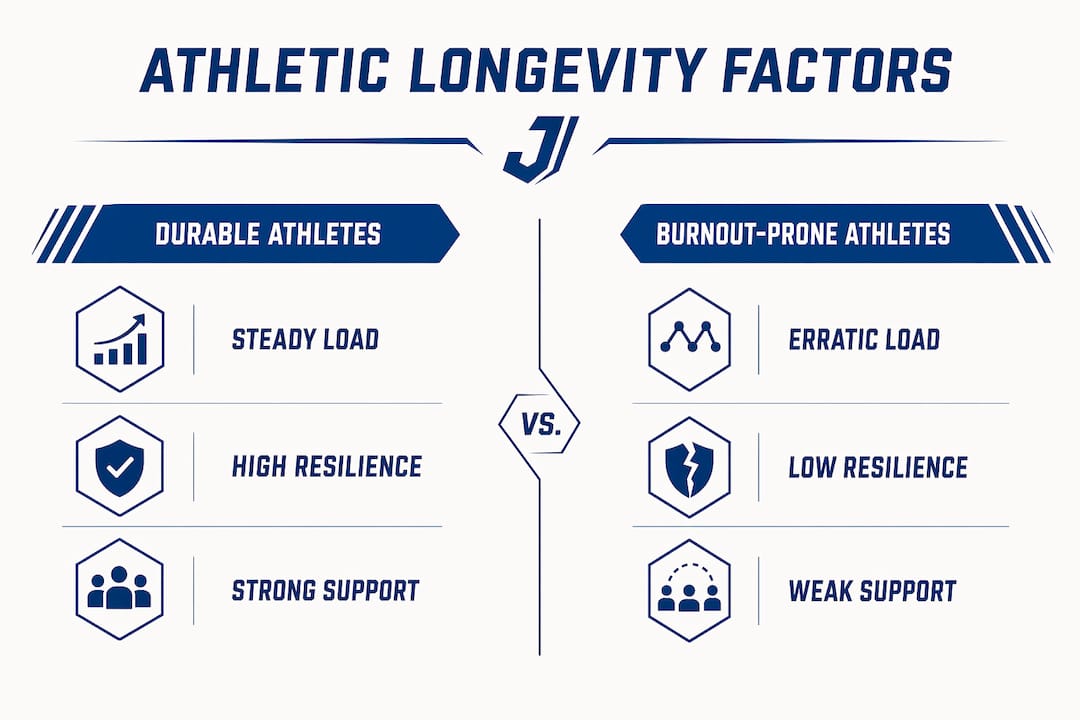
Three factors determine whether an athlete sustains peak performance or breaks down early. The Durability Profile organizes these into training-load management, psychological resilience, and socio-cultural support. Each pillar reinforces the others.
Training-load management
Training-load volatility is the single most controllable factor in career length. Elite endurance runners with careers longer than 10 years showed significantly lower training load volatility compared to athletes who burned out earlier. Consistency beats intensity every time when the goal is longevity.
Psychological resilience
Athletes who cope well with setbacks, losses, and physical adversity stay in the game longer. Resilience is not a personality trait you either have or lack. It is a skill built through deliberate practice, reflection, and support. An athletic mindset built on consistency and self-awareness directly feeds career durability.
Socio-cultural support
Community matters more than most athletes admit. Coaches, training partners, family, and a culture of accountability all reduce dropout risk and help athletes navigate hard seasons. Isolation accelerates burnout. A strong support network extends careers.
The table below contrasts traits common in durable athletes versus those prone to burnout.
| Trait | Durable athletes | Burnout-prone athletes |
|---|---|---|
| Training consistency | Moderate, steady load | High spikes, low recovery |
| Response to setbacks | Adaptive, process-focused | Reactive, outcome-focused |
| Recovery approach | Structured, prioritized | Skipped or unplanned |
| Support network | Strong coaches and community | Isolated or unsupported |
| Ego management | Patient, long-term thinking | Short-term performance chasing |
Pro Tip: Track your weekly training load in a simple log. If your volume spikes more than 10% above your rolling average, pull back. Small, consistent gains compound into long careers.
How do training strategies improve athletic longevity?
The right training approach builds the physical foundation that keeps athletes performing for years. Strength and conditioning reduce injury risk by improving muscle strength, joint stability, and correcting muscle imbalances. These are not optional extras. They are the structural work that keeps everything else functioning.
Compound, multi-joint movements stimulate neuromuscular efficiency and produce brain-derived neurotrophic factor, which supports both physical durability and cognitive function. Isolated exercises build muscle. Complex movement patterns build athletes who last.
As athletes age, the core training ingredients, including strength, power, and endurance, stay the same. The recipes change. Adapting exercise selection means replacing high-impact moves with joint-friendly alternatives like air bike intervals or cable-based resistance work instead of heavy barbell loading. The goal is the same stimulus with less structural cost.
Public health guidelines recommend 150 minutes of moderate aerobic activity plus two days of strength training per week as the baseline for longevity. Even four to five minutes of daily vigorous activity improves long-term outcomes. Volume does not need to be extreme. It needs to be consistent.
Here are four training modifications that support long-term performance:
- Replace barbell squats with cable or machine alternatives when knee or hip discomfort appears. The stimulus remains. The joint stress decreases.
- Add one dedicated mobility session per week focused on hips, thoracic spine, and ankles. These three areas govern movement quality across nearly every sport.
- Shift one high-intensity session per week to moderate intensity as training age increases. Recovery capacity declines with age. Workload must reflect that.
- Prioritize multi-planar movements like lateral lunges, rotational cable pulls, and single-leg work. These patterns build the connective tissue and coordination that protect athletes in unpredictable game situations.
Pro Tip: Recovery is not passive. Treat it as a training session. Schedule sleep, nutrition timing, and soft tissue work the same way you schedule your lifts. Athletes who plan recovery build functional fitness that lasts.
How do you measure and monitor athletic longevity?
Measuring athletic longevity means tracking the metrics that predict whether your body is building capacity or accumulating damage. Performance longevity requires monitoring strength, power, endurance, adaptability, recovery rate, and mental mindset over time. No single number tells the full story.
Training load volatility is the most critical metric to watch. Prior injury is the strongest predictor of future injury. Athletes who spike their training load after a layoff dramatically increase their recurrence risk. Gradual return protocols are not caution. They are the evidence-based path back.
The table below summarizes key longevity metrics and their practical impact.
| Metric | What it measures | Impact on longevity |
|---|---|---|
| Training load volatility | Week-to-week volume spikes | High volatility predicts injury and burnout |
| Strength output | Force production across major lifts | Decline signals recovery deficit or overtraining |
| Resting heart rate | Cardiovascular recovery status | Elevated rate indicates under-recovery |
| Coping score | Psychological response to adversity | Low scores correlate with early career exit |
| Support network quality | Access to coaches, community, family | Strong networks extend career duration |
Practical monitoring does not require expensive technology. A training journal, a weekly RPE (rate of perceived exertion) score, and a simple strength benchmark test every four to six weeks give athletes the data they need. Tracking performance metrics consistently reveals patterns that single-session data never shows.
- Log daily training volume and intensity using a 1–10 RPE scale.
- Test a key strength or power benchmark every four to six weeks.
- Rate your recovery quality each morning on a simple 1–5 scale.
- Note mood, motivation, and stress levels weekly. These predict overtraining before physical symptoms appear.
What are the real benefits of athletic longevity?
The benefits of athletic longevity extend well beyond a longer career. Athletes who sustain consistent moderate-to-vigorous activity across decades show better functional fitness, lower chronic injury rates, and reduced disability risk as they age. The body rewards consistency with capacity.
Longer Peakspan windows mean more competitive seasons, more personal records, and more time doing the thing you love at a high level. Athletes who avoid the burnout cycle also report better quality of life outside sport, including stronger relationships, sharper cognitive function, and greater physical independence in later decades.
The ATHLETISPAN framework captures this idea precisely. The goal is not just to compete longer. The goal is to remain physically capable and functionally free well into middle age and beyond. That means carrying groceries without pain, playing with your kids, and moving through life without restriction.
Athletes who prioritize longevity training also tend to eat for performance with more intention, which compounds the health benefits across every system in the body.
- Reduced chronic injury rates from consistent, moderate training loads
- Extended competitive career spans through Peakspan management
- Better cardiovascular health from sustained aerobic conditioning
- Improved neuromuscular function from compound movement training
- Greater functional independence and quality of life in middle age
Key Takeaways
Athletic longevity requires managing training load volatility, building psychological resilience, and maintaining strong social support to sustain near-peak performance for years.
| Point | Details |
|---|---|
| Peakspan is the goal | Sustaining 90% or more of peak performance over years defines true athletic longevity. |
| Durability Profile drives careers | Training-load management, resilience, and community support predict how long athletes compete. |
| Consistency beats intensity | Low training load volatility correlates directly with careers lasting 10 or more years. |
| Adapt training as you age | Replace high-impact moves with joint-friendly alternatives to maintain stimulus without structural damage. |
| Measure what matters | Track load volatility, strength output, recovery rate, and coping scores to catch problems early. |
Why most athletes misunderstand what longevity actually demands
I have watched athletes train themselves into the ground chasing a single great season. They hit a peak, push past it, and spend the next two years managing injuries they could have avoided. The misconception is that training less equals longevity. That is wrong. The real answer is training smarter and staying consistent.
Ego is the biggest enemy of a long career. The athlete who drops weight on the bar when their body signals fatigue is not weak. They are building the tissue tolerance that keeps them competing at 40. Recovery is not a reward for hard work. It is the work itself.
What I have found is that the athletes who last the longest treat their career like a business. They track their numbers, manage their load, and invest in their support systems. They also know when to push and when to pull back. That self-awareness does not come naturally. It gets built through honest reflection and the willingness to play the long game.
If you are 20 and reading this, the habits you build now determine whether you are still competing at 35. If you are 35, the adjustments you make now determine whether you are still moving well at 50. The principles do not change. The application does.
— Jason
Teamjhall gear built for athletes who train for the long run
Teamjhall was built for athletes who show up every day, not just on game day. The brand stands for confidence, consistency, and the kind of loyalty to your craft that produces real longevity.

The Teamjhall store carries athletic tees, tanks, and performance joggers designed for athletes who train hard and recover smart. Whether you are in the weight room, on the track, or in recovery mode, the gear moves with you. The TJH Women’s Athletic Tank and the UA Ladies Athletic Tee are built for the athlete who takes their training seriously and wants apparel that keeps up. Gear that fits your lifestyle is part of the foundation.
FAQ
What does athletic longevity mean in simple terms?
Athletic longevity means sustaining around 90% of your peak physical performance for many years through consistent training, injury prevention, and smart recovery. The industry term for this sustained window is Peakspan.
What is the biggest factor affecting athletic longevity?
Training load volatility is the most controllable factor. Elite endurance runners with careers over 10 years showed significantly lower load volatility than those who burned out, confirming that consistency predicts career length.
How do you improve athletic longevity as you age?
Replace high-impact exercises with joint-friendly alternatives, prioritize compound movements for neuromuscular efficiency, and treat recovery as a structured training component rather than optional downtime.
Can everyday athletes benefit from athletic longevity training?
Yes. The same principles that extend elite careers, including consistent load management, strength training, and recovery protocols, apply directly to everyday athletes at every fitness level.
How do you measure athletic longevity?
Track training load volatility, strength output benchmarks, resting heart rate, and weekly coping scores. These four metrics together reveal whether your body is building capacity or accumulating damage before injuries occur.