

Balance Entrepreneurship and Active Lifestyle in 2026
Treating fitness as a non-negotiable business asset is the single most effective strategy to balance entrepreneurship and an active lifestyle. 87% of entrepreneurs report burnout symptoms, and 30% experience depression compared to 7% of the general population. Those numbers reflect a system failure, not a willpower failure. The standard advice to “find balance” misses the point entirely. Work-life integration, the practice of weaving personal health routines directly into your business schedule, is what actually works. Entrepreneurs who build fitness into their calendar as a fixed commitment report better decision speed, stronger stress tolerance, and more sustained energy across every area of their business.
How to balance entrepreneurship and an active lifestyle through scheduling
The most effective approach to entrepreneur wellness starts with your calendar, not your motivation. Work-life integration beats balance because it treats personal priorities as structural, not optional. When fitness lives inside your schedule as a fixed block, it stops competing with business demands.
Build your weekly schedule backward from personal priorities. That means placing workouts, family time, and recovery blocks on the calendar before any meetings or client calls. Business fills the remaining space. This single shift changes the entire dynamic of your week.
Here is a practical scheduling sequence for entrepreneurs:
- Block workouts first. Assign 3–5 weekly workout slots before anything else. Treat each one like a client meeting you cannot cancel.
- Set a hard stop time. Choose a daily cutoff, say 6 p.m., and protect it. Work expands to fill available time if you let it.
- Schedule recovery. Sleep, rest days, and decompression time belong on the calendar too. Recovery is not laziness. It is maintenance.
- Batch similar tasks. Group calls, emails, and admin into defined windows. This protects deep work time and your workout blocks from constant interruption.
- Review weekly. Spend 15 minutes every Sunday checking that personal priorities still hold their calendar space.
Founders who hit 8,000–10,000 steps per day report measurable gains in mental clarity and sustained energy. That is not a coincidence. Physical activity directly supports the cognitive output that entrepreneurship demands.
Pro Tip: Set your workout as a recurring calendar event with a reminder 30 minutes before. The friction of canceling a scheduled event is often enough to keep you consistent on low-motivation days.
Why resilience systems matter more than willpower
Traditional work-life boundaries fail entrepreneurs because they depend on daily willpower decisions. Willpower is a finite resource. Long hours alone do not cause burnout. The real culprits are high responsibility, low control, and the absence of recovery systems.
The fix is architectural, not motivational. Build physical non-negotiables into your routine so they run on autopilot, not on how you feel that morning. Think of these as your resilience infrastructure.
“Recovery rhythms must operate regardless of subjective willpower.” The entrepreneurs who sustain high performance over years are the ones who systematized their recovery, not the ones who pushed hardest.
Practical resilience systems include:
- Decision boundaries. Cap major decisions at three per day. Delegate or defer everything else. Decision fatigue affects 71% of entrepreneurs and directly erodes both business judgment and personal discipline.
- Task automation. Automating 40–60% of business tasks with AI tools and delegation reduces cognitive load and protects the mental energy you need for fitness and leadership.
- Peer accountability. Joining a founder peer group or accountability circle creates external structure. When someone else knows your fitness commitments, the follow-through rate climbs.
- Physical non-negotiables. Identify two or three daily physical habits, a morning walk, a midday stretch, an evening wind-down, and treat them as fixed as brushing your teeth.
Embedding physical non-negotiables builds resilience that outlasts any motivational spike. The system carries you on the days when passion and energy run low.
What fitness strategies actually fit an entrepreneurial schedule?
Efficient fitness for busy entrepreneurs is not about long gym sessions. It is about consistent, moderate activity timed to your energy rhythms. The everyday athlete mindset applies directly here: you do not need to be a professional athlete to train like one matters.
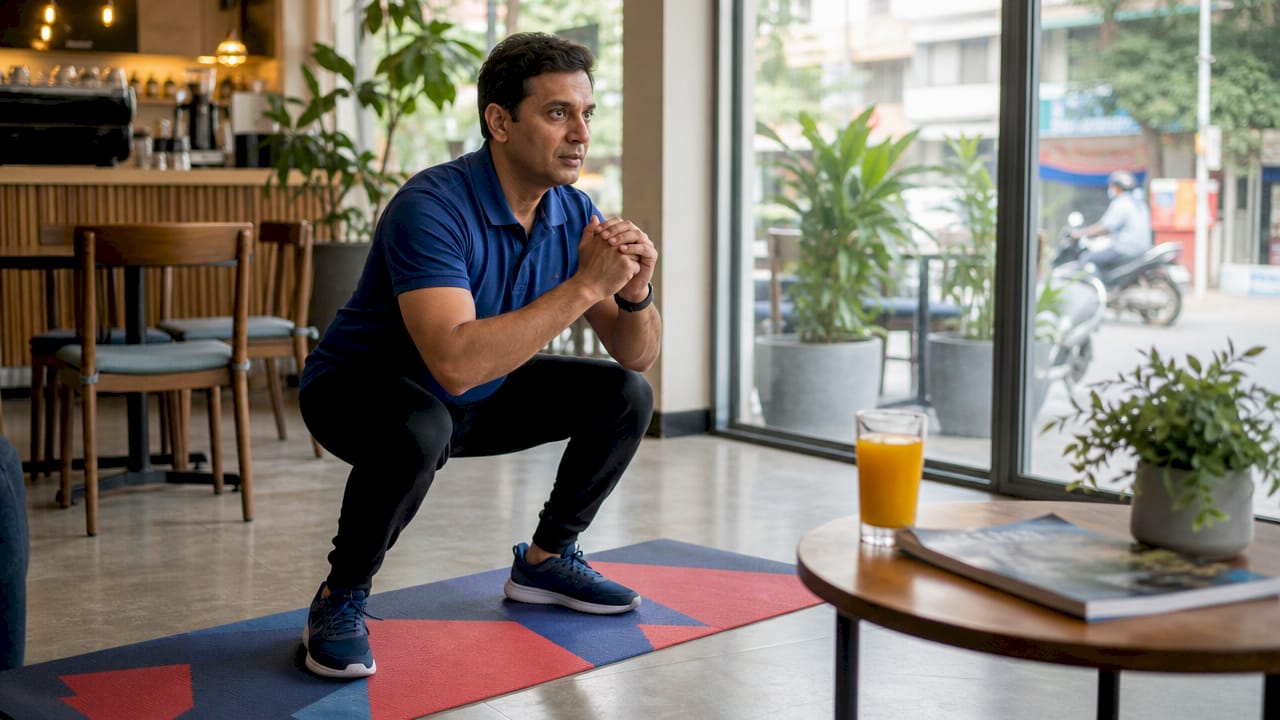
Two approaches stand out for entrepreneurs with packed schedules:
| Approach | Best for | Time required | Business benefit |
|---|---|---|---|
| Movement snacks | Between meetings, travel days | 5–10 minutes | Reduces mental fatigue, resets focus |
| Zone 2 cardio | Morning or lunch blocks | 20–45 minutes | Builds aerobic base, improves stress tolerance |
| Short strength sessions | 3x weekly, fixed blocks | 30–40 minutes | Increases energy, supports posture and confidence |
| Functional fitness | Home or hotel, no equipment | 15–20 minutes | Maintains capacity during travel or schedule disruption |
Short movement snacks, like 5-minute walks or stair climbs, grow physiological capacity without requiring a gym. A five-minute walk between back-to-back calls is not a compromise. It is a deliberate recovery tool that resets your nervous system before the next conversation.
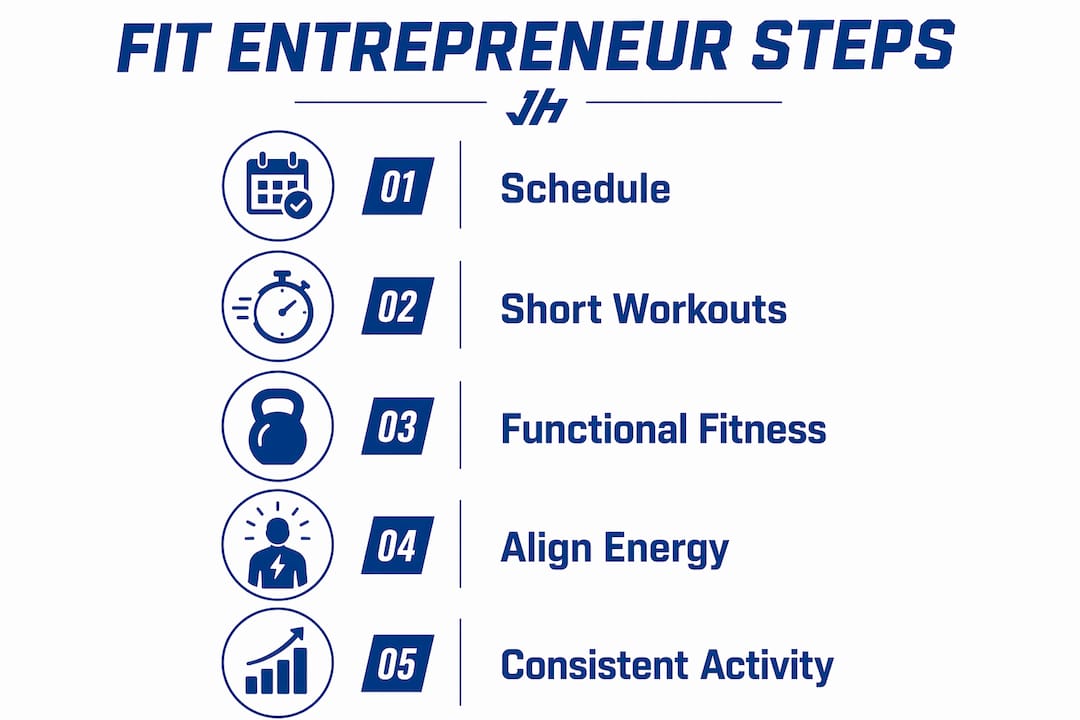
Functional fitness deserves special attention for entrepreneurs who travel frequently. Bodyweight circuits, resistance bands, and hotel-room routines remove the “I don’t have a gym” excuse entirely.
Pro Tip: Align your hardest workouts with your highest-energy days. If you know Tuesday mornings are your sharpest, schedule strength training then. Save lighter movement snacks for your post-lunch energy dip.
Fitness also sharpens the skills that matter most in business. Consistent physical training improves decision speed, raises stress tolerance, and builds the kind of leadership presence that clients and teams respond to. Viewing a workout as a meeting with your future self reframes the entire commitment from sacrifice to investment.
How do you stay consistent when business demands spike?
Consistency breaks down at predictable points: fundraising rounds, product launches, travel weeks, and hiring surges. Knowing these pressure points in advance lets you build contingency plans before you need them.
Common pitfalls and their fixes:
- Guilt about personal time. Guilt signals a belief that rest is unearned. Reframe recovery as performance maintenance, not indulgence. Nearly 50% of small business owners cancel social engagements weekly, and 25% take fewer than 10 vacation days per year. That pattern accelerates burnout, not success.
- Travel disrupting routines. Pack resistance bands. Book hotels with fitness centers. Schedule a morning walk as your first calendar event on travel days. The routine adapts; the commitment does not.
- Irregular schedules. Anchor one fixed workout per week as your minimum. One session beats zero. Build back to full volume when the schedule stabilizes.
- Passion masking exhaustion. Loving your work does not protect you from burnout. Identity fusion with your business, where your self-worth depends entirely on business outcomes, is a top burnout driver for 82% of entrepreneurs. Fitness creates an identity anchor outside the business.
- Technology as distraction. Use technology as a tool, not a tether. Activity trackers, calendar apps, and habit-tracking tools support consistency. Constant email notifications during workouts destroy it. Set your phone to do-not-disturb during every fitness block.
An athletic mindset treats setbacks as data, not failure. Miss a week of workouts during a product launch? Adjust, restart, and move forward without self-criticism. Consistency over months matters far more than perfection over any single week.
Key takeaways
Entrepreneurs who integrate fitness into their schedule as a fixed commitment outperform those who treat wellness as optional, because physical health directly drives the decision-making capacity and stress tolerance that business demands.
| Point | Details |
|---|---|
| Schedule fitness first | Block workouts before meetings so personal priorities hold their place every week. |
| Build resilience systems | Cap daily major decisions at three and automate repetitive tasks to protect mental energy. |
| Use movement snacks | Five-minute walks between meetings reset focus and reduce fatigue without gym time. |
| Treat fitness as investment | Consistent training improves decision speed, stress tolerance, and leadership presence. |
| Plan for pressure points | Create contingency fitness plans for travel and high-demand business cycles before they hit. |
Why “balance” is the wrong goal
The word balance implies two separate scales that must stay equal. That framing sets you up to fail. Every time business demands spike, you feel like fitness loses. Every time you prioritize a workout, you feel like work suffers. I spent years chasing that equilibrium and it never held.
What actually changed my performance was treating fitness as part of the business, not separate from it. My morning workout is not time stolen from work. It is the first productive decision of the day. It sets my mental state, my energy, and my tolerance for the friction that entrepreneurship constantly delivers.
The entrepreneurs I respect most do not compartmentalize. They integrate. Their fitness gear is in their car. Their workout is on the calendar before their first call. Their nutrition supports their output, not just their appearance. They have built a performance lifestyle where physical and professional goals reinforce each other instead of competing.
The hardest part is giving yourself permission to start. You do not need a perfect schedule or a full hour. You need one consistent habit that signals to your body and your brain that you are an athlete and a builder at the same time. Experiment with the systems in this article. Personalize what sticks. Drop what does not. The goal is a rhythm you can sustain for years, not a program you survive for 30 days.
— Jason
Gear built for entrepreneurs who train
The right apparel does more than cover your body during a workout. It signals to your brain that you are in performance mode.

Teamjhall designs premium athletic apparel for competitors, creators, and leaders who refuse to separate their fitness identity from their professional one. Whether you are hitting a 6 a.m. strength session before your first call or squeezing in a midday run between meetings, the right gear keeps you in the right mindset. The Teamjhall store carries performance apparel built for everyday athletes who also happen to run businesses. For women balancing boardroom and training sessions, the TJH Women’s Athletic Tank delivers comfort and durability across both worlds. Gear that fits your life makes it easier to show up consistently.
FAQ
What does work-life integration mean for entrepreneurs?
Work-life integration means scheduling personal priorities, including workouts and family time, directly inside your business calendar rather than treating them as separate categories. It replaces the idea of balance with a unified system where health and business coexist.
How many days per week should an entrepreneur work out?
Three to five sessions per week is a practical target for most entrepreneurs. Even one consistent session per week beats zero during high-demand business cycles, and you can rebuild volume when the schedule allows.
Can short workouts actually improve business performance?
Short workouts and movement snacks, including five-minute walks or 20-minute functional fitness sessions, measurably improve mental clarity, stress tolerance, and decision speed. Consistent moderate activity outperforms occasional long gym visits for cognitive and energy benefits.
How do entrepreneurs avoid burnout while staying active?
Burnout prevention requires structural changes, not just motivation. Capping major decisions at three per day, automating repetitive tasks, and embedding physical non-negotiables into a daily routine create resilience that does not depend on willpower.
Why do entrepreneurs struggle to maintain fitness routines?
The top barriers are guilt about personal time, irregular schedules, and identity fusion with business outcomes. Building contingency fitness plans for travel and high-demand periods, and anchoring at least one fixed weekly workout, keeps the habit alive through disruption.