

What Is Purpose-Driven Fitness and Why It Works
Purpose-driven fitness is defined as exercising with a clear, intrinsic purpose that aligns with your personal values and goals. This approach differs from generic workout routines by anchoring movement to a specific internal “why” rather than external outcomes like appearance or social approval. Behavioral psychology research confirms that purpose predicts habit consistency more reliably than discipline alone. The fitness coaching field increasingly recognizes intentional training as a standard for sustainable results. Teamjhall was built on exactly this foundation: confidence, faith, and consistency over ego-driven effort.
What is purpose-driven fitness, and why does it matter?
Purpose-driven fitness means every workout serves a defined reason tied to your values, not just a number on a scale or a mirror check. The industry term for this practice is intentional training, and the two phrases describe the same core principle: you know what you are training for before you start. That clarity changes everything about how you show up.
Anchoring physical activity to purpose acts as a psychological buffer against the most common exercise barriers, including fatigue, lack of time, and low motivation. This matters because most people quit fitness routines not from physical inability but from motivational collapse. When your reason for training connects to something you genuinely value, skipping becomes harder to justify.

The difference from traditional exercise is not about effort level. It is about direction. A standard routine might say “do 4 sets of 10.” A purpose-driven routine says “these 4 sets build the strength I need to stay active for my family for the next 30 years.” Same reps, completely different psychological experience.
What are the psychological and motivational benefits?
Shifting exercise from extrinsic rewards to intrinsic goals increases adherence and psychological health in measurable ways. Extrinsic goals, like losing weight for an event or looking good for someone else, fade once the event passes. Intrinsic goals, rooted in who you want to be, do not expire.
Behavioral psychology identifies three core intrinsic needs that sustain movement habits over the long term:
- Autonomy: You choose your training based on your values, not someone else’s expectations.
- Purpose: Each session connects to a larger personal mission, whether that is longevity, mental clarity, or athletic performance.
- Relatedness: Training alongside others who share your values deepens commitment and satisfaction.
Purpose acts as performance fuel that outlasts motivation. Motivation fluctuates daily. Purpose stays constant. Individuals with a strong sense of life purpose remain more physically active even during high-stress periods when motivation disappears entirely.
The mental health benefits extend beyond the gym. Purposeful training improves emotional regulation, builds resilience, and sharpens mental clarity. These are not side effects. They are direct outcomes of training with intention rather than impulse.
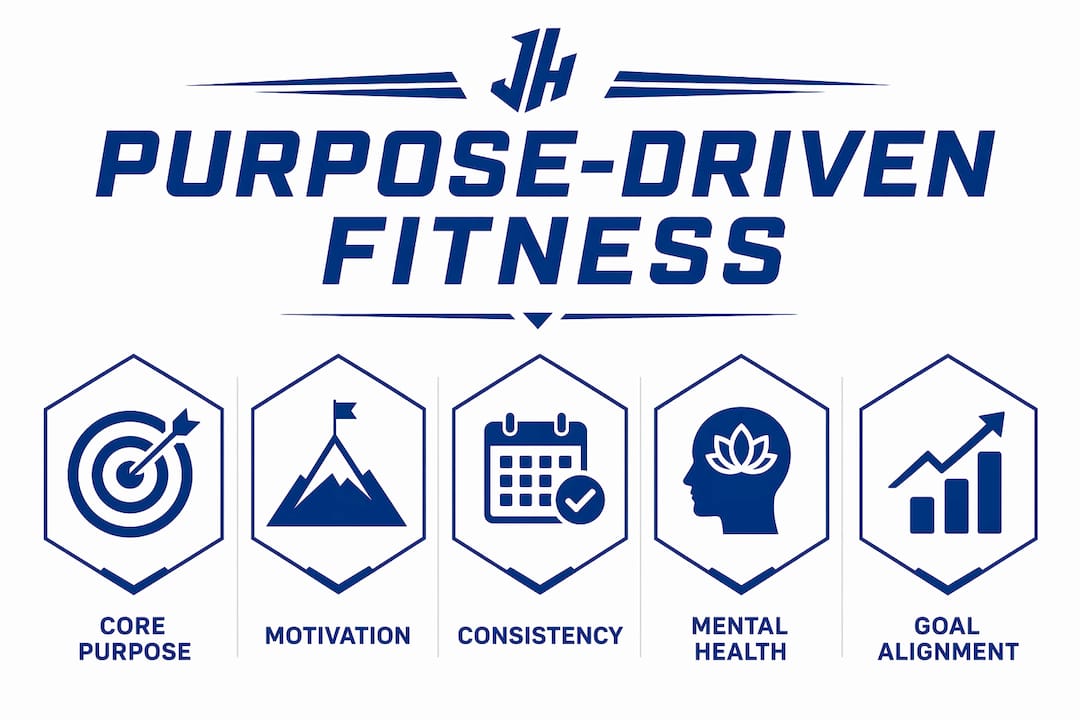
Pro Tip: Write your personal fitness “why” in one sentence and read it before every session. It sounds simple, but this single habit separates people who train consistently from people who train occasionally.
How does purpose-driven fitness differ from traditional exercise?
Traditional exercise programs focus on intensity, volume, or appearance outcomes. They measure success by how hard you worked or how sore you feel afterward. Purpose-driven training measures success by whether the session achieved its specific physiological aim.
Purpose-driven training defines a specific stimulus per session, whether that is hypertrophy, power, mobility, or active recovery. The load you select matches the session goal, not your ego or your mood that day. This distinction reduces injury risk significantly because you stop pushing at maximum intensity during phases when your body needs recovery.
| Attribute | Traditional approach | Purpose-driven approach |
|---|---|---|
| Motivation source | External (appearance, comparison) | Internal (values, identity, longevity) |
| Session intensity | Often ego-driven or random | Matched to specific physiological goal |
| Injury risk | Higher during recovery phases | Lower through intentional load selection |
| Progress measure | Weight lifted, calories burned | Movement quality, session objective met |
| Long-term adherence | Inconsistent without external pressure | Sustained by internal purpose |
Intentional training means controlling every rep with awareness of what the muscle should feel and how the body moves. Chasing soreness or ego is not the goal. Mastering movement is. High-intensity training is often misunderstood as the gold standard, but slowing down to master movement produces better long-term joint health and function than grinding through pain.
Pro Tip: Before your next session, write one sentence describing what this workout is for. Hypertrophy? Recovery? Mobility? That sentence becomes your filter for every decision you make during the hour.
How to practice purpose-driven fitness: practical steps
Building a purposeful workout routine starts with identifying your personal fitness “why.” This is not a vague aspiration. It is a specific, values-based reason that belongs to you alone. A strong fitness purpose must be tied to your own values, not copied from an influencer or borrowed from someone else’s goals.
Use these reflection questions to find yours: What do I want to be physically capable of in 10 years? Who depends on my health and energy? What does fitness make possible in my life outside the gym?
Once you have your “why,” apply it through these steps:
- Set a session objective before you start. Decide whether the goal is strength, mobility, recovery, or skill. Write it down.
- Select load and volume to match the objective. A recovery session should feel easy. A hypertrophy session should feel controlled and deliberate, not chaotic.
- Practice mindful movement during each set. Attention in training matters more than effort alone for both progression and injury prevention. Feel the muscle working, not just the weight moving.
- Evaluate mid-set based on purpose, not ego. If the load stops matching the session goal, adjust it. This is not weakness. It is intelligence.
- Track progress with both objective and subjective measures. Log the weight and reps, but also note whether the session felt aligned with its purpose. Both data points matter.
The biggest pitfall in purposeful workout routines is reverting to ego-driven decisions under pressure. You planned a recovery session, but your training partner is going heavy. Purpose-driven athletes stay the course because they know what the session is for.
Pro Tip: Physical exhaustion does not equal an effective workout. Purpose-driven training may feel easier on some days and that is the point. Sustainable long-term growth beats short-term burnout every time.
What are the broader impacts on mental and social well-being?
Exercise participation creates a psychosocial ecosystem where psychological growth and social cohesion reinforce each other. When you train with a clear purpose, you attract and connect with others who share similar values. That social layer deepens your commitment far beyond what solo discipline can sustain.
The broader psychosocial benefits of fitness with intention include:
- Resilience: Regular purposeful training builds tolerance for discomfort that transfers directly to life outside the gym.
- Social support: Group training around shared meaningful goals increases both adherence and satisfaction.
- Identity: Viewing yourself as someone who trains with purpose reshapes how you make decisions about sleep, nutrition, and stress.
- Emotional regulation: Intentional movement reduces cortisol and improves mood more consistently than random high-intensity sessions.
“Purpose-driven training fundamentally rewires the nervous system to favor recovery and resilience over simple exhaustion. It bridges physical and mental wellness in a way that no amount of grinding can replicate.”
The athletic mindset required for this kind of training is not about being elite. It is about being intentional. When you treat fitness as a lifestyle framework rather than a temporary fix, your nervous system adapts toward recovery and resilience rather than chronic stress. That shift has compounding returns across every area of your life.
Key Takeaways
Purpose-driven fitness works because intrinsic motivation, intentional session design, and values-based goals create consistency that external pressure and discipline alone cannot sustain.
| Point | Details |
|---|---|
| Purpose beats discipline | Anchoring training to personal values sustains habits through stress and fatigue better than willpower. |
| Session design matters | Define a specific physiological goal before each workout and match load to that goal, not your ego. |
| Intrinsic motivation lasts | Autonomy, purpose, and relatedness are the three needs that keep people moving long term. |
| Mental benefits are direct | Intentional training improves resilience, emotional regulation, and mental clarity as primary outcomes. |
| Community amplifies results | Training alongside others who share your values deepens commitment and satisfaction significantly. |
Why I think most people are training without a real reason
Most people I have worked with and observed over the years can tell you exactly what they do in the gym. Very few can tell you why. They know their split, their rep ranges, their protein targets. But ask them what the training is actually for and you get a pause.
That pause is the problem. Without a clear answer, every hard day becomes a reason to quit. Every missed session becomes evidence that fitness is not for you. The truth is fitness is for everyone, but only when it is built on something real.
I adopted purpose-driven training after years of chasing intensity for its own sake. The shift was not dramatic. I did not overhaul my program overnight. I simply started asking one question before every session: what is this for? That question changed my relationship with training more than any program ever did.
The misconception I hear most often is that training with purpose means going easier. It does not. Some of my most demanding sessions have been purpose-driven. The difference is that every hard rep had a reason. I was not grinding to prove something. I was building something specific.
If you want lasting commitment to fitness, stop copying someone else’s goals. Build yours from your own values, your own life, and your own definition of what it means to be capable. That is where real consistency lives. You can also look at how functional fitness for sports performance connects to this same principle of training with a defined outcome in mind.
— Jason
Gear built for athletes who train with intention
Teamjhall exists for people who take their training seriously and live by something bigger than a number on a scale. The brand was built on confidence, family, faith, loyalty, and consistency. Those are not marketing words. They are the values behind every piece of apparel in the collection.

Purpose-driven athletes need gear that keeps up with intentional, consistent training. The Teamjhall collection includes athletic wear designed for competitors, creators, and everyday athletes who show up with a reason. From performance tees to training tanks, every piece is built for people who train with direction. If you are ready to wear what you stand for, the full collection is at Teamjhall.store.
FAQ
What does purpose-driven fitness mean?
Purpose-driven fitness means exercising with a clear, personal reason tied to your values rather than external outcomes like appearance. It is the practice of intentional training where each session has a defined physiological and motivational goal.
How does purpose-driven fitness improve long-term consistency?
Anchoring physical activity to a personal purpose acts as a psychological buffer against common barriers like fatigue and lack of time. Research shows purpose predicts long-term habit consistency more reliably than discipline alone.
Can purpose-driven fitness reduce injury risk?
Intentional training reduces injury risk by matching session load to a specific goal rather than ego or mood. This prevents athletes from pushing at maximum intensity during recovery phases when the body needs lighter work.
How do I find my personal fitness “why”?
Ask yourself what you want to be physically capable of in 10 years and who depends on your health and energy. Your answer should be specific, values-based, and tied to your own life rather than someone else’s goals.
Is purpose-driven fitness only for advanced athletes?
Purpose-driven fitness applies at every level. Beginners benefit from it as much as experienced athletes because the core principle, knowing what your training is for, improves both adherence and results regardless of experience level.