

Why Apparel Affects Confidence: A 2026 Guide
Clothing is a direct input to your psychological state, not just a social signal. Research confirms that what you wear shapes how your brain processes confidence, social cues, and emotional readiness. The scientific term for this is enclothed cognition, a framework established in 2012 that explains how the symbolic meaning of a garment changes the wearer’s cognitive and emotional performance. A January 2026 study with 215 adolescents found that clothing preferences and social anxiety are fully mediated by self-esteem. That finding means apparel does not just reflect how you feel. It actively shapes it. Understanding why apparel affects confidence gives you a real tool for managing your mental state every single day.
Why apparel affects confidence at the level of fit and comfort
Fit is the most underrated factor in clothing psychology. A 2026 report found that lack of access to well-fitting clothing negatively impacts mental well-being and social confidence at a statistically significant level. That is not a minor finding. It means the physical relationship between your body and your clothes directly predicts how willing you are to show up in social and professional spaces.
Ill-fitting clothes create what psychologists call cognitive distraction. When your waistband digs in, your shirt pulls across the shoulders, or your pants bunch at the ankles, your brain registers physical discomfort as a background stressor. That stressor pulls mental bandwidth away from the task in front of you. You become self-conscious rather than present.

The somatosensory system, the network of nerves that processes touch and physical sensation, connects fabric feel to your emotional state. Clothes that fit well and feel comfortable send low-stress signals through this system. Clothes that bind, scratch, or restrict do the opposite. The somatosensory connection between fabric and cortisol is well-documented in textile psychology research. Your wardrobe is, in a real sense, a stress-management system.
Practical signs that fit is hurting your confidence:
- You tug, adjust, or pull at your clothes throughout the day
- You avoid eye contact or shrink your posture in certain outfits
- You feel relieved when you change into something else
- You describe certain clothes as “comfortable” but mean “I feel invisible in these”
- You avoid social situations when you cannot find the “right” outfit
Pro Tip: Build a small core wardrobe of pieces that fit your body right now, not the body you are working toward. Confidence built on clothes that fit today is more reliable than confidence deferred.
What is enclothed cognition and how does it change your brain?
Enclothed cognition is the psychological process by which the symbolic meaning of clothing changes the wearer’s mental performance and emotional state. The concept was formalized in a 2012 foundational study and has been expanded significantly through research as of March 2026. The most cited example is the lab coat experiment: participants who wore a coat described as a doctor’s lab coat performed better on attention tasks than those who wore the same coat described as a painter’s smock. The garment was identical. The meaning was not.
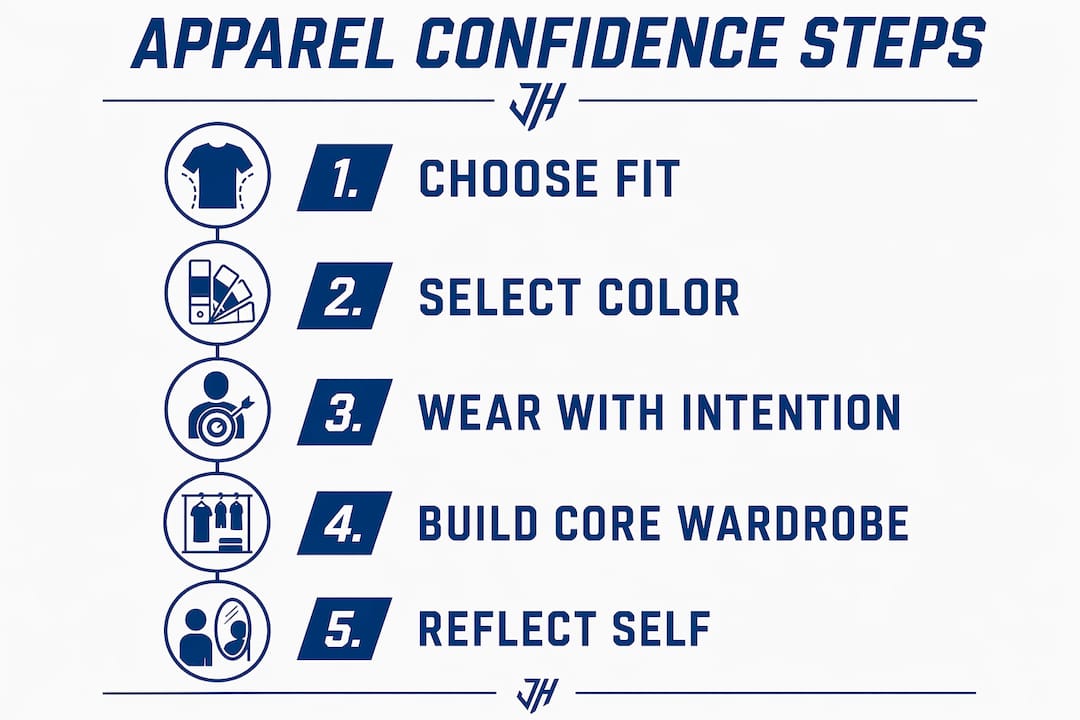
This matters for you because it means the confidence effect of any piece of clothing depends on what you believe it represents. A performance tee worn by someone who sees it as athletic gear triggers a different mental state than the same tee worn by someone who sees it as a hand-me-down. You assign the meaning. The clothing responds to that assignment.
Four ways to apply enclothed cognition intentionally:
- Dress for the role before you feel ready for it. Wearing clothes associated with competence primes your brain for competent behavior.
- Choose clothes that reflect your values, not external approval. Dressing to impress others creates fragile confidence. Dressing to express who you are creates durable confidence.
- Create a pre-performance ritual around getting dressed. Choosing to dress for confidence is a psychological ritual that signals readiness to your brain before you leave the room.
- Retire clothes that carry negative associations. If a shirt reminds you of a bad day, its symbolic weight works against you every time you wear it.
“Clothes communicate to ourselves as much as to others. Consciously assigning meaning to apparel triggers confidence by changing brain states.”
Dressing with intention is not vanity. It is a practical application of how the brain works. The enclothed cognition effect depends entirely on the meaning the wearer assigns, which means you hold the power in this equation.
How does color psychology in clothing affect self-esteem?
Color is not decoration. It is data your brain processes before you consciously register a single thought about an outfit. Research from February 2026 found that persistent avoidance of bright colors and a preference for muted palettes can indicate emotional vulnerability or diminished self-confidence. The pattern of avoidance is the signal, not any single choice.
Colors affect both the wearer and the observer, and situational context shapes their psychological meaning. Wearing red in a competitive setting signals dominance and readiness. Wearing it to a quiet one-on-one conversation reads differently. The same color carries different psychological weight depending on context. That context-dependence is what makes color psychology practical rather than prescriptive.
Fabric texture works alongside color through the somatosensory system. Soft, smooth textures reduce cortisol and promote relaxation, while rough or scratchy textures send low-level stress signals that accumulate over a full day. Performance fabrics that combine smooth texture with functional fit deliver a double benefit: physical comfort and psychological readiness.
| Clothing element | Psychological effect | Practical application |
|---|---|---|
| Bright, saturated colors | Signals energy and social readiness | Wear for presentations, interviews, or high-stakes social settings |
| Muted, neutral tones | Signals calm and approachability | Wear for focused work, creative sessions, or low-pressure days |
| Smooth, soft fabrics | Reduces cortisol, promotes ease | Prioritize for long days or high-stress environments |
| Rough or stiff fabrics | Elevates background stress signals | Avoid when you need sustained mental focus |
| Well-fitted silhouettes | Reduces cognitive distraction | Choose fit over trend when confidence is the goal |
Pro Tip: If you consistently reach for the same gray or black pieces every day, ask yourself whether you are choosing comfort or hiding. Both are valid, but only one builds confidence over time.
How to use clothing to build confidence every day
Wardrobe intentionality is the practice of choosing clothes with a clear purpose rather than defaulting to habit. It is one of the most direct ways to apply the psychology of clothing choices to your daily life. Consistently dressing in garments that feel incongruent with your personal identity triggers internal dissonance and undermines authentic confidence. The fix is alignment, not a bigger wardrobe.
A personal uniform is one of the most effective tools for building daily confidence. Routine personal style reduces decision fatigue and preserves mental energy for the things that actually matter. When you are not burning cognitive resources on “what do I wear today,” you show up sharper and more present. Many high-performing people across creative, athletic, and professional fields use this principle deliberately.
Practical strategies for dressing with confidence every day:
- Audit your wardrobe for fit first. Remove anything that does not fit your body today, regardless of its cost or sentimental value.
- Identify your personal uniform. Find two or three outfit formulas that consistently make you feel ready and repeat them without guilt.
- Align your clothes with your context. Dress for the environment you are entering, not the one you just left.
- Use texture and color as mood tools. On low-energy days, reach for smooth fabrics and a color with personal significance rather than defaulting to the most invisible option.
- Dress before you feel motivated. The act of getting dressed intentionally primes your brain for the mindset you want, not the one you woke up with.
The fear of judgment around clothing is real, especially for people aged 18–35 navigating professional and social environments simultaneously. The research is clear: true confidence comes from apparel alignment with personal values, not from dressing for external approval. When your clothes reflect who you actually are, the opinion of others carries less weight.
Key Takeaways
Apparel affects confidence by directly shaping brain states through enclothed cognition, fit satisfaction, color psychology, and fabric texture, making clothing a practical psychological tool you control.
| Point | Details |
|---|---|
| Fit drives confidence | Ill-fitting clothes create cognitive distraction and reduce social confidence measurably. |
| Enclothed cognition is real | The symbolic meaning you assign to clothing changes your cognitive performance and emotional state. |
| Color signals emotional state | Persistent avoidance of bright colors can indicate diminished self-esteem, not just personal preference. |
| Texture affects stress hormones | Smooth, soft fabrics reduce cortisol; rough textures add background stress that compounds over a day. |
| Personal uniform reduces fatigue | A consistent personal style preserves mental energy and builds reliable daily confidence. |
The thing most people get wrong about dressing for confidence
Most people treat clothing as the last step in getting ready. I think that is the wrong order entirely. The way I see it, getting dressed is the first decision of the day that tells your brain what kind of day you are about to have. When you pull on something that fits well, feels good against your skin, and reflects who you actually are, you have already made a choice about your mindset before you walk out the door.
The mistake I see constantly is people chasing confidence through novelty. They buy something new hoping it will change how they feel, and it does, for about a week. Then the feeling fades because the clothes were never aligned with their identity in the first place. Real confidence through clothing is not about having more. It is about having the right things and knowing why they matter to you.
The other thing I want to push back on is the idea that caring about what you wear is shallow. The research does not support that view at all. Enclothed cognition is a documented psychological mechanism. Fit satisfaction predicts social confidence. Texture affects cortisol. These are not opinions. They are measurable effects. Paying attention to your wardrobe is paying attention to your mental state.
What I have found, both personally and in watching others, is that the people who dress with the most confidence are not the ones with the most expensive clothes. They are the ones who know exactly what they are communicating and why. That clarity is the real source of the confidence you see on them.
— Jason
Apparel built for the way you actually live
Teamjhall designs performance apparel for people who compete, create, and lead, and who want their clothes to work as hard as they do. Every piece is built around fit, comfort, and the kind of quality that holds up when the stakes are high.

Whether you are training, working, or showing up for something that matters, the right gear changes how you carry yourself. The TJH Men’s Performance Tee and the UA Ladies Athletic Tee are built with smooth, performance fabrics that support both physical output and the mental edge that comes with wearing something that fits right. Browse the full Teamjhall collection and find the pieces that match who you are and where you are going.
FAQ
Why does clothing affect how confident you feel?
Clothing triggers a psychological process called enclothed cognition, where the symbolic meaning of a garment changes your brain’s cognitive and emotional state. When your clothes align with your identity and fit your body well, they reduce cognitive distraction and prime your brain for confidence.
Does the fit of clothing really impact self-esteem?
Yes. A 2026 report found that lack of access to well-fitting clothing negatively impacts mental well-being and social confidence at a statistically significant level. Clothes that fit poorly create physical discomfort that the brain registers as a background stressor, pulling focus away from social and professional performance.
How do color choices in clothing relate to self-esteem?
Persistent avoidance of bright colors and a preference for muted palettes can signal emotional vulnerability or diminished self-confidence, according to February 2026 psychological analysis. Color choices reflect and reinforce emotional states, making them a practical tool for mood regulation.
What is the best way to dress for confidence daily?
Build a personal uniform around two or three outfit formulas that fit well, feel comfortable, and reflect your values. Routine personal style reduces decision fatigue and preserves mental energy, which research links directly to more reliable daily confidence.
Can athletic apparel boost confidence the same way formal clothing does?
Yes, because enclothed cognition depends on the meaning you assign to the garment, not its formality. Athletic apparel worn by someone who associates it with performance, discipline, and identity triggers the same confidence-priming effect as a suit worn by someone who associates it with authority.