

Best Parent and Athlete Bonding Activities to Try Now
The four most effective parent and athlete bonding activities are shared active play, partner skill practice, game-day rituals, and co-led recovery routines. You can start today.
- Do a 15-minute jumping or tag session in your backyard or living room — no equipment needed, high enjoyment, and genuinely tiring for both of you.
- Ask two questions after practice: “What felt good today?” and “What do you want to work on next?” Then listen without fixing.
- Plan a shared recovery snack after their next game. Sit down, no phones, and let them lead the conversation.
- Pick one skill drill from their sport and ask them to teach it to you. Reversing the teacher role builds trust fast.
These four moves work because they combine physical effort with autonomy support — giving your athlete a sense of control while you show up consistently. That combination is exactly what the research says builds lasting trust.
Key Takeaways
Consistent, autonomy-supportive shared activity — starting with just 15 minutes of high-enjoyment play — is the most research-backed way to strengthen the parent–athlete bond.
| Point | Details |
|---|---|
| Start with MVPA play | Jumping games and tag produce the highest enjoyment and activity intensity for parent–child pairs. |
| Let the athlete lead | Autonomy-supportive sessions build trust and self-determined motivation more than parent-directed coaching. |
| Measure enjoyment, not scores | Track a 1–5 enjoyment rating and effort check-ins rather than wins or performance metrics. |
| Use the 4-week plan | Begin with three 15-minute sessions in Week 1 and scale to a 60-minute athlete-designed session by Week 4. |
| Communicate about goals | Ask “What do you want from this sport?” — parents who align with their athlete’s actual goals provide better support. |
Table of Contents
- Why shared sport activity strengthens the parent–athlete bond
- What types of parent–child sports bonding activities actually work?
- Ready-to-run session plans: 15, 30, and 60 minutes
- How to lead sessions that actually build trust
- How to adapt activities by age: younger athletes vs. teens
- Common barriers and how to get past them
- How to run bonding sessions in any space with minimal gear
- How to track progress without turning it into pressure
- Safety, consent, and coach boundaries
- A 4-week routine to make this a habit
- Why you can trust this guide
- Sport-specific drills make sessions feel relevant
- Non-physical bonding activities that still build the connection
- Communication strategies that deepen the emotional connection
- Using technology and apps to track progress together
- How to celebrate milestones without adding pressure
- A perspective on the one activity worth trying this week
- Sources
Why shared sport activity strengthens the parent–athlete bond
The evidence here is cleaner than most parents expect. A small accelerometer study of 31 parent–child dyads found that jumping games, body-weight exercises, and tag games produced higher moderate-to-vigorous physical activity (MVPA) and enjoyment than walking or dancing — tag was the most enjoyed by both parents and children. The implication: skip the casual stroll and go straight to the games that make you both breathless and laughing.
A 2024 review in Frontiers in Psychology concluded that moderate, autonomy-supportive parent involvement — acting as a facilitator rather than an extension coach — promotes self-determined motivation in young athletes. Meanwhile, research on adolescent-parent relationships in sport found that teen athletes name trust as the single most important parental factor, built by prioritizing psychological support over controlling training.
A 12-week randomized trial (N=34) showed both home-based and organized programs increased activity levels, and most participants reported improved relationships after the intervention. Home programs work. You don’t need a facility or a coach to make this happen.
What types of parent–child sports bonding activities actually work?
Choose activities that are sport-relevant, genuinely enjoyable, and appropriate for your child’s age. The categories below cover the full range from high-intensity play to quiet strategy sessions.
- MVPA active play (high intensity): Tag, jumping games, relay races, freeze tag. Minimal equipment, maximum effort and laughter. Best for younger athletes and as warm-ups for teens.
- Partner skill practice (moderate intensity): Passing drills, shooting repetitions, catching and throwing, dribbling challenges. Tailor to your athlete’s sport. The key: let them set the pace and correct you.
- Mini-competitions and challenges (moderate–high): Timed sprints, accuracy contests, “beat your score” challenges. Shared challenge builds trust because you’re both trying — and both failing sometimes.
- Tactical conversations and video review (low intensity): Watch a game film together, discuss a play, ask “What would you have done differently?” This builds strategic thinking and shows you respect their expertise.
- Recovery and game-day rituals (low intensity): Shared stretching, foam rolling side by side, a pre-game playlist you build together, a post-game meal tradition. Rituals create predictability, and predictability feels like safety to a young athlete.
Each category supports bonding differently. Active play creates shared physical experience. Skill practice signals respect for their craft. Rituals build identity and belonging — the feeling that this is what our family does.
Ready-to-run session plans: 15, 30, and 60 minutes
Pick the template that fits your schedule. Each one balances fun, effort, and athlete autonomy.
15-minute plan
- 2 min: light movement (jog in place, arm circles)
- 8 min: one MVPA game (tag, jumping contest, relay)
- 3 min: athlete picks one thing to show you from their sport
- 2 min: cool-down stretch + shared snack or water
Sample phrase: “You pick the game — I’ll follow your rules.”
30-minute plan
- 5 min: warm-up jog or dynamic stretch
- 10 min: short skill circuit (3 drills from their sport, athlete leads)
- 10 min: small-sided game or challenge (keep score loosely)
- 5 min: reflective debrief — two questions, athlete talks first
Sample phrase: “I noticed how hard you worked on that. What did you notice?”
60-minute plan (include a home workout structure for reference)
- 10 min: warm-up, athlete leads
- 20 min: extended skill session — parent as training partner, not instructor
- 15 min: longer game or intergenerational strength circuit (body-weight only for teens; check with their coach on load)
- 10 min: structured recovery (stretching, breathing, hydration)
- 5 min: goal-setting check-in for next session
Safety checklist for 60-minute sessions: warm up fully, stay hydrated, keep teen loads appropriate, inspect any equipment, stop if something hurts.
Sample phrase: “What’s one thing you want to get better at today? Let’s build the session around that.”
How to lead sessions that actually build trust
Your job in these sessions is to facilitate, not coach. That single shift changes everything.
- Before the session: Ask your athlete what they want to do. Give two options if they’re stuck, but let them choose.
- During the session: Match their energy. Praise effort out loud (“That was a tough rep — you stayed with it”). Avoid correcting technique unless there’s a safety issue.
- After the session: Use a two-question debrief. Keep it short.
Do / Don’t:
- ✅ “What felt strong today?”
- ✅ “You kept going even when it got hard.”
- ❌ “You should have done that differently.”
- ❌ Comparing today’s performance to last week’s.
Three debrief prompts that invite athlete voice:
- “What’s one thing you’d change about today’s session?”
- “What do you want to work on next time?”
- “What do you want to get out of this sport right now?”
That last question matters more than most parents realize. Research shows parents often misjudge their children’s sports goals — and direct communication about what the child actually wants improves parental support and alignment significantly.
Pro Tip: When you feel the urge to instruct, turn it into a question. “You should plant your foot there” becomes “What do you think your foot position was doing on that one?” The athlete figures it out — and owns the answer.
How to adapt activities by age: younger athletes vs. teens
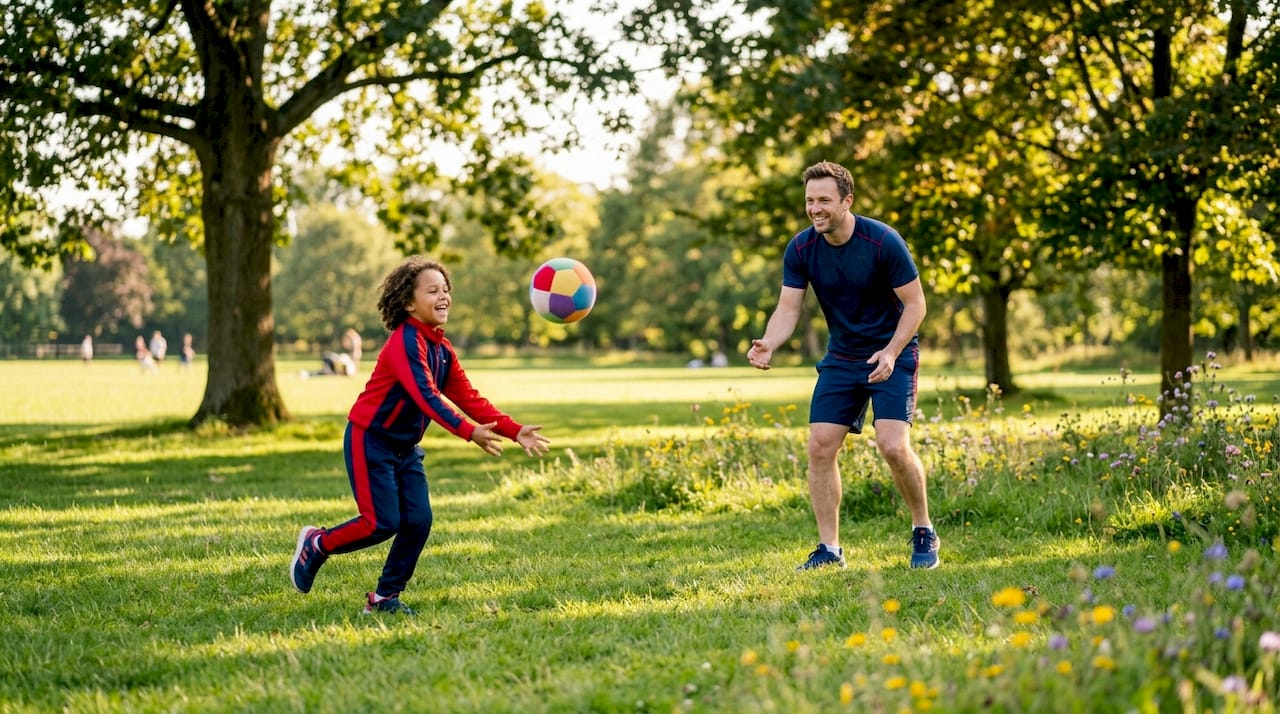
Younger children (ages 5–12) need play-driven structure and adult-led choices. Teens (ages 13–17) need autonomy, shorter collaborations, and genuine respect for their privacy and expertise.
| Factor | Ages 5–12 | Ages 13–17 |
|---|---|---|
| Session length | 15–20 minutes | 20–60 minutes |
For teens, scale session length based on engagement and the 4-week progression — from 20 minutes in early weeks to up to 60 minutes in athlete-designed sessions by Week 4. | Activity examples | Tag, jumping games, relay races, obstacle courses | Skill drills, strength circuits, tactical video review | | Communication style | Simple, enthusiastic, game-framed | Conversational, question-based, peer-level | | Supervision level | Close, parent-led with child choices | Athlete-led, parent as partner | | Primary benefit | Enjoyment, movement habits, connection | Trust, identity, shared respect |
A systematic review found family cohesion improvements were strongest in interventions targeting children aged 5–12, though targeted programs for teens showed meaningful gains too. Scale intensity gradually for teens — body-weight circuits before adding any external load, and always coordinate with their coach.
Common barriers and how to get past them
The most common barriers are solvable. A 2025 meta-synthesis identified environmental and structural constraints as the primary obstacles, with motivational strategies and family-centered program design as the strongest facilitators.
- No time: Replace one 10-minute car ride with a quick active check-in at home. Three 15-minute sessions per week beats one long session you never schedule.
- Low motivation (yours or theirs): Let the athlete pick the activity. Child-led choice is one of the most consistent facilitators in intervention research.
- No space or equipment: A hallway works for agility drills. A driveway works for almost everything else. See the next section.
- Scheduling conflicts: Block sessions on a shared calendar like a practice — treat it as non-negotiable family time, not optional.
- Feeling like you’re intruding: You’re not their coach. You’re their parent. That’s a different and more important role. Keep sessions clearly separate from their coached training.
How to run bonding sessions in any space with minimal gear
Almost every activity adapts to whatever space you have.
Tiny space (hallway or living room):
- Agility ladder patterns with tape on the floor
- Balance challenges and single-leg holds
- Reaction drills (clap-and-move games)
Medium space (backyard or driveway):
- Tag and relay variations
- Passing and catching drills
- Timed sprints with duct-tape start/finish lines
Large space (park or field):
- Full skill circuits from their sport
- Small-sided games
- Distance runs with conversation built in
Equipment substitutes: folded towels as agility markers, duct tape for sprint lines, a rolled-up shirt as a target, water bottles as cones. The active family lifestyle guide has additional low-cost ideas worth bookmarking.
How to track progress without turning it into pressure
Measure enjoyment, effort, and athlete-led goals — not wins or scores. Three non-score metrics that work:
- Enjoyment rating: After each session, both of you rate it 1–5. Track it over four weeks. Rising scores mean the routine is working.
- Effort check-in: “Did you give what you had today?” Yes or no. No judgment either way.
- Athlete-led goal completion: The athlete sets one small goal per session. Did they attempt it? That’s the metric — not whether they nailed it.
Post-session check-in template (two sentences): “You worked hard on [specific thing]. What’s one thing you want to try next time?” That’s it. Short, effort-focused, forward-looking.
Safety, consent, and coach boundaries
Safety and consent come first — always check readiness, environment, and coach boundaries before any session.
- Warm up for at least 5 minutes before any MVPA activity.
- Keep teens hydrated; have water available throughout.
- Match load to their current training phase — don’t add intensity during heavy competition weeks.
- Inspect any equipment before use.
- If your athlete says “not today,” respect it immediately and without negotiation.
On coach boundaries: your bonding sessions are separate from their coached training. Don’t replicate drills their coach is correcting — you’ll create conflicting cues. Don’t critique their coach on the sideline or in the car. Understanding the community and coach relationship helps parents stay in their lane without feeling sidelined themselves.
A 4-week routine to make this a habit
A low-friction 4-week progression builds routine and trust. Start small and scale up.
| Week | Sessions | Athlete role | Parent role |
|---|---|---|---|
| Week 1 | Three 15-min active play sessions | Picks the game | Follows the rules, praises effort |
| Week 2 | Two 15-min + one 30-min skill session | Leads one drill | Participates as partner, asks debrief questions |
| Week 3 | Two 30-min sessions with co-led challenge | Sets the session goal | Supports, tracks enjoyment rating |
| Week 4 | One 30-min + one 60-min session | Designs the full session | Celebrates completion, resets goals together |
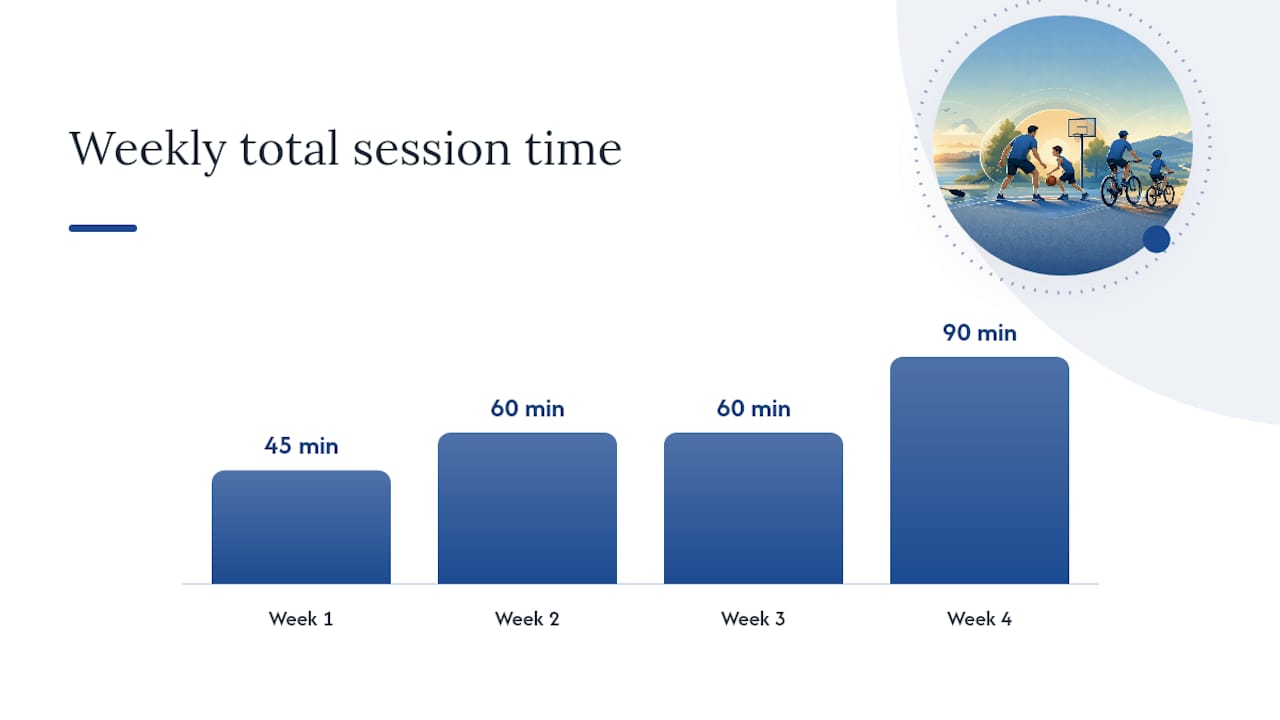
Week 4 ends with a family reward ritual — athlete’s choice. A meal out, a movie, a new piece of gear. The point is marking the milestone together. Fitness habits that actually stick follow this same pattern: small wins, consistent repetition, meaningful celebration.
Why you can trust this guide
This guide draws on peer-reviewed research including randomized intervention trials, systematic reviews, and meta-syntheses on parent–child physical activity and adolescent sport relationships. Every recommendation is grounded in published findings, not opinion alone.
Jason is the author behind the Teamjhall blog and a driving voice in the TeamJHall performance lifestyle movement. The Teamjhall brand is built on the values of confidence, family, faith, loyalty, and consistency — values that show up directly in how these bonding frameworks are designed.
Sources used include:
- Accelerometer-measured MVPA studies on parent–child dyads
- Randomized controlled trials on family-based physical activity programs
- Systematic reviews on family functioning and physical activity interventions
- Meta-syntheses on barriers and facilitators to parent–child co-activity
- Adolescent sport psychology research on trust and autonomy support
Sport-specific drills make sessions feel relevant
Generic workouts are fine. Sport-specific drills are better. When your athlete recognizes the drill from their actual practice, engagement goes up immediately — it signals that you’ve paid attention to what they do.
For a soccer player: take turns as goalkeeper and shooter from 10 yards. For a basketball player: run a two-person passing drill and count consecutive catches. For a swimmer: do dry-land core circuits their coach has assigned. For a baseball or softball player: soft-toss in the backyard with a rolled-up sock if you don’t have a ball handy.
The drill doesn’t need to be perfect. The point is that you’re in their world, speaking their sport’s language. That alone shifts the dynamic. Athletic development resources can help you understand what skills matter at each stage.
Non-physical bonding activities that still build the connection
Not every session needs to be physical. Some of the strongest parent–athlete bonding happens sitting still.
Watch a game together — not just any game, but one in their sport at a level above theirs. Pause it. Ask what they see. “What would you have done on that play?” turns passive watching into shared analysis.
Shared goal-setting is underused and powerful. Sit down once a month and ask your athlete to name one thing they want to improve and one thing they want to enjoy more. Write it down. Revisit it. The act of writing it together signals that their goals are yours too.
Strategy discussions during a car ride, a meal, or a walk count. “What’s the hardest part of your position right now?” is a better conversation starter than “How was practice?” The specificity shows you’re paying attention.
Communication strategies that deepen the emotional connection
The way you talk during and around these sessions matters as much as the activity itself. A few principles that hold up across age groups:
Listen more than you speak. A ratio of two questions to every statement keeps the athlete talking and keeps you learning what they actually need.
Name effort, not outcome. “You stayed focused through that whole drill” lands differently than “You did great.” The first one tells them what you saw; the second is just noise.
Avoid the post-game debrief trap. Immediately after a loss is the worst time for analysis. Give it 20 minutes, or wait until the next day. Research confirms that parents who communicate about goals — rather than performance — build stronger alignment with their athlete’s actual experience.
Use “I noticed” instead of “you should.” “I noticed you kept your composure when the ref made that call” is specific, positive, and observation-based. It builds the athlete’s self-awareness without triggering defensiveness.
Using technology and apps to track progress together
Technology works best when the athlete controls it. A few tools worth knowing:
Strava lets you log shared runs or rides and comment on each other’s efforts. The social layer makes it feel like a shared project rather than surveillance.
Nike Training Club has free family-friendly workouts you can do side by side, with clear instructions that remove the “what do we do next?” friction.
A shared notes app (Apple Notes, Google Keep) works well for logging session goals, enjoyment ratings, and athlete-led targets. Simple, private, and athlete-controlled.
Avoid apps that emphasize performance rankings or comparisons to peers — those shift focus from enjoyment and effort back to outcome. The goal is a tool that tracks your progress together, not one that benchmarks your child against others.
How to celebrate milestones without adding pressure
Celebration reinforces the behavior you want to see more of. The key is celebrating the process — showing up, trying hard, completing the 4-week routine — not the result.
Mark the end of Week 4 with something the athlete chooses. A meal at their favorite restaurant, a new piece of gear from Teamjhall, a day trip to a place they’ve wanted to go. The choice matters as much as the reward.
Mid-routine acknowledgment works too. After Week 2, say out loud: “We’ve done this four times now. That’s not nothing.” Small verbal acknowledgments between milestones keep motivation from dipping in the middle weeks.
One thing to avoid: tying celebration to performance. “We’ll celebrate when you make the starting lineup” turns a bonding ritual into a conditional reward. Celebrate the effort and the consistency — those are the things your athlete actually controls.
A perspective on the one activity worth trying this week
If you only do one thing from this entire guide, make it a 15-minute tag game. No setup, no equipment, no plan beyond “you’re it.” What happens in those 15 minutes — the laughing, the effort, the moment your athlete realizes you’re actually trying — is the foundation everything else builds on.
The families I’ve seen build the strongest parent–athlete connections aren’t the ones with the most structured programs. They’re the ones who show up consistently in small ways, let the athlete lead, and resist the urge to turn every moment into a coaching opportunity. Gear up, get moving, and let the connection follow.
Sources
Trusted research underpins these recommendations — read more here.
- Physical Activity and Enjoyment in Parent-Child Dyads During Shared Physical Activity
- Adolescent-parent relationships in sport (MDPI)
- Frontiers in Psychology review on parent involvement and autonomy support
- Daughters and Mothers Exercising Together (DAMET): Effects of Home- and University-Based Interventions on Physical Activity Behavior and Family Relations
- Family physical activity interventions and family functioning (Wiley review)
- Parents Want Kids to Succeed in Sports, and Communication is Key · Frontiers for Young Minds