

What Does Athletic Development Mean for Young Athletes
Athletic development is defined as the structured, long-term process of building an athlete’s physical, technical, and psychological capacities in a planned, progressive way tied to biological maturation. This process is not simply about getting faster or stronger in the short term. The Long-Term Athlete Development (LTAD) model, used widely across North American sports organizations, organizes this growth into distinct stages from early childhood through elite competition. Athletes who follow systematic development models achieve 25–40% better performance outcomes with lower injury rates and greater satisfaction compared to those who train without structure. That gap is not a minor advantage. It is the difference between a long, productive athletic career and one cut short by injury or burnout.
What does athletic development mean across its main stages?
Athletic development, in the industry’s standard framework, progresses through defined stages tied to biological age rather than the year on a birth certificate. Chronological age is a poor indicator of training readiness. Two athletes who are both 13 years old can differ by two or more years in biological maturity. Ignoring that gap leads to overloading athletes who are not yet physically ready.
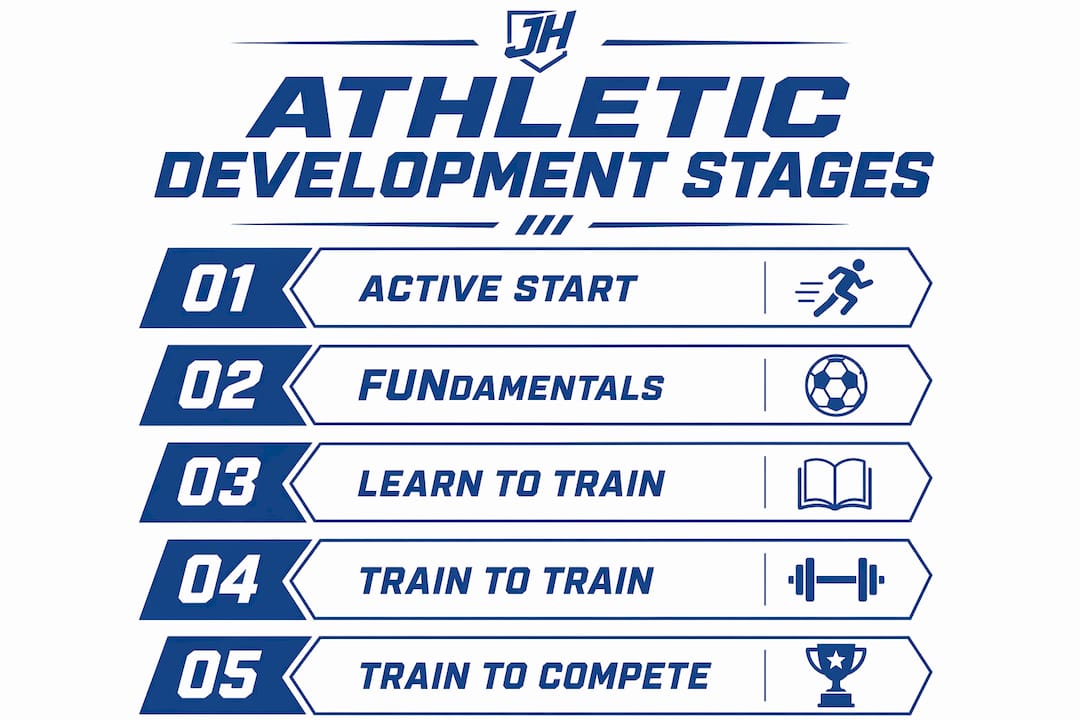
The LTAD model breaks development into five core stages:
- Active Start (ages 0–6): Free play and basic movement. No structured sport training.
- FUNdamentals (ages 6–9): Learning fundamental movement skills like running, jumping, and throwing through fun, game-based activity.
- Learn to Train (ages 9–12): The most critical window for skill acquisition. Coordination and motor patterns are built here.
- Train to Train (boys 12–16, girls 11–15): General physical conditioning becomes the priority. This stage transitions athletes from movement literacy to structured strength and endurance work.
- Train to Compete: Sport-specific training intensifies. Athletes begin preparing for high-level competition.
A key biological marker used to guide stage transitions is Peak Height Velocity (PHV), the point of fastest growth during puberty. Training programs should vary significantly across PHV phases to protect developing joints and maximize neural adaptation. Coaches who ignore PHV and push heavy loading during rapid growth phases increase injury risk substantially.
Most sports require 10–15 years and over 10,000 hours of purposeful practice to reach competitive levels. That timeline cannot be compressed by starting intense specialization at age 9. The LTAD model exists precisely to distribute that development intelligently across the years available.
| Stage | Age Range | Primary Focus |
|---|---|---|
| Active Start | 0–6 | Free movement and play |
| FUNdamentals | 6–9 | Basic movement skills |
| Learn to Train | 9–12 | Motor skill and coordination |
| Train to Train | Boys 12–16, Girls 11–15 | Physical conditioning base |
| Train to Compete | 16+ | Sport-specific performance |
Which physical qualities matter most, and when should you train them?
Athletic development is a planned integration of neuromuscular adaptation, skill acquisition, and intelligent recovery aimed at building forceful yet resilient bodies. Not all physical qualities respond equally to training at every age. Sensitive periods exist where specific qualities respond more robustly to training stimulus. Missing these windows does not make development impossible, but it does raise the ceiling you are working against.
The physical qualities with the clearest sensitive periods include:
- Speed: Best developed before puberty. The nervous system is highly adaptable in early adolescence, making sprint mechanics and reactive speed easier to ingrain.
- Aerobic capacity: Responds well during and after puberty. Endurance training becomes more productive as the cardiovascular system matures.
- Strength: Most trainable after PHV, when testosterone and growth hormone levels support meaningful muscle adaptation.
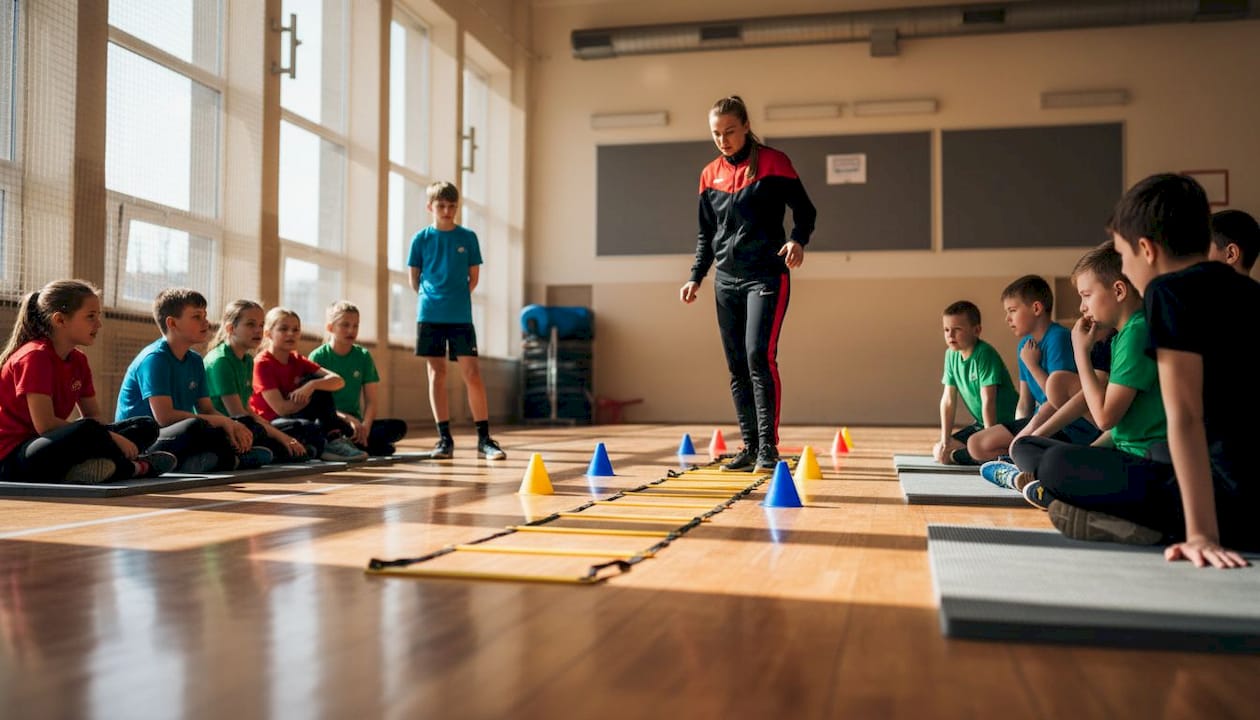
- Coordination and agility: Peak trainability falls within the “golden age of motor learning,” approximately ages 9–12.
The golden age of motor learning is when foundational movement skills become deeply entrenched and transferable across sports. An athlete who builds strong coordination patterns between ages 9 and 12 carries those patterns into every sport they play later. An athlete who misses this window and lacks foundational motor skills by age 12 will face reduced coordination even after years of specialized training.
Pro Tip: If you are coaching or training a young athlete aged 9–12, prioritize movement variety over sport-specific drills. Gymnastics, martial arts, and multi-directional games build the motor library that pays dividends for decades.
Power, which combines strength and speed, develops most effectively after the strength and speed foundations are already in place. Trying to build power in a 10-year-old who has not yet developed basic strength patterns is like building a second floor before the foundation is set.
How do psychological and social factors shape long-term athletic success?
Athletic development is mischaracterized when it is treated as purely physical. Psychological, social, and environmental factors greatly influence athlete retention, motivation, and long-term health alongside physical training. An athlete with strong physical tools but poor mental resilience will plateau or quit before reaching their ceiling.
Mindset and emotional readiness determine how an athlete responds to failure, fatigue, and pressure. Young athletes who develop a growth mindset, the belief that ability improves through effort, stay in sport longer and push through setbacks more effectively. Coaches and parents who frame mistakes as learning opportunities build this mindset directly.
“Social and psychological growth are as critical as physical development to sustain athlete participation and long-term health. North American research consistently shows that athletes who feel supported by their environment stay in sport longer and perform at higher levels.”
Social support from parents, coaches, and peers acts as a buffer against burnout. Athletes who feel psychologically safe in their training environment take more risks, ask more questions, and develop faster. The opposite is also true. Environments built on fear of failure or excessive pressure accelerate dropout, particularly in athletes aged 12–16 who are already navigating the stress of puberty.
Athletic identity also plays a role here. Athletes who tie their entire self-worth to performance outcomes are more vulnerable to anxiety and early exit from sport. Coaches who help athletes build identity beyond results create more durable competitors.
How can athletes, coaches, and parents apply these principles practically?
Understanding athletic development concepts is only useful when it changes behavior. Here is how to apply these principles at each level.
- Build a multi-sport base before age 15. Early specialization before age 15 is linked with increased overuse injuries and higher dropout rates. Multi-sport exposure builds broader movement literacy and keeps athletes engaged longer.
- Design age-appropriate training plans. Match training volume and intensity to biological stage, not just age. A 14-year-old who has not yet hit PHV needs different loading than one who has already passed it.
- Monitor training loads consistently. Track weekly volume, intensity, and recovery quality. Sudden spikes in load are the leading cause of overuse injuries in young athletes.
- Prioritize recovery as part of the program. Sleep, nutrition, and rest days are not optional extras. They are when adaptation actually happens. An athlete who trains hard but sleeps poorly is running a deficit.
- Adjust based on biological indicators. Watch for signs of PHV such as rapid height gain and adjust resistance training accordingly. This is the period where bone stress injuries are most likely.
- Involve parents as partners, not pressure sources. Parents who understand development timelines become assets. Parents who push for early specialization and immediate results become liabilities.
Pro Tip: Use a simple training log to track not just workouts but also sleep hours, mood, and soreness levels. Patterns in that data reveal when an athlete is approaching overtraining before injuries occur.
Sports performance training programs that apply these principles produce athletes who are not only more capable but also more durable. The goal is not peak performance at age 16. The goal is peak performance at 24, 26, or 28, with a healthy body that got there without shortcuts.
Athletic longevity depends directly on how well the early development stages were executed. Rushing those stages does not accelerate the timeline. It shortens it.
Key Takeaways
Athletic development is a long-term, biologically guided process that requires patience, structure, and attention to physical, psychological, and social factors at every stage.
| Point | Details |
|---|---|
| Follow biological age, not just chronological age | Use markers like Peak Height Velocity to guide training loads and stage transitions. |
| Protect the 9–12 motor learning window | Prioritize movement variety and coordination during this critical developmental period. |
| Avoid early single-sport specialization | Multi-sport exposure before age 15 reduces injury risk and keeps athletes in sport longer. |
| Treat psychology as part of training | Mindset, social support, and identity shape whether athletes reach their physical ceiling. |
| Plan for 10–15 years of development | Elite performance requires over 10,000 hours of purposeful practice across multiple stages. |
Why I think most people misread athletic development entirely
The most common mistake I see is treating athletic development as a faster path to the same destination. Parents want their kid competing at the highest level by 14. Coaches want wins this season. Athletes want results now. So everyone compresses the timeline and skips the foundational work.
What actually happens is the opposite of what they want. Athletes who specialize too early, train too hard too soon, or skip the motor learning years arrive at 18 with a narrow skill set, a body full of overuse injuries, and a mind that is already burned out on the sport. I have watched talented athletes walk away from sport at 17 because the joy was trained out of them before they ever got to the good part.
The athletes who make it to elite levels are almost never the ones who peaked earliest. They are the ones who stayed curious, stayed healthy, and stayed in the game long enough to let the process work. That requires coaches and parents who understand that functional fitness foundations built early pay off years later, not weeks later.
Deliberate practice matters enormously, but so does the environment around it. An athlete training in a culture of confidence, family support, faith in the process, and consistency will outperform a more physically gifted athlete in a toxic environment. That is not motivational talk. That is what the research on retention and performance actually shows.
The long view is not the patient view. It is the correct view.
— Jason
Teamjhall gear built for every stage of the process
Training hard requires gear that keeps up. Teamjhall designs performance apparel for competitors, creators, and everyday athletes who take their development seriously at every stage.

Whether you are in the gym building your base, on the field developing your skills, or recovering between sessions, the right gear supports your focus and your identity as an athlete. The Teamjhall store carries performance pieces built for real training, including the UA Ladies Athletic Tee and the TJH Women’s Athletic Tank, both designed for comfort and durability through every rep. Confidence, loyalty, and consistency are not just values. They show up in what you wear to work.
FAQ
What does athletic development mean in simple terms?
Athletic development is the structured, long-term process of building an athlete’s physical, technical, and psychological abilities in stages aligned with biological maturity. It covers everything from early movement skills in childhood through elite competition readiness.
What is the LTAD model and why does it matter?
The Long-Term Athlete Development (LTAD) model organizes athletic growth into stages from Active Start through Train to Compete, each tied to biological markers rather than just age. It matters because it prevents injury, reduces burnout, and builds a foundation for peak performance later in an athlete’s career.
When is the best age to start serious athletic training?
Serious structured training should begin with the “Learn to Train” stage around ages 9–12, focusing on coordination and movement skills. Heavy sport-specific specialization before age 15 increases overuse injury risk and dropout rates.
How does psychology affect athletic development?
Psychological factors including mindset, emotional readiness, and social support directly influence how long athletes stay in sport and how high they perform. Athletes in supportive environments develop faster and experience less burnout than those in high-pressure settings.
Can you make up for missed development stages later?
Missing sensitive periods, especially the motor learning window between ages 9 and 12, makes later development harder but not impossible. Athletes who missed foundational stages need more deliberate remedial work to build the coordination and movement patterns that would have come more naturally earlier.