

What Is a High-Performance Habit: 6 Habits That Build Lasting Success
A high-performance habit is a deliberate, repeatable behavior you practice consistently to sustain both achievement and personal wellbeing over the long term. Brendon Burchard’s research-backed framework, the HP6, identifies six of them:
- Seek clarity — know who you are, what you want, and how you want to show up
- Generate energy — actively manage your physical, mental, and emotional fuel
- Raise necessity — make performance feel required, not optional
- Increase productivity — focus on high-quality output, not just activity
- Develop influence — build the relationships and communication skills that multiply your impact
- Demonstrate courage — act boldly and consistently, even when it’s uncomfortable
Pick one of these habits today. Track it for seven days. That single decision is how this starts.
Key Takeaways
High-performance habits are deliberate, repeatable behaviors that automate high-leverage actions, free cognitive resources, and sustain both achievement and wellbeing over time.
| Point | Details |
|---|---|
| Definition | A high-performance habit is a deliberate, repeatable behavior that sustains achievement and wellbeing simultaneously. |
| The HP6 framework | Burchard’s six habits are: seek clarity, generate energy, raise necessity, increase productivity, develop influence, and demonstrate courage. |
| Science behind habits | Repetition shifts behavior from effortful to automatic, freeing cognitive capacity for high-level decisions. |
| 6-week start plan | Use the 3-3-3 rule: commit for 3 days, 3 weeks, then 3 months, adding one habit at a time. |
| First action | Pick one HP6 habit today, attach it to an existing routine, and track it for seven days. |
Table of Contents
- Where does the HP6 framework come from, and why does it matter?
- Seek clarity: the habit that sharpens every decision you make
- Generate energy: why your fuel determines your ceiling
- Raise necessity: how to make performance feel non-optional
- Increase productivity: the difference between busy and effective
- Develop influence: the habit that multiplies everything else
- Demonstrate courage: training yourself to act despite discomfort
- Why do habits improve performance? The science in plain terms
- How to build your first high-performance habit: a practical 6-week plan
- Sample morning routines that put all six habits to work
- A coach’s honest take on HP6 in real athletic and daily life
- Sources
Where does the HP6 framework come from, and why does it matter?
Brendon Burchard developed the HP6 through large-scale surveys and the High Performance Indicator (HPI) assessment, a tool that measures how consistently people practice each of the six habits. The findings became the foundation of his book High Performance Habits, which frames high performance not as grinding harder but as doing what matters most with intention. The distinction Burchard draws is worth sitting with: the difference between miserable achievers and genuinely fulfilled high performers is not talent or luck. It’s deliberate habit design.
The framework defines “high performance” as the intersection of sustained achievement and wellbeing. That second word matters. Habits that produce results at the cost of your health, relationships, or sanity are not high-performance habits. They’re just unsustainable pressure.
Why habits and not goals? Goals tell you where to go. Habits determine whether you actually get there. When a behavior becomes automatic, it stops consuming willpower and starts running in the background, freeing your brain for the decisions that genuinely require focus. Research on performance habits confirms that automating high-leverage behaviors reduces decision fatigue and improves long-term skill acquisition. That’s the cognitive case for building habits deliberately rather than relying on motivation to show up every morning.
The HP6 habits are also learnable by anyone. The High Performance Institute’s research emphasizes that these behaviors are not personality traits you either have or don’t. They’re skills built through repetition, measurement, and deliberate review.
Seek clarity: the habit that sharpens every decision you make
Clarity means knowing three things at once: who you are, what outcomes you’re working toward, and what standards you hold yourself to in the process. Without all three, you make decisions by default instead of by design.
The practical payoff is faster, better decision-making. When you’re clear on your identity and priorities, you stop wasting time on tasks that don’t align with either. You also reduce the mental overhead of second-guessing yourself mid-task.
Three micro-practices that build this habit:
- Daily intention setting: Before you open your phone or email, write one sentence: “Today I will focus on ___ because it matters to ___.”
- Pre-task identity prompt: Before any significant task, ask yourself, “Who do I need to be right now to do this well?” A coach, a creator, a competitor?
- End-of-day reflection: Spend two minutes answering: “Did my actions today match my stated priorities?” A yes/no answer is enough to start.
To measure progress, track decision speed. Notice how long it takes you to commit to a course of action on a given day. As clarity builds, that lag shrinks.
Pro Tip: Use this template before any task: “As [identity], I will [action] so that [outcome].” Example: “As a competitor, I will finish this proposal without distraction so that I can submit it ahead of deadline.” That one sentence aligns identity, action, and purpose in under ten seconds.
Generate energy: why your fuel determines your ceiling
Energy management is the habit of actively protecting and replenishing your physical, mental, and emotional capacity. Most people manage their calendar. High performers manage their energy first, then their calendar.
Sleep, nutrition, and movement are not lifestyle choices separate from performance. They’re inputs that directly determine cognitive stamina. Sleep deprivation impairs prefrontal cortex function, which is exactly the part of the brain you need for planning, judgment, and self-control. Nutrition affects neurotransmitter production. Movement increases blood flow to the brain and reduces cortisol. These are foundational factors for all aspects of performance. For practical guidance on fueling your training and daily output, the Teamjhall nutrition guide covers the specifics.
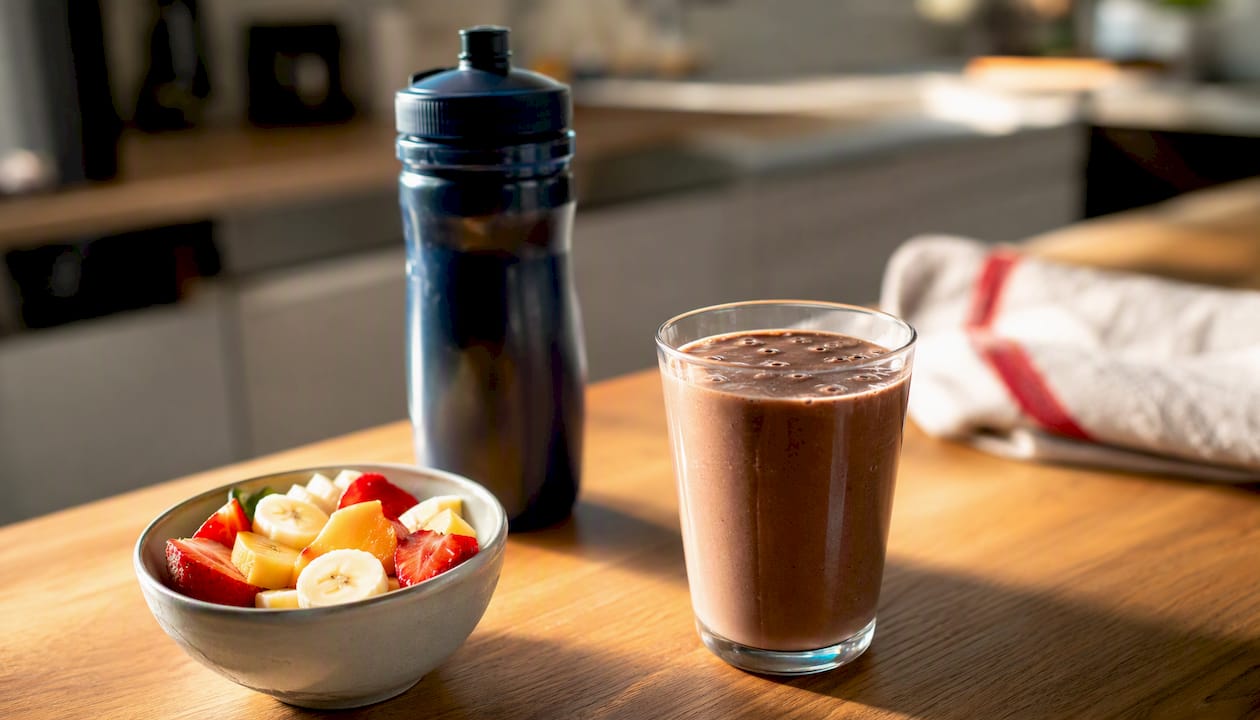
Three practices worth building into your week: First, take a five-minute movement break every 90 minutes. Your focus degrades after roughly that window, and a short walk or set of bodyweight movements resets it. Second, build a simple sleep hygiene checklist: consistent bedtime, no screens 30 minutes before, room temperature around 65–68°F. Third, use a 4-7-8 breathing protocol (inhale four counts, hold seven, exhale eight) before high-stakes tasks to lower your heart rate and sharpen focus.
Pro Tip: Stop tracking hours worked and start tracking energy quality. At the end of each day, rate your energy on a 1–5 scale across three categories: physical, mental, and emotional. After two weeks, patterns emerge. You’ll see exactly which habits drain you and which ones refill you.
Raise necessity: how to make performance feel non-optional
Necessity means making your performance feel required through a combination of internal identity standards and external accountability. It’s the habit that closes the gap between “I want to do this” and “I will do this.”
The mechanics are straightforward. When you tie performance to who you are (not just what you want), the cost of quitting feels personal. When you add external stakes, like a public commitment or a partner who expects results, you add social accountability to the mix. Together, those two forces increase follow-through more reliably than motivation alone.
Practical tactics:
- Public commitments: Tell someone specific what you’re going to do and by when. The social cost of backing out is a real motivator.
- Hard deadlines: Set a date and attach a consequence. “I’ll finish this by Friday or I owe my training partner a workout.”
- Pair accountability: Find one person with a similar goal and check in weekly. Brief, specific, honest.
- Identity scripts: Write a one-sentence statement of who you are when you perform at your best. Read it before you start your day.
One warning: necessity that tips into chronic pressure becomes burnout. The mitigation is simple. Set stakes that raise your sense of mission without creating anxiety about failure. The goal is urgency, not dread.
Pro Tip: Design your stakes around something you care about, not something you fear. “I’m doing this because it matters to my family” generates more sustainable drive than “I’m doing this because I’m afraid of failing.” Both create necessity, but only one keeps you going for months.
Increase productivity: the difference between busy and effective
Prolific Quality Output (PQO) is Burchard’s term for the specific, high-value work that actually moves your goals forward. It’s not the number of tasks you complete. It’s the quality and relevance of the output that matters most in your field or role. Busy is not productive. Productive is doing the right work well.
Four methods that shift you from activity to output:
- Time-blocking: Assign specific work categories to specific time slots. Protect them like appointments.
- Single-task sprints: Work on one thing for 45–90 minutes with no switching. Close every tab that isn’t relevant.
- Batching: Group similar tasks (email, admin, calls) into one block instead of scattering them across the day.
- Inbox rules: Check email at set times only. Reactive email management is one of the fastest ways to lose a morning.
A simple time-block template you can copy:
- 6:00–8:00 AM: Deep work (your most important creative or strategic task)
- 10:00 AM–12:00 PM: Second deep work block or high-priority project work
- 1:00–2:30 PM: Admin, email, and reactive tasks
- 4:00–5:00 PM: Planning, review, and wrap-up
To measure PQO, pick one weekly output metric tied to your role. A writer tracks words published. An athlete tracks training sessions completed at target intensity. A salesperson tracks qualified conversations. One number, tracked weekly.
Pro Tip: Context switching is the silent productivity killer. Every time you shift between tasks, your brain needs roughly 20 minutes to fully re-engage. Protect your deep work blocks by turning off notifications and setting a physical signal (headphones on, door closed) that tells others you’re unavailable.
Develop influence: the habit that multiplies everything else
Influence is the habit of consistently communicating in ways that get others to believe in your work and want to support it. It’s not manipulation. It’s the skill of making your ideas clear, your intentions trustworthy, and your asks easy to say yes to.
Why it matters for sustained results: access to resources, faster collaboration, and better feedback all depend on how well you communicate and how much people trust you. High performers rarely succeed alone. The ones who sustain results over years tend to be the ones who invest in relationships before they need them.
Four habits that build influence:
- One-on-one rituals: Schedule brief, regular check-ins with the people who matter most to your work. Consistency builds trust faster than intensity.
- Value-first outreach: When you reach out to someone, lead with something useful to them, not a request. A resource, a connection, a piece of feedback they didn’t ask for.
- Feedback loops: Ask for specific feedback after any significant interaction. “What could I have communicated more clearly?” is a better question than “How did I do?”
- Follow-up structure: After any meaningful conversation, send a one-sentence summary of what was agreed and what comes next. It signals reliability.
Track your influence by monitoring two things: response rate to your outreach and the number of meaningful collaborations you initiate per month. Both are leading indicators of your relational reach.
Pro Tip: The fastest way to build influence is to be the person who follows through on small things. Reply when you say you will. Deliver what you promised. People extend trust and opportunity to those who are predictable, not just impressive.
Demonstrate courage: training yourself to act despite discomfort
Courage, as a habit, means regularly taking action in the face of uncertainty or fear. Not reckless action. Deliberate, considered action that you take anyway, even when the outcome isn’t guaranteed.

This habit changes career and relationship trajectories because most meaningful opportunities require someone to go first: to speak up, to publish, to ask, to commit. The people who do that consistently don’t have less fear. They’ve just practiced acting through it often enough that the gap between feeling afraid and moving forward has narrowed.
Small-step challenges that build the habit:
- Speak up in the next meeting where you’d normally stay quiet
- Publish one piece of work before you feel it’s ready
- Ask for feedback from someone whose opinion you respect and fear
- Have one honest conversation you’ve been postponing
Track these in a courage log. A simple note in your phone works: date, action, outcome. After 30 days, you’ll have a record of evidence that you can act despite discomfort, and that record itself becomes fuel.
Pro Tip: Pair every courage move with a safety net. Before you take a bold action, identify the realistic worst-case outcome and your response to it. Knowing you can handle the downside makes it easier to take the step. This isn’t about lowering the stakes; it’s about managing your risk intelligently so fear doesn’t veto good decisions.
Why do habits improve performance? The science in plain terms
The core mechanism is automaticity. When you repeat a behavior consistently in the same context, your brain gradually shifts its processing from the prefrontal cortex (conscious, effortful) to the basal ganglia (automatic, efficient). The behavior starts to run without deliberate thought. Habit-formation research frames this as the key reason habits improve performance: they automate high-impact behaviors, freeing cognitive resources for the decisions that actually require your full attention.
The formation process follows four stages:
| Stage | What’s happening | Daily action to support it |
|---|---|---|
| Decision | You choose the behavior and commit to it | Write the habit down and set a trigger |
| Translation | You attempt the behavior for the first time | Do it once, imperfectly, and note what worked |
| Repetition | You repeat it consistently in the same context | Same time, same cue, same environment daily |
| Automaticity | The behavior runs with minimal conscious effort | Shift attention to the next habit layer |
One honest caveat: most performance-habit research is still developing. The evidence for how habits form mechanically (the stages above, the role of cues and rewards) is solid. The evidence that any specific habit universally improves performance across every domain and every person is less settled. The HP6 framework is built on large survey data and correlational research, which is meaningful but not the same as controlled experimental proof. Treat it as a well-tested, evidence-informed framework rather than a guaranteed formula.
What is clear: high-performance habits are not set-and-forget. As your context grows more complex, the habits require active maintenance. The world’s demands on a high performer tend to increase over time, which means the habits need to evolve with them.
How to build your first high-performance habit: a practical 6-week plan
The habit-formation stages give you a realistic timeline. Six weeks is enough to move from decision to early automaticity on one habit, if you’re consistent. Here’s how to structure it:
- Week 1 (Decision): Choose one HP6 habit. Write a one-sentence commitment. Set a daily trigger (a specific time or existing routine to attach it to). Do it once, even badly.
- Week 2 (Translation): Practice the habit daily. Keep it small enough that skipping feels harder than doing it. Track each day with a checkmark.
- Week 3 (Repetition begins): Add one small layer of complexity. If you started with a two-minute clarity prompt, extend it to five minutes. Note what’s working.
- Week 4 (Repetition deepens): Identify your biggest obstacle from weeks 1–3 and address it directly. Adjust the trigger, the time, or the format.
- Week 5 (Consolidation): The habit should feel noticeably easier. Add a weekly review: did you hit your daily target? What’s your output metric showing?
- Week 6 (Early automaticity): Assess whether the habit is running with less conscious effort. If yes, begin layering in a second HP6 habit. If not, extend week 5 for another week before adding anything new.
The 3-3-3 rule is a simple commitment test: commit to the habit for 3 days (proof of concept), then 3 weeks (pattern formation), then 3 months (consolidation). Each threshold is a decision point. If you can’t sustain it for three days, the habit is too complex or the trigger is wrong. Fix that before extending.
Habit-stacking examples that pair new HP6 actions with existing routines:
- After brushing teeth → two-minute clarity prompt (seek clarity)
- After pouring morning coffee → five-minute energy check and intention set (generate energy + seek clarity)
- After sitting down at your desk → write your top PQO task for the day before opening email (increase productivity)
- After your workout → send one value-first message to someone in your network (develop influence)
Troubleshooting checklist:
- No time: The habit is too long. Cut it to two minutes. Consistency beats duration every time.
- Willpower dips: Your trigger is too weak. Attach the habit to something you already do automatically.
- Context change (travel, schedule shift): Pre-plan a travel version of the habit. A five-minute version beats a zero-minute version.
- Motivation disappears: Return to your necessity tactics. Raise the stakes, call your accountability partner, or revisit your identity script.
For more on building consistency in athletic and daily routines, the Teamjhall guide on discipline in fitness covers the mechanics of staying consistent when motivation fades.
Sample morning routines that put all six habits to work
Two templates, built for different schedules. Both map directly to the HP6.
Template 1: The 30–45 minute focused morning routine
- 5 min: Clarity prompt (write today’s intention and identity statement)
- 10 min: Movement (walk, mobility work, or a short bodyweight circuit)
- 5 min: Energy check (rate physical, mental, emotional energy 1–5; adjust the day’s plan if needed)
- 20 min: First deep work block on your top PQO task
- 5 min: Review and set one courage action for the day
Template 2: The 10–15 minute quick-start routine (for early shifts, parents, or compressed mornings)
- 2 min: Write one sentence of intention
- 5 min: Movement (even a short walk to the end of the block counts)
- 3 min: Identify your top task and one person to connect with today
- 2 min: Name one bold action you’ll take before noon
Night-before checklist (makes both templates easier to execute):
- Set out workout clothes or gear
- Write tomorrow’s top three tasks
- Set a consistent wake time
- Identify one person to reach out to
Adaptation tips for shift workers and parents: Compress the clarity and energy steps into one two-minute journaling prompt. Move the movement block to a break period or lunch. The sequence matters less than the consistency. Even a five-minute version of this routine, practiced daily, builds the habit.
| Routine step | HP6 habit reinforced |
|---|---|
| Clarity prompt / intention | Seek clarity |
| Movement block | Generate energy |
| Energy check | Generate energy |
| Deep work / PQO task | Increase productivity |
| Courage action | Demonstrate courage |
| Network outreach | Develop influence |
| Stakes review / identity script | Raise necessity |
For athletes looking to build this into a structured training context, the Teamjhall home workout guide offers practical routine templates that integrate well with the morning structure above.
A coach’s honest take on HP6 in real athletic and daily life
The HP6 framework is genuinely useful. But here’s what most summaries skip: the habits that feel easiest to start are rarely the ones you need most. Clarity sounds simple until you sit down to write your intention and realize you don’t actually know what you’re working toward. Courage sounds obvious until you’re in the meeting and you stay quiet again.
The athletes and competitors who get the most from this framework are the ones who stop treating it as a checklist and start treating it as a mirror. Each habit reveals something. Seek clarity shows you where you’ve been drifting. Generate energy shows you what you’ve been ignoring about your own recovery. Raise necessity shows you whether your goals actually mean enough to you to act on them without someone pushing you.
The Inc. coverage of the HP6 makes the point well: these habits are adopted deliberately, not by accident. That means the work is in the choosing, not in waiting until you feel ready. You won’t feel ready. Pick one habit, do it badly for a week, and adjust. That’s the whole method.
One practical tip for Teamjhall’s audience specifically: pair your HP6 habit work with your training gear and environment. The clothes you wear, the space you train in, and the gear you reach for are all environmental cues. Use them. Put on your Teamjhall performance gear before your morning routine the same way every day. That physical cue becomes part of the trigger, and triggers are what make habits stick.

The Teamjhall store carries performance apparel built for athletes, creators, and competitors who take their daily habits seriously. Shop the full collection and gear up for the work.
Sources
The following sources underpin the claims and frameworks in this article. Use the book for the full HP6 framework and exercises, and the research papers for the underlying habit-formation mechanics.
- High Performance Habits: How Extraordinary People Become That Way
- Performance habits: conceptualization and potential research agenda
- High Performance Habits by Brendon Burchard
- 6 High-Performance Habits Only the Most Extraordinary People Share, Backed by Science