

Why Mobility Work Improves Athleticism: 2026 Guide
Mobility work is the practice of actively moving joints through their full range of motion with strength and control. This is the standard industry term for what athletes and coaches call “joint mobility training,” and it is the foundation of every powerful, efficient movement in sport. The American Council on Exercise identifies mobility as a prerequisite for power, speed, and injury prevention. A 2026 randomized controlled trial with 38 basketball athletes confirmed that joint mobilization combined with eccentric training produces significant improvements in jump performance and the Triple Hop Test. Understanding why mobility work improves athleticism starts with recognizing that it is not stretching. It is a neurological skill that trains your brain and muscles to work together under load.
Why mobility work improves athleticism at the joint level
Mobility training works because it is a nervous system response that coordinates brain-to-muscle communication. When your joints move through a full, controlled range, your nervous system learns to recruit the right muscles at the right time. That coordination is what separates fluid, powerful athletes from stiff, injury-prone ones.
The physiological benefits stack quickly once you train consistently:
- Neuromuscular efficiency: Better brain-muscle communication means less wasted energy per movement. You sprint, cut, and jump with less effort.
- Improved force absorption: Mobile joints absorb impact more effectively. This protects cartilage, tendons, and ligaments during high-load activities.
- Stretch-shortening cycle gains: A mobile joint stores and releases elastic energy faster. That is the mechanism behind explosive power in sprinting and jumping.
- Reduced compensatory patterns: Tight hips force your lower back to compensate. Tight ankles shift load to your knees. Mobility work eliminates those chain reactions before they cause injury.
- Circulation and tissue resilience: Mobility training improves neuromuscular activation and tissue resilience, which accelerates recovery between sessions.
Athletes who incorporate mobility training consistently report fewer injuries overall. Eccentric exercises combined with mobility work reduce hamstring strain risk by approximately 30%, and range of motion typically increases 18–25% over 4–8 weeks. That kind of structural improvement directly raises your performance ceiling.
What is the difference between mobility and flexibility?
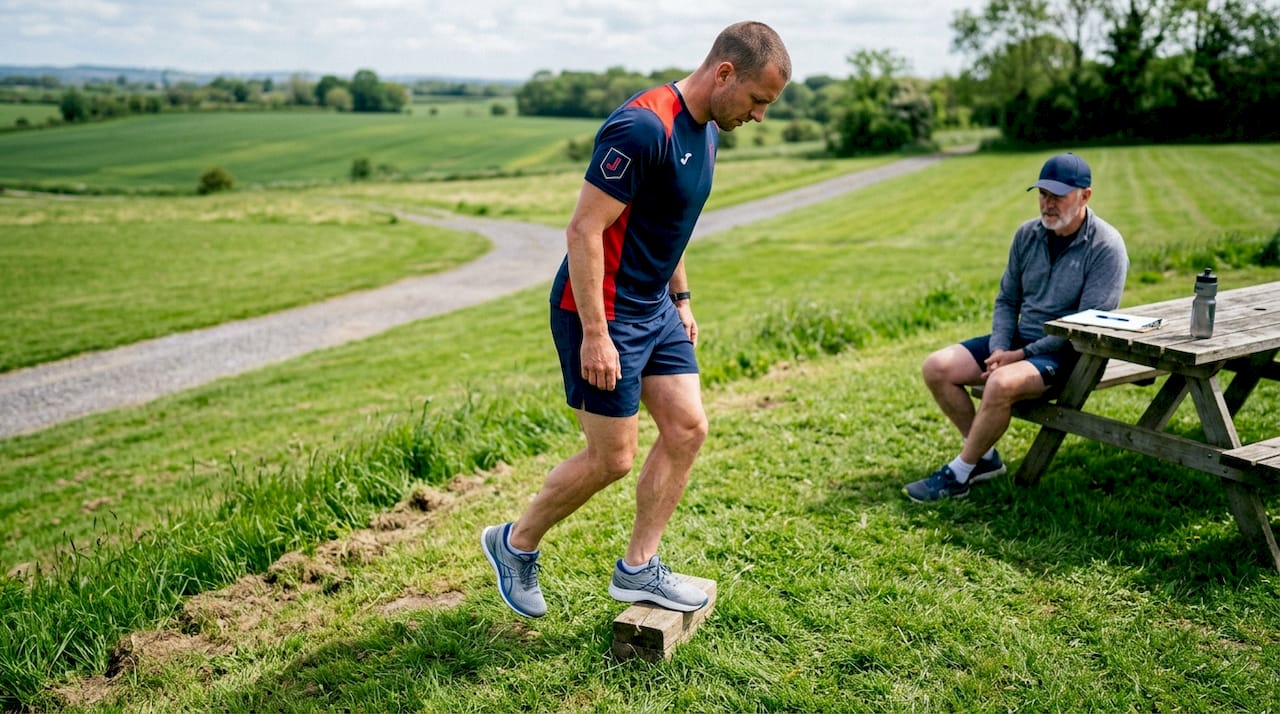
Flexibility is the passive ability of a muscle to lengthen. Mobility is the active ability to control a joint through its range under load. The difference matters more than most athletes realize.
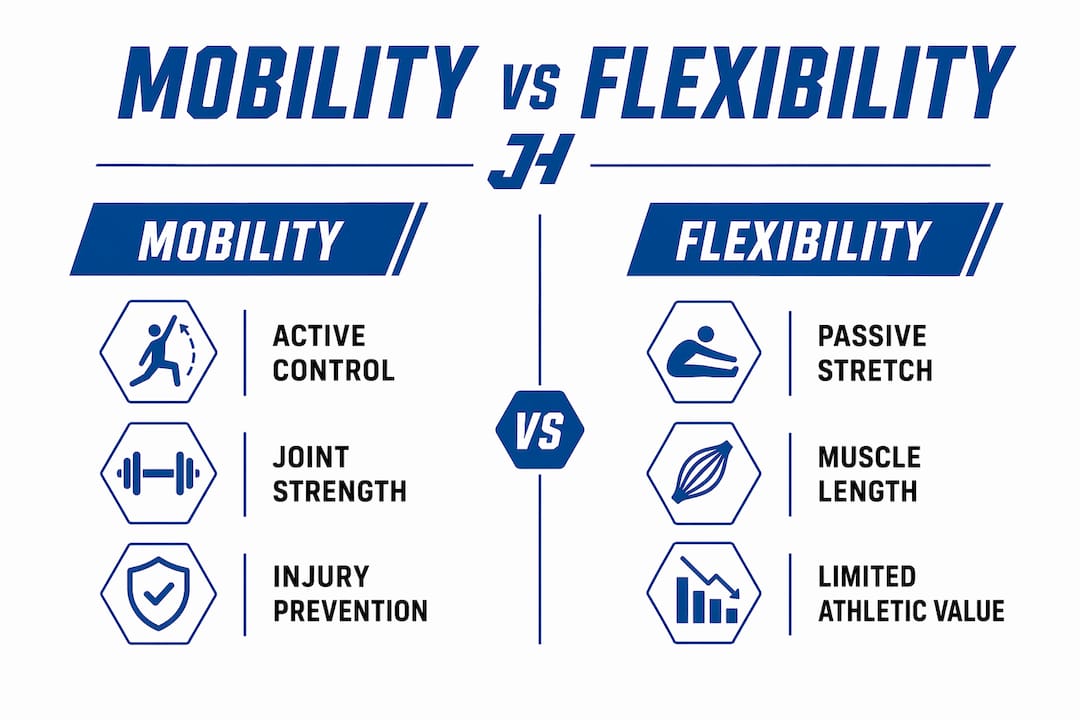
A gymnast who can do a full split passively but cannot control that position while absorbing force has flexibility without mobility. That gap is where injuries happen. True mobility requires active muscular control, not just a passive stretch. Being loose without control decreases force transfer and raises injury risk significantly.
| Quality | Definition | Athletic value |
|---|---|---|
| Flexibility | Passive muscle lengthening | Low without active control |
| Mobility | Active joint range with control | High; directly transfers to sport |
| Stability | Joint control under load | Required to make mobility useful |
Static stretching before explosive training is not a neutral choice. Static stretching immediately before exercise reduces maximal force output by 5.4% and explosive power by 1.9%. That is a measurable performance cost on game day or during a speed session. Dynamic mobility drills, by contrast, prime the nervous system without reducing muscle stiffness.
Pro Tip: Replace static stretching in your warm-up with dynamic drills like leg swings, hip circles, and thoracic rotations. Save static holds for post-workout when your goal is tissue lengthening, not performance.
The common mistake athletes make is equating loose joints with good mobility. Loose joints without control lead to decreased force transfer and higher injury rates. Real mobility combines controlled strength with active range. That combination is what makes it a performance tool rather than just a recovery habit.
How do mobility and stability work together to enhance athleticism?
Mobility and stability are two sides of the same coin. Mobility provides joint access; stability provides control. Strength without mobility is tension. Mobility without stability is uncontrolled movement. You need both to convert training into usable athletic output.
Here is what happens when the balance breaks down:
- Mobility without stability: A wide squat range of motion means nothing if your knees cave under load. The joint access exists, but the strength to control it does not. That mismatch is a direct injury pathway.
- Stability without mobility: A strong but immobile hip cannot generate full stride length. The muscle is powerful, but the joint cannot access the position needed to express that power.
- Integrated training: Exercises like the single-leg Romanian deadlift, deep squat with pause, and controlled articular rotations (CARs) train both qualities simultaneously. They build positions that hold under force.
If an athlete can passively achieve a joint range but cannot maintain it actively under load, they lack useful mobility and face real injury risk when pushed. This is why sport-specific mobility training always includes a stability component. A basketball player working on ankle mobility also needs single-leg balance drills. A football lineman improving thoracic rotation also needs anti-rotation core work.
The payoff is direct. When mobility and stability train together, strength transfers more efficiently into sport-specific power. You can read more about how these qualities connect in the context of functional fitness for performance. The result is movement quality that holds up under competition pressure, not just in the gym.
How can athletes incorporate mobility work into training?
Mobility training works best when it is structured, not random. The goal is progressive loading of joint positions, not passive hanging in a stretch.
-
Start every session with dynamic mobility (10–15 minutes). Use joint-focused movements to prime the nervous system and increase blood flow. Dynamic mobility warm-ups increase motor unit recruitment without reducing muscle stiffness, which keeps explosive capacity intact.
-
Target the four key areas for athletes. Hips, ankles, thoracic spine, and shoulders are the most common mobility limiters in sport. Hip 90/90 stretches, ankle dorsiflexion drills, thoracic rotations, and shoulder CARs address the positions that matter most.
-
Add two dedicated mobility sessions per week. These sessions run 20–30 minutes and focus on end-range strength, not just passive range. Think loaded stretches, active holds, and controlled articular rotations.
-
Use foam rolling to support range of motion gains. Foam rolling improves range of motion 4–8% without performance loss. Five minutes per week per muscle group is enough to see results.
-
Progress load, not just range. Once you can access a position, add resistance. A deep squat becomes a goblet squat. A hip flexor stretch becomes a split squat. This is how mobility converts into athletic power.
Pro Tip: Consistency beats intensity in mobility training. Ten minutes daily produces better long-term results than a 60-minute session once a week. Treat it like brushing your teeth, not like a workout you can skip.
Avoid two common pitfalls. First, do not overstretch. Pushing past your end range without control creates instability, not mobility. Second, do not skip stability work. Mobility gains without stability integration do not transfer to sport. For a complete framework on building these habits at home, the home workout guide for athletes covers how to structure sessions around both qualities.
A systematic review found that 15 of 22 studies show positive or neutral performance outcomes from mobility work. That means the evidence strongly supports adding it to your program. The athletes who skip it are leaving performance on the table.
Key Takeaways
Mobility work improves athleticism by building active joint control that transfers directly into power, injury prevention, and movement efficiency across every sport.
| Point | Details |
|---|---|
| Mobility is neurological | It trains brain-to-muscle coordination, not just tissue length. |
| Flexibility alone is not enough | Passive range without active control raises injury risk and reduces force transfer. |
| Stability makes mobility useful | Joint access without control does not transfer to sport-specific power. |
| Dynamic drills beat static stretching pre-workout | Static stretching reduces force output by 5.4%; dynamic drills prime performance. |
| Consistency compounds results | Daily 10-minute sessions outperform infrequent long sessions over time. |
Mobility is the compound interest of athletic development
I have trained alongside athletes who could bench press 300 pounds but could not reach overhead without their lower back arching off the table. They were strong. They were not mobile. And every single one of them eventually dealt with a shoulder or neck injury that cost them weeks of training.
Mobility is compound interest. You invest a small amount consistently, and the returns build over time in ways that are hard to see week to week but impossible to ignore over a season. The athletes I have watched commit to daily mobility work, even just 10 minutes before a session, move differently within 6–8 weeks. Their cuts are sharper. Their landings are quieter. Their recovery between hard sessions is faster.
The mindset shift that matters most is this: mobility is not optional recovery work. It is training. Treat it with the same seriousness you give your lifts and your conditioning. If you would not skip a squat session, do not skip your hip and ankle work. Athletic longevity depends on the quality of your movement, not just the quantity of your output.
The athletes who last the longest in their sport are rarely the ones who were the most gifted. They are the ones who built bodies that could absorb stress, recover fast, and move well under pressure. Mobility work is how you build that body.
— Jason
Gear built for athletes who train with purpose
Athletes who prioritize mobility need gear that moves with them, not against them. Restrictive clothing limits range of motion during warm-ups, drills, and recovery work. That is a problem you can solve before your next session.

Teamjhall designs premium athletic apparel for competitors and everyday athletes who take their training seriously. The UA Ladies Athletic Tee and the TJH Women’s Athletic Tank are built for full-range movement and breathability during active sessions. For warm-ups and recovery, the Teamjhall store carries mid-layers and hoodies designed to keep muscles warm between sets. Every piece reflects the same values behind the brand: confidence, consistency, and showing up ready to compete.
FAQ
What is mobility work in athletic training?
Mobility work is the practice of actively moving joints through their full range of motion with muscular control. It differs from stretching because it requires strength and coordination, not just tissue length.
Does mobility training actually improve athletic performance?
A systematic review found that 15 of 22 studies show positive or neutral performance outcomes from mobility training. A 2026 randomized trial with basketball athletes confirmed significant jump and hop test improvements from combined mobility and eccentric training.
How often should athletes do mobility work?
Daily sessions of 10–15 minutes are more effective than infrequent long sessions. Adding two dedicated 20–30 minute sessions per week accelerates range of motion and stability gains.
Is static stretching bad before a workout?
Static stretching before explosive activity reduces maximal force output by 5.4% and explosive power by 1.9%. Dynamic mobility drills are the correct pre-workout choice because they prime the nervous system without reducing muscle stiffness.
What is the difference between mobility and flexibility for athletes?
Flexibility is passive muscle lengthening. Mobility is active joint control under load. Athletes need mobility because sport demands strength and coordination through a full range, not just the ability to reach a position passively.